Proximity sensors are indispensable components in modern industrial automation, offering non-contact detection of objects with high precision and reliability. As an electrical engineer, selecting the appropriate sensor model is crucial for optimizing system performance, ensuring safety, and reducing maintenance costs. This guide delves into the key types, specifications, and applications of proximity sensor models, providing insights to aid in informed decision-making.
The most common proximity sensor models are categorized based on their sensing technology: inductive, capacitive, ultrasonic, and photoelectric. Inductive sensors, such as the popular E2E series by Omron or the BI series by Schneider Electric, detect metallic objects using electromagnetic fields. They are ideal for harsh environments due to their robust construction, with models like the E2E-X5ME1 offering sensing ranges up to 5mm and IP67-rated protection against dust and water. Capacitive sensors, including the E2K series, can detect both metallic and non-metallic materials, making them suitable for liquid level control or plastic object detection. Ultrasonic models, like the UC series from Pepperl+Fuchs, use sound waves to measure distance, excelling in applications requiring long-range detection or varying surface conditions. Photoelectric sensors, such as the E3Z series, employ light beams for high-speed object counting or color recognition, with options for diffuse, retro-reflective, or through-beam configurations.
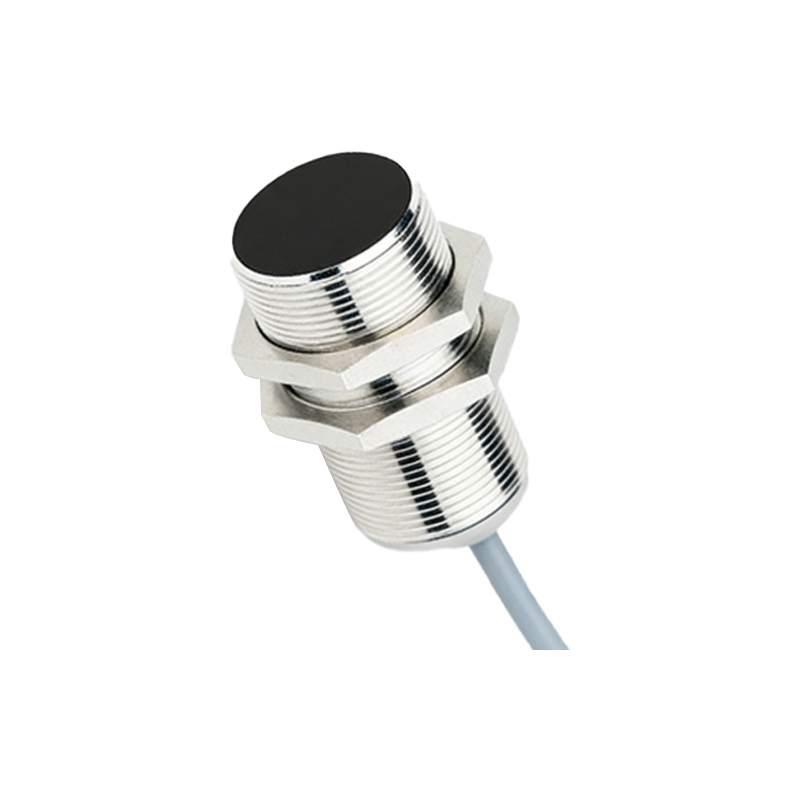
When evaluating proximity sensor models, engineers must consider critical specifications. Sensing distance, typically ranging from 2mm to 60mm for inductive models, determines how close an object must be for detection. Response frequency, measured in Hertz, indicates how quickly the sensor can operate—high-speed models like the E2E-X10ME1 can reach up to 5kHz, essential for fast-moving assembly lines. Output types include NPN (sinking) or PNP (sourcing) transistor outputs, with some models offering analog outputs (e.g., 4-20mA) for continuous distance measurement. Environmental ratings, such as IP67 or IP69K, ensure durability in extreme conditions, while housing materials like stainless steel (common in models like the BI10-M30-AP6X) provide resistance to corrosion and mechanical stress.
Applications vary widely across industries. In automotive manufacturing, inductive sensors like the E2E-X18ME1 are used for position sensing in robotic arms, while capacitive models monitor fluid levels in tanks. Food and beverage industries often opt for hygienic designs with FDA-compliant materials, such as the E2E-X14ME1 with a PTFE coating. In packaging, photoelectric sensors ensure accurate label placement, and ultrasonic models assist in bulk material handling. Engineers should also factor in installation requirements: tubular models (e.g., M12 or M30 threaded barrels) are easy to mount, while rectangular housings offer flexibility in tight spaces.
Advancements in technology have led to smart sensor models with integrated IO-Link communication, enabling real-time diagnostics and parameter adjustments. For instance, the E2E-X18ME1-IL model allows remote monitoring of operating status, reducing downtime. When selecting a model, always cross-reference manufacturer datasheets for compatibility with control systems like PLCs, and consider lifecycle costs—premium models may have higher upfront costs but lower failure rates. In summary, understanding the nuances of proximity sensor models empowers engineers to enhance automation efficiency, from simple object detection to complex industrial networks. By aligning specifications with operational needs, one can achieve reliable, long-term performance in diverse electrical engineering projects.