In the realm of industrial automation, proximity sensors stand as silent sentinels, enabling countless processes with their non-contact detection capabilities. At the heart of their functionality lies a critical component: the sensing face. This surface is not merely a physical front but the primary interface through which the sensor interacts with its environment. Understanding its characteristics, limitations, and optimal application is paramount for any engineer designing or maintaining automated systems.
The sensing face, often constructed from materials like PBT (polybutylene terephthalate) or metal alloys, houses the active sensing element. For inductive sensors, this is a coiled oscillator that generates an electromagnetic field. For capacitive sensors, it involves electrode plates that create an electrostatic field. The material and design of the face directly influence the shape, strength, and reach of this emitted field, thereby defining the nominal sensing distance (Sn). A common misconception is that this distance is a fixed, hard boundary. In reality, it is a standardized value under ideal conditions. Factors such as the target material's properties, size, shape, and even environmental temperature can cause significant deviations. For instance, an inductive sensor calibrated for mild steel will exhibit a reduced sensing range when detecting stainless steel or aluminum, a phenomenon accounted for by correction factors specified in datasheets.
The orientation and mounting of the sensing face are equally crucial. Most standard sensors are designed for flush mounting, where the sensing face can be installed level with a metal surface without a reduction in sensing range. Non-flush mountable sensors, on the other hand, require a clear, unobstructed area around the sensing face to achieve their stated range. Ignoring these mounting requirements is a frequent source of application failure. Engineers must meticulously plan the sensor's placement to avoid "shadowing" effects from nearby metal structures or mutual interference when multiple sensors are positioned closely. A general rule is to maintain a minimum separation distance, often 2-3 times the sensor diameter, to prevent crosstalk.
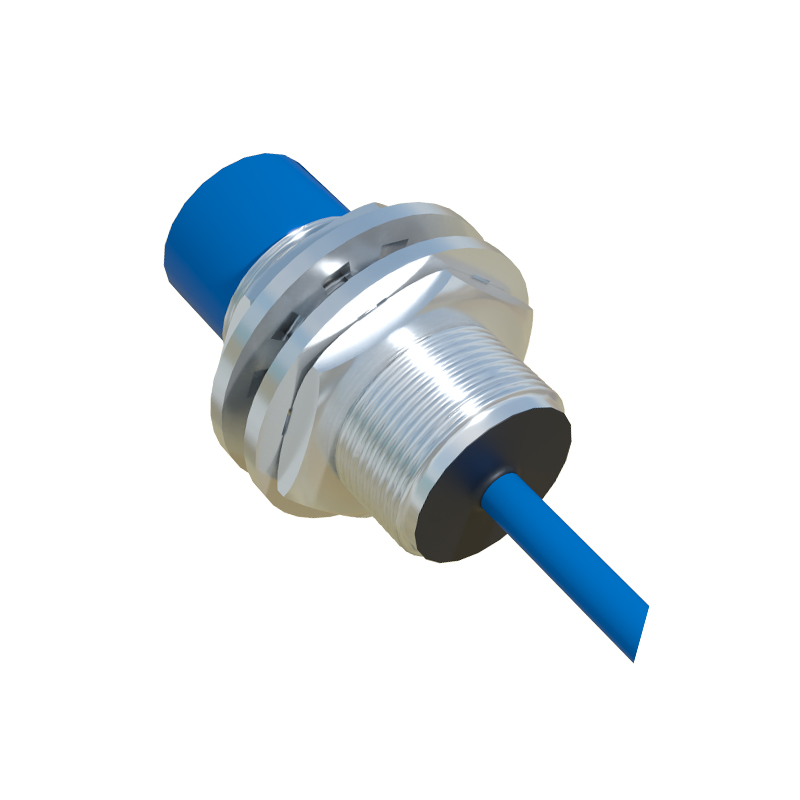
Environmental resilience is engineered into the sensing face. In harsh industrial settings, it must withstand physical abrasion from passing targets, exposure to cutting fluids, coolants, oils, and chemical splashes. Many high-end sensors feature sensing faces made of stainless steel or are coated with specialized polymers like PTFE (Teflon) for exceptional chemical resistance. The ingress protection (IP) rating, such as IP67 or IP69K, indicates the level of sealing around this critical area against dust and water. A compromised sensing face, whether cracked or coated with a thick, conductive residue, will degrade performance or cause complete sensor failure.
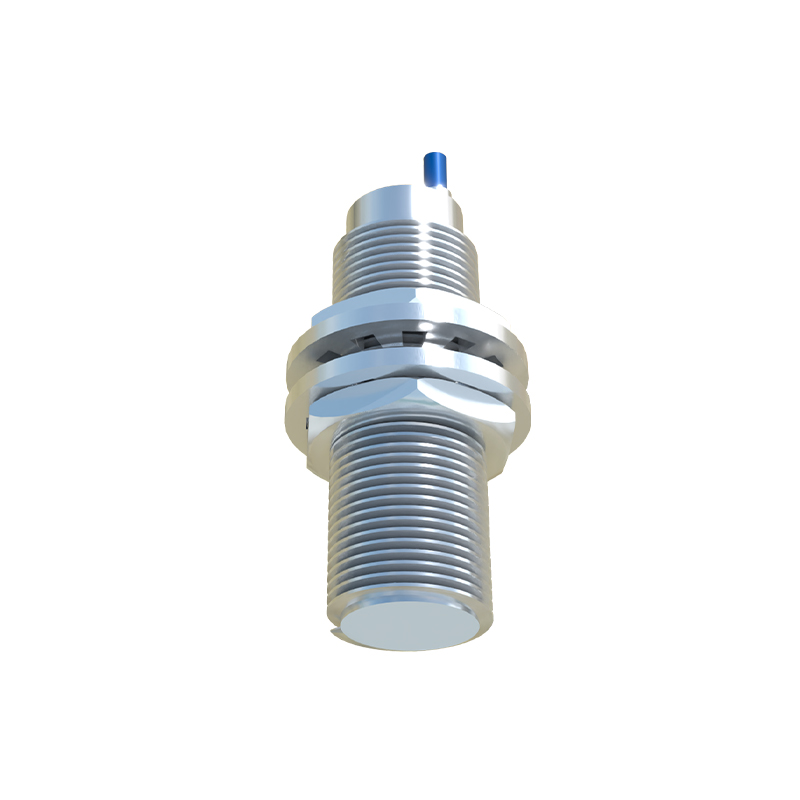
Furthermore, the sensing face is not always a flat disc. Modern applications demand specialized form factors. Cylindrical faces are common, but rectangular, ring-shaped, or even slot-type sensing faces are available for unique detection tasks, such as verifying the presence of a label on a bottle or detecting the teeth of a gear. The selection of the correct face geometry is integral to solving specific mechanical and spatial challenges within a machine design.
In conclusion, the sensing face of a proximity sensor is a deceptively simple component that embodies complex engineering considerations. Its material, mounting, environmental protection, and geometry are all carefully calibrated to translate an electromagnetic or electrostatic field into a reliable digital signal. Treating it as merely the "front part" of the sensor is a critical oversight. Successful implementation demands a thorough analysis of the target, the environment, and the mechanical constraints, always with the specifications and limitations of the sensing face as the guiding principle. By respecting this interface, engineers ensure robust, reliable, and repeatable operation, forming the foundation of efficient and safe industrial automation.