Ring-type proximity sensors, also known as through-beam or donut sensors, are specialized non-contact detection devices widely used in automated manufacturing, packaging, and material handling systems. Their unique design allows objects to pass through the center aperture, enabling precise detection without physical contact. This article explores the core characteristics, operational principles, and benefits of ring-type proximity sensors in modern industrial environments.
One of the most distinctive features of ring-type proximity sensors is their through-hole configuration. The sensor consists of a ring-shaped housing that contains an emitter and a receiver facing each other across the aperture. When an object passes through the center opening, it interrupts the transmitted beam—typically infrared or laser light—triggering a detection signal. This design is particularly effective for counting, sorting, or verifying the presence of small to medium-sized items such as bolts, capsules, wires, or components on conveyor lines. Unlike standard proximity sensors that detect objects approaching from one direction, ring sensors monitor items passing directly through their field, offering highly reliable and repeatable sensing.
The sensing principle relies on modulated light beams to ensure immunity to ambient light interference. Advanced models incorporate background suppression technology, which allows them to ignore objects beyond a set distance or outside the defined detection zone. This results in exceptional accuracy, with detection repeatability often within micrometer ranges. Many ring-type sensors also feature adjustable sensitivity, enabling users to fine-tune the sensor for specific object sizes, colors, or surface materials. For instance, transparent or glossy objects that might challenge conventional sensors can be reliably detected by adjusting the gain or using polarized filters.
Durability and environmental resilience are critical in industrial settings. High-quality ring-type proximity sensors are built with rugged materials such as stainless steel, nickel-plated brass, or industrial-grade plastics. They are commonly rated IP67 or higher, providing resistance to dust, moisture, oils, and coolants. This makes them suitable for harsh environments like automotive assembly lines, food processing plants, or pharmaceutical packaging where washdowns or chemical exposure may occur. Additionally, the non-contact nature eliminates mechanical wear, ensuring long operational life and minimal maintenance.
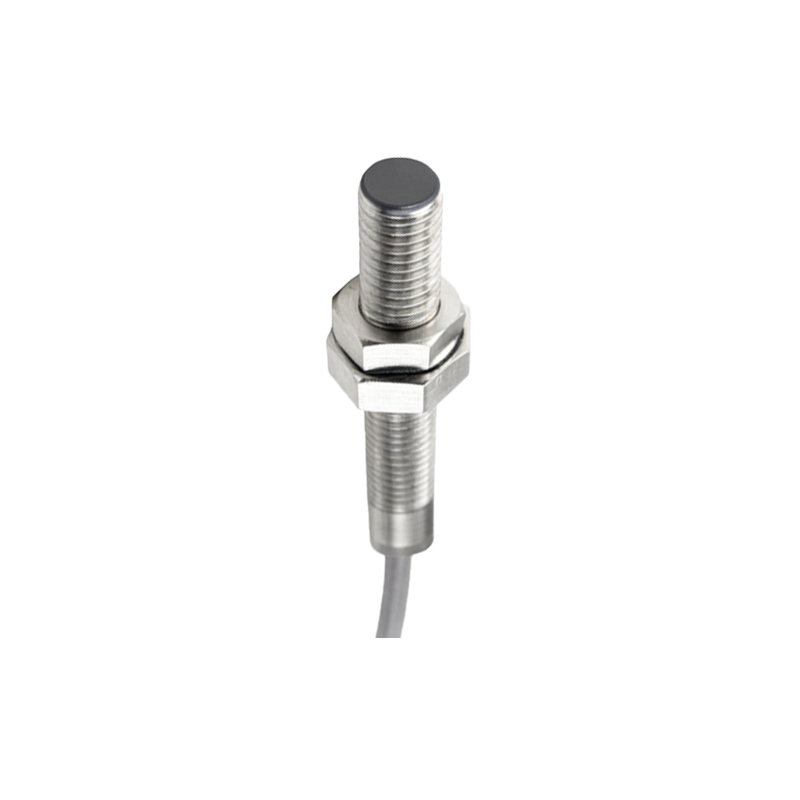
Integration flexibility is another significant advantage. These sensors are available in various aperture sizes—from a few millimeters to over 100 millimeters—to accommodate different product dimensions. They can be easily mounted inline with conveyors, chutes, or guiding rails. Electrical outputs typically include NPN, PNP, or push-pull configurations, compatible with PLCs, counters, and control systems. Some models offer IO-Link or analog outputs for advanced diagnostics and real-time monitoring, supporting Industry 4.0 connectivity.
Applications of ring-type proximity sensors span numerous industries. In electronics manufacturing, they verify component insertion on PCBs. In packaging, they detect missing labels or caps on bottles. Automotive suppliers use them to inspect fastener presence, while pharmaceutical companies rely on them for pill counting and blister pack verification. Their ability to operate at high speeds—often detecting objects moving at several meters per second—makes them ideal for high-throughput production lines.
Despite their advantages, selecting the right ring sensor requires consideration of factors like object size, speed, material transparency, and environmental conditions. Proper alignment and installation are crucial to avoid false triggers. However, with correct implementation, these sensors deliver unmatched reliability for through-beam detection tasks.
In summary, ring-type proximity sensors offer a blend of precision, durability, and versatility that addresses complex detection challenges in automation. Their through-hole design enables non-invasive monitoring of moving objects, while advanced features ensure consistent performance even in demanding conditions. As industries continue to prioritize efficiency and quality control, the role of ring-type proximity sensors in enabling smarter, more responsive automation systems remains indispensable.