In the realm of industrial automation and control systems, proximity sensors are indispensable components. These non-contact devices detect the presence or absence of an object within their sensing range without any physical contact. Their reliability, speed, and durability make them critical for tasks ranging from object counting and position verification to safety interlocks and machine automation. Understanding the different types of proximity sensors is essential for selecting the right technology for a specific application. This guide delves into the primary categories, their operating principles, advantages, and typical use cases.
The most prevalent type is the Inductive Proximity Sensor. This sensor generates an electromagnetic field from a coil in its sensing face. When a metallic object (typically ferrous metals like steel or iron, though some models detect non-ferrous metals) enters this field, it induces eddy currents within the target. This change in the electromagnetic field is detected by the sensor's circuitry, triggering an output signal. Inductive sensors are highly robust, resistant to environmental factors like dust, oil, and moisture, and offer very fast switching frequencies. They are ideal for detecting metal parts in machinery, such as in CNC machines, conveyor systems, and robotic arms. Their limitation is clear: they only detect metallic objects.
For detecting non-metallic materials, Capacitive Proximity Sensors are the go-to choice. These sensors function by generating an electrostatic field. Any object that enters this field, whether metallic, plastic, wood, liquid, or granular material, alters the capacitance of the sensor's circuit. This change is measured, and an output is activated. Capacitive sensors can even detect materials through certain non-metallic barriers, making them useful for level detection in tanks (e.g., detecting liquid or powder levels through a glass or plastic wall). They are commonly used in packaging, food processing, and chemical industries. However, they can be more susceptible to environmental factors like humidity and require careful calibration to avoid false triggers from non-target materials.
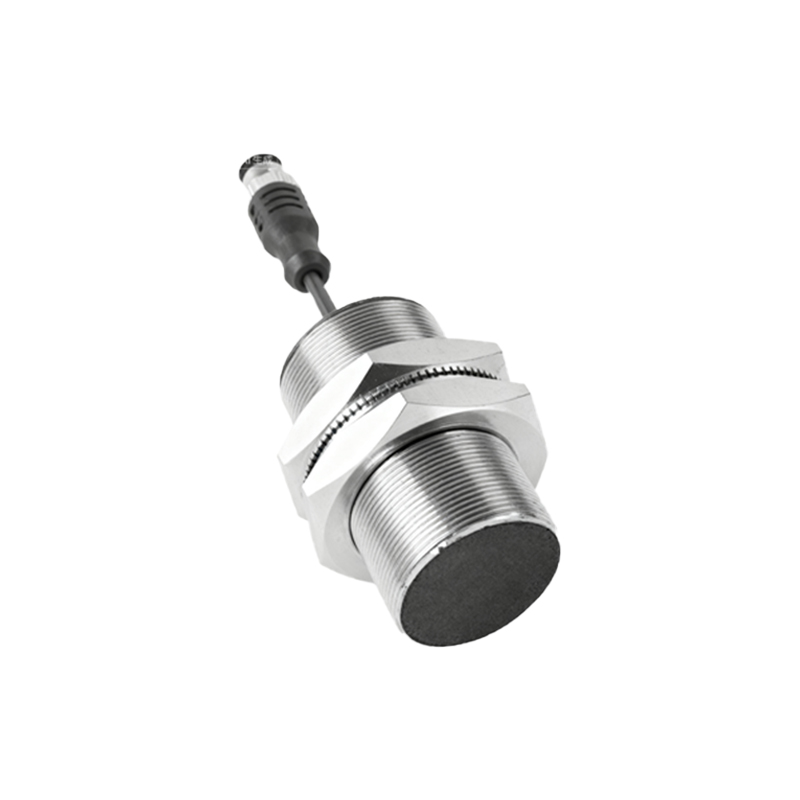
Ultrasonic Proximity Sensors operate on a principle similar to sonar. They emit high-frequency sound waves (ultrasonic waves) and measure the time it takes for the echo to return after bouncing off a target object. By calculating this time-of-flight, the sensor can determine both the presence and the distance to the object. This makes them excellent for distance measurement, level sensing of bulk materials or liquids, and detecting objects with complex surfaces or colors that might confuse optical sensors. They are effective in harsh environments with dust or steam, but their performance can be affected by temperature variations, wind, and extremely soft materials that absorb sound.
Photoelectric Sensors, while often considered a broader category, are a key form of proximity detection. They use a light emitter (usually LED or laser) and a receiver. In the diffuse (reflective) mode for proximity sensing, the sensor emits light, and the target object reflects it back to the receiver. The sensor detects the presence based on the received light intensity. They can detect a vast range of materials regardless of material composition—metal, plastic, wood, etc. Variants like through-beam (separate emitter and receiver) and retro-reflective (using a reflector) offer solutions for longer ranges or specific environmental challenges. Photoelectric sensors are versatile but can be hindered by environmental contaminants like dirt on the lens, highly reflective backgrounds, or color variations of the target.
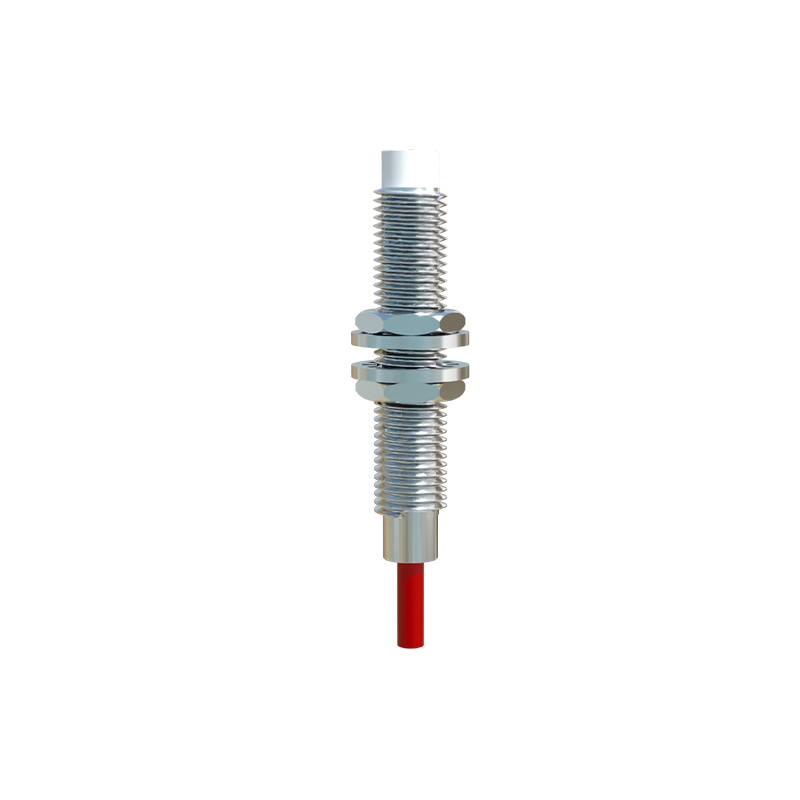
A specialized and highly precise type is the Magnetic Proximity Sensor (often called a reed switch or Hall-effect sensor). These detect the presence of a magnetic field, typically from a permanent magnet attached to the moving target. Reed switches use ferromagnetic reeds that contact each other when a magnet is near. Hall-effect sensors produce a voltage change in response to a magnetic field. They are extremely reliable for detecting the position of cylinders (with embedded magnets), in safety door interlocks, and in low-speed rotational sensing. Their operation is virtually unaffected by dirt, water, or non-magnetic materials, but they require a magnet on the target object.
Selecting the correct proximity sensor involves a careful analysis of several factors: the target material (metal, plastic, liquid), the required sensing distance, the operating environment (temperature, presence of contaminants, humidity), the output type needed (PNP/NPN, analog, IO-Link), and the physical size and mounting constraints. For instance, an inductive sensor is perfect for counting metal gears in an oily environment, while a capacitive sensor is necessary for monitoring plastic bottle caps on a line, and an ultrasonic sensor is best for measuring the fill level of gravel in a hopper.
In conclusion, the diverse family of proximity sensors—inductive, capacitive, ultrasonic, photoelectric, and magnetic—provides engineers with a powerful toolkit for solving automation challenges. Each technology has