In modern industrial automation and safety-critical applications, ensuring the continuous and reliable operation of equipment is paramount. One of the most effective technologies for monitoring the integrity of physical connections and detecting failures is the laser sensor wire break alarm system. This technology offers a non-contact, high-precision method for detecting breaks or significant damage in wires, cables, filaments, and even thin fibers, triggering an immediate alarm to prevent downstream damage, production halts, or safety incidents.
The core principle behind a laser-based wire break detection system is the interruption of a laser beam. A typical system consists of two main components: a laser transmitter and a photoelectric receiver. The transmitter emits a focused, coherent beam of light directed precisely at the receiver. The wire or filament to be monitored passes through the path of this beam. Under normal operating conditions, the laser beam is partially or fully obstructed by the intact wire. The receiver detects a specific light intensity level. When a break occurs, the wire's section moves out of the beam path or ceases to exist, causing a sudden change in the amount of light reaching the receiver. This change is instantly processed by the system's control unit, which then activates an alarm output. This output can be a relay closure, a voltage signal, or a digital communication message sent to a central PLC (Programmable Logic Controller) or SCADA (Supervisory Control and Data Acquisition) system.
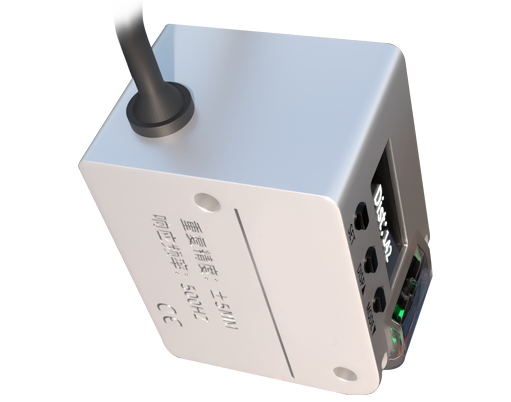
The advantages of using laser sensors for this purpose are significant. Firstly, they provide non-contact measurement, meaning there is no physical wear on the sensor or the target wire, leading to exceptionally long service life and minimal maintenance. Secondly, laser sensors offer very high resolution and accuracy, capable of detecting breaks in extremely fine materials, such as glass fibers in the textile industry or filaments in light bulb production. Their fast response time, often in the microsecond range, ensures virtually instantaneous detection, which is crucial for high-speed manufacturing lines. Furthermore, laser sensors are generally immune to environmental factors like electromagnetic interference (EMI), which can plague inductive or capacitive sensing methods, making them ideal for electrically noisy industrial environments.
The applications of laser sensor wire break alarms span numerous industries. In the textile sector, they are indispensable for monitoring yarns and threads during spinning, weaving, and knitting processes. A single break can cause massive tangles and costly downtime. In wire and cable manufacturing, these sensors ensure the integrity of the product being drawn and coiled. The optical fiber industry relies on them to detect breaks in delicate glass fibers during production and coating. In the packaging industry, they monitor the continuity of sealing wires or plastic straps. Beyond manufacturing, they find use in security systems, such as monitoring tripwires in perimeter protection, and in research settings for monitoring experimental apparatus.
Selecting the right laser sensor for a wire break alarm application requires careful consideration of several factors. The primary specification is the diameter or thickness of the target wire. The sensor must have sufficient resolution to detect the presence or absence of that specific size. The required sensing distance between the transmitter and receiver is also critical, as it determines the necessary laser power and lens configuration. Environmental conditions play a key role; for dusty or dirty environments, sensors with higher ingress protection (IP) ratings and more powerful lasers that can penetrate light contamination are necessary. The type of output signal must be compatible with the existing control system. Finally, form factor and ease of installation are practical concerns, with some models offering compact, aligned housings while others provide separate components for flexible mounting.

Integration and maintenance are straightforward. During setup, the sensor is aligned so the laser beam is correctly interrupted by the intact wire. Sensitivity thresholds are adjusted to account for normal vibration or minor wandering of the wire. Regular maintenance typically involves only keeping the lens surfaces clean to ensure optimal light transmission. Modern sensors often include diagnostic LEDs and stability indicators to aid in setup and troubleshooting.
In conclusion, laser sensor wire break alarm systems represent a robust, accurate, and reliable solution for a wide array of industrial monitoring tasks. By providing immediate detection of breaks in critical materials, they safeguard product quality, protect expensive machinery, enhance overall operational efficiency, and contribute to a safer working environment. As industrial processes continue to demand higher speeds and greater precision, the role of these non-contact sensing systems will only become more vital.
