In the realm of industrial automation, square proximity sensors represent a critical category of non-contact detection devices. Their robust, compact housing offers distinct advantages in space-constrained applications where durability is paramount. Unlike cylindrical sensors, the square form factor allows for easier mounting and integration into machinery with flat surfaces, often providing multiple sensing faces. This article delves into the common models, operating principles, and key selection criteria for these indispensable components.
The fundamental technology behind most square proximity sensors is based on electromagnetic fields. Inductive models are the most prevalent, generating an oscillating electromagnetic field from the active face. When a metallic target enters this field, it induces eddy currents, causing a change in oscillation amplitude. This change is detected by the sensor's circuitry, triggering a solid-state output switch. Common model series, such as the E2B-S or XS6C, are designed for ferrous metal detection with sensing ranges typically from 2mm to 15mm. Their square housings, often made of nickel-plated brass or stainless steel (e.g., V4A/316L grade), provide excellent resistance to mechanical impact, cutting fluids, and coolants.
For applications requiring detection of non-metallic objects, capacitive square proximity sensors (model series like E2K-C or CQ2) are employed. These sensors can detect materials like wood, plastic, glass, and liquids by measuring changes in capacitance. The sensing face forms one plate of a capacitor, and the target object alters the dielectric constant, triggering the output. These models are vital in packaging, material handling, and level detection systems.
Key specifications define a sensor's suitability for an application. The sensing distance (Sn) is the nominal operating range under standardized conditions. Hysteresis is the difference between the switch-on and switch-off points, preventing chatter when a target is at the threshold. Output configuration is crucial: NPN (sinking) or PNP (sourcing) transistor outputs must match the PLC input card. Some advanced models feature IO-Link communication, enabling digital parameter setting and diagnostic data transmission, exemplified by series like E2A-iOL.
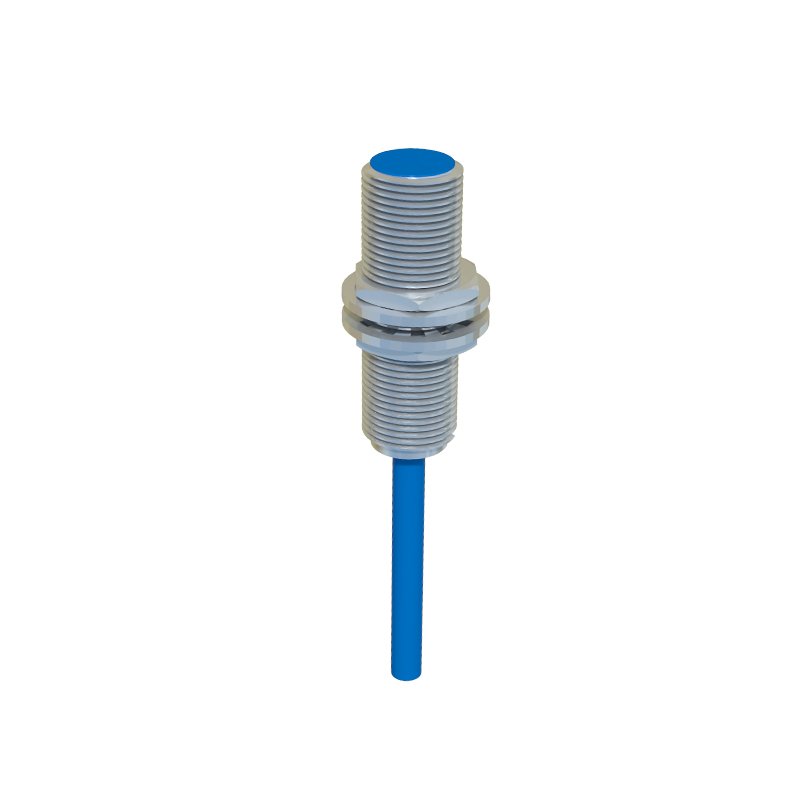
Environmental ratings are non-negotiable. An IP67 rating signifies protection against dust ingress and temporary immersion in water, while IP69K indicates ability to withstand high-pressure, high-temperature washdowns—essential for food and pharmaceutical industries. Operating voltage ranges, such as 10-30V DC, and temperature tolerance (e.g., -25 to 70°C) must align with the installation environment.
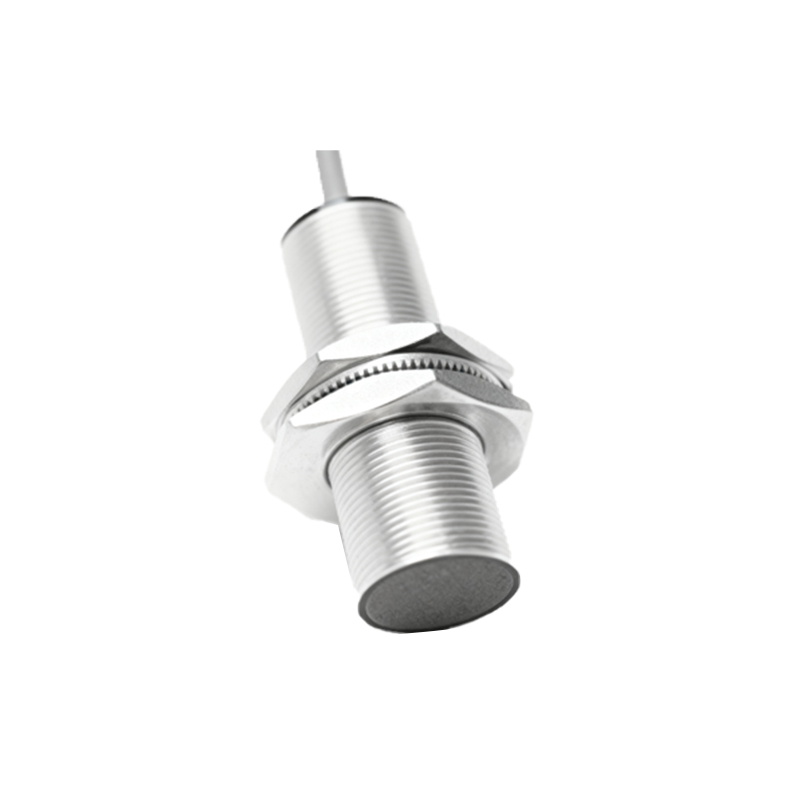
Selecting the correct model involves a systematic approach. First, identify the target material (steel, aluminum, plastic). Second, determine the required sensing distance, considering a safety factor of 70-80% of the nominal Sn. Third, assess the electrical requirements: output type (NPN/PNP/NO/NC), voltage, and current capacity. Fourth, evaluate the housing material and protection class relative to environmental hazards like oils, chemicals, or physical abrasion. Finally, consider mounting style—flush or non-flush. Flush-mounted square sensors can be embedded in metal without affecting performance, whereas non-flush types offer longer ranges but require a clear lateral area.
In practice, square proximity sensors are ubiquitous. On conveyor systems, models with high switching frequencies monitor product presence. In robotic welding cells, rugged sensors with weld-field immunity (often labeled W in model codes) detect fixture positions. In automated assembly, precise miniature square sensors verify component insertion.
Maintenance is generally minimal, but periodic checks are advised. Verify the sensor's output with an indicator or multimeter. Ensure the sensing face remains clean from debris buildup, which can attenuate the sensing field. Check wiring integrity and connector seals for corrosion. Leveraging diagnostic features via IO-Link can preempt failures by monitoring parameters like operating temperature or signal strength.
In conclusion, the square proximity sensor is a versatile and rugged solution for industrial sensing. Understanding model specifications—from standard inductive types to specialized capacitive or IO-Link variants—empowers engineers to design reliable and efficient automation systems. Proper selection based on target, environment, and electrical interface ensures optimal performance and longevity, minimizing downtime and maximizing productivity across countless applications.