Point laser sensors have become indispensable tools across a wide range of industries due to their precision, reliability, and versatility. These sensors operate by emitting a focused laser beam onto a target surface and measuring the reflected light to determine distance, displacement, or presence. Unlike line or area scanners, point laser sensors concentrate energy on a single spot, enabling high-accuracy measurements even in challenging environments.
In manufacturing and automation, point laser sensors play a critical role in quality control and process optimization. They are commonly used for precise positioning of components on assembly lines, ensuring that parts are correctly aligned before welding or fastening. For example, in automotive manufacturing, these sensors verify the exact placement of engine parts, brake systems, and body panels, reducing errors and enhancing safety standards. Additionally, they monitor thickness in rolling mills and detect minute defects in semiconductor wafers, where micron-level accuracy is essential.

The logistics and packaging sector benefits significantly from point laser sensors in dimensioning and sorting applications. By quickly measuring the height, width, and length of packages, these sensors help automate warehouse operations, optimize storage space, and calculate shipping costs accurately. They also enable robotic systems to identify and handle items of varying sizes, improving efficiency in distribution centers. In conveyor systems, point laser sensors detect jams or misaligned items, triggering automatic adjustments to prevent downtime.
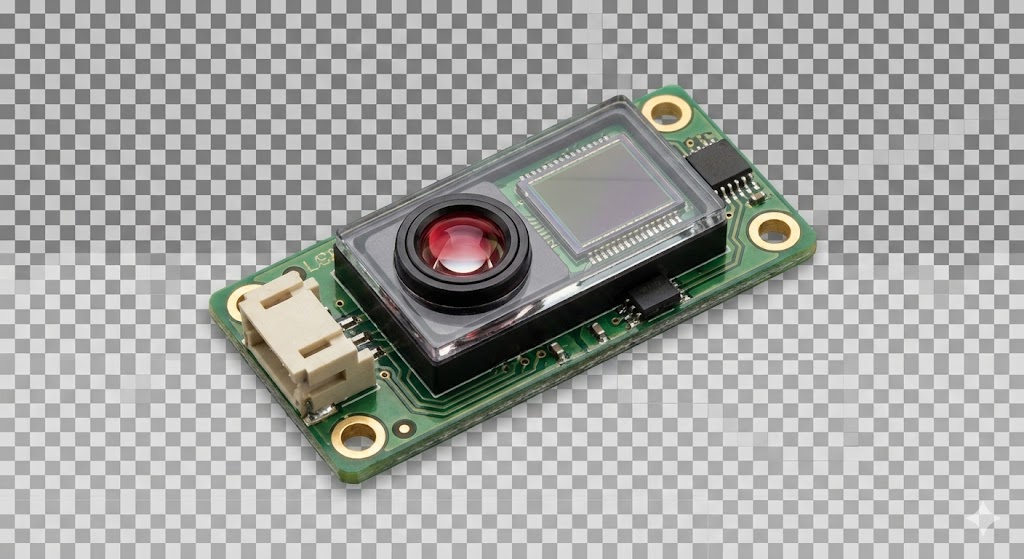
In robotics and autonomous systems, point laser sensors provide essential data for navigation and object recognition. Mobile robots use them to map surroundings, avoid obstacles, and perform tasks like picking and placing objects in unstructured environments. Their ability to deliver real-time distance measurements supports the development of safer and more responsive autonomous vehicles, where they complement other sensing technologies like LiDAR and cameras.
Environmental monitoring and infrastructure inspection represent another key application area. Point laser sensors measure water levels in rivers and reservoirs, track structural deformations in bridges and buildings, and assess wear on railway tracks. Their non-contact nature allows for measurements in hazardous or hard-to-reach locations, such as monitoring volcanic activity or inspecting pipelines in corrosive environments. This data aids in predictive maintenance, helping to prevent failures and extend asset lifespans.
The medical field leverages point laser sensors for diagnostic and therapeutic purposes. In imaging devices, they assist in aligning equipment for procedures like laser eye surgery or dermatological treatments. They also enable precise measurements in dental scans and orthopedic implants, ensuring custom-fitted devices that improve patient outcomes. Research laboratories use these sensors to monitor cell growth or fluid levels in experiments, where contamination risks must be minimized.
Despite their advantages, selecting the right point laser sensor requires consideration of factors like measurement range, resolution, and environmental conditions. For instance, sensors with higher laser classes may be needed for outdoor use with ambient light interference, while compact models suit space-constrained applications. Innovations in miniaturization and connectivity, such as IoT integration, are expanding their potential, allowing for smarter, data-driven decision-making in industrial and consumer applications.
In summary, point laser sensors are vital components in modern technology, driving efficiency and accuracy across diverse fields. From factory floors to research labs, their ability to deliver reliable, non-contact measurements supports innovation and operational excellence, making them a cornerstone of automated and intelligent systems worldwide.