Magnetic proximity sensors are fundamental components in modern industrial automation and consumer electronics. Unlike optical or ultrasonic sensors, they detect the presence or absence of a magnetic field, typically generated by a permanent magnet. This operational principle grants them unique advantages, making them indispensable in environments where reliability, durability, and non-contact sensing are paramount.
The core technology behind these sensors is based on the Hall effect or magnetoresistive (MR) elements. Hall-effect sensors generate a voltage difference (the Hall voltage) across an electrical conductor when a magnetic field is applied perpendicular to the current flow. This voltage signal is then conditioned and amplified to produce a clear digital or analog output signal indicating the magnet's proximity. Magnetoresistive sensors, on the other hand, change their electrical resistance in the presence of a magnetic field, offering high sensitivity and the ability to detect both the strength and direction of the field. Reed switches, a simpler and older technology, consist of two ferromagnetic reeds sealed within a glass tube. When a magnet approaches, the reeds attract each other and make contact, closing an electrical circuit.
The choice of technology dictates the sensor's characteristics. Hall-effect sensors are renowned for their solid-state reliability, high switching frequency, and ability to operate in dirty, oily, or wet conditions where physical contact or optical paths would be compromised. They are commonly used for speed sensing (e.g., detecting gear teeth or motor RPM), position detection (e.g., in linear actuators or valve positioning), and current sensing. Magnetoresistive sensors excel in applications requiring precise angular or linear position measurement, such as in automotive steering angle sensors or high-resolution encoders. Reed switches, while slower and subject to mechanical wear over millions of cycles, offer simplicity, low power consumption, and excellent isolation between the sensing element and the circuit, making them ideal for low-power safety interlocks and liquid level detection in tanks.
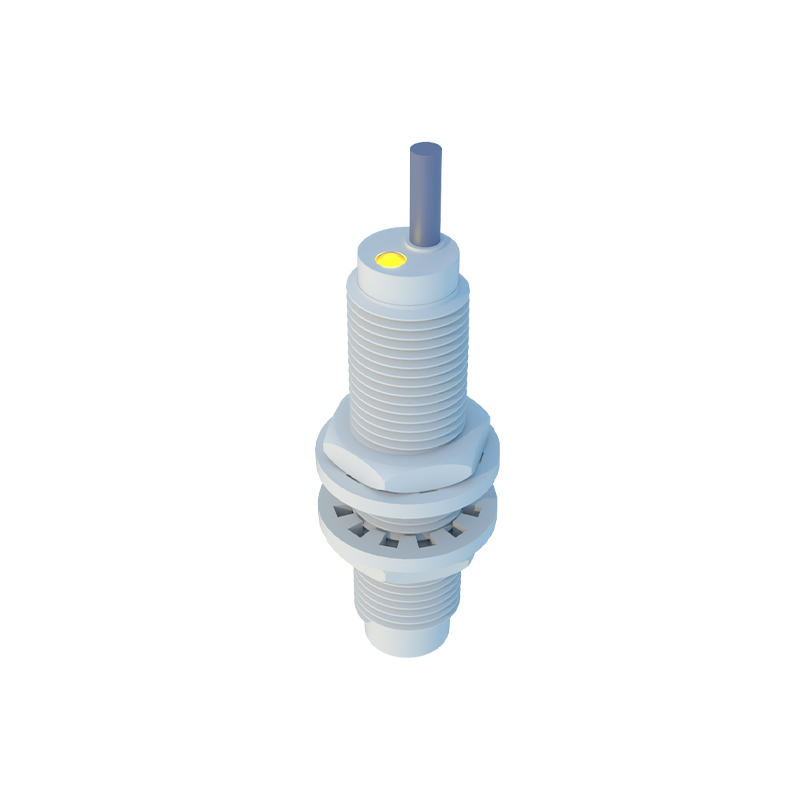
Selecting the right magnetic proximity sensor requires careful consideration of several key parameters. First is the sensing distance, which varies significantly based on the magnet's strength and size, as well as the sensor's sensitivity. Designers must ensure reliable operation within the required gap. The output type is crucial: digital outputs (PNP/NPN) provide simple on/off signals for presence detection, while analog outputs (0-10V, 4-20mA) offer continuous feedback proportional to the magnetic field strength, useful for precise positioning. Environmental factors are critical. Most industrial magnetic sensors boast high Ingress Protection (IP) ratings (e.g., IP67, IP69K), ensuring resistance to dust, water jets, and washdowns. They are also inherently immune to ambient light, non-metallic dust, and most chemical vapors. However, strong external magnetic fields or ferrous metal chips can interfere with operation, necessitating proper shielding or installation.
Applications span virtually every industry. In automotive systems, they are ubiquitous in anti-lock braking systems (wheel speed sensors), transmission systems, and door/trunk ajar detection. Factory automation relies on them for end-of-travel detection on cylinders, conveyor belt monitoring, and robotic arm positioning. In consumer appliances, they provide lid closure detection in washing machines and position feedback in smart home devices. Their robustness makes them perfect for harsh environments like agricultural machinery, construction equipment, and offshore platforms.
When integrating a magnetic proximity sensor, attention to installation details ensures optimal performance. The orientation between the sensor and the magnet is vital; most sensors have a specific sensing face and are sensitive to the magnetic pole. The use of a bi-polar (latching) or uni-polar magnet must match the sensor's specification. Proper mounting, often in non-ferrous materials like aluminum or stainless steel, prevents magnetic shunting, which can drastically reduce the effective sensing range. Electrical wiring should follow EMC guidelines to prevent noise from affecting sensitive analog signals.
In conclusion, magnetic proximity sensors offer a robust, versatile, and highly reliable solution for non-contact detection and measurement. By understanding the underlying technologies—Hall effect, magnetoresistive, and reed switch—and carefully evaluating application requirements such as sensing distance, output signal, and environmental conditions, engineers can select and implement the ideal sensor to enhance system reliability, safety, and performance. Their continued evolution, including miniaturization and integration with digital interfaces like IO-Link, promises even broader adoption in the interconnected landscape of Industry 4.0 and the Internet of Things.