Optical interference remains a significant challenge in the reliable operation of laser sensors across various industrial environments. Laser sensors, which operate on principles such as time-of-flight, triangulation, or laser Doppler vibrometry, rely on the precise detection of reflected or scattered light. However, their performance can be severely degraded by external optical noise sources, leading to measurement inaccuracies, signal dropout, or complete system failure. This article delves into the primary sources of optical interference, their impact on sensor performance, and established engineering strategies for mitigation.
The most common sources of optical interference are ambient light and cross-talk. Ambient light interference originates from high-intensity environmental lighting, such as direct sunlight, halogen lamps, or strobe lights commonly found in manufacturing plants and outdoor applications. These external light sources can saturate the sensor's photodetector, effectively drowning out the weak return signal from the laser itself. Cross-talk, on the other hand, occurs in applications where multiple laser sensors operate in close proximity. The emitted beam from one sensor can be detected by the receiver of another, creating ghost signals and erroneous distance or presence readings. This is particularly problematic in automated warehouses with dense arrays of sensors on robotic vehicles or in complex assembly lines.
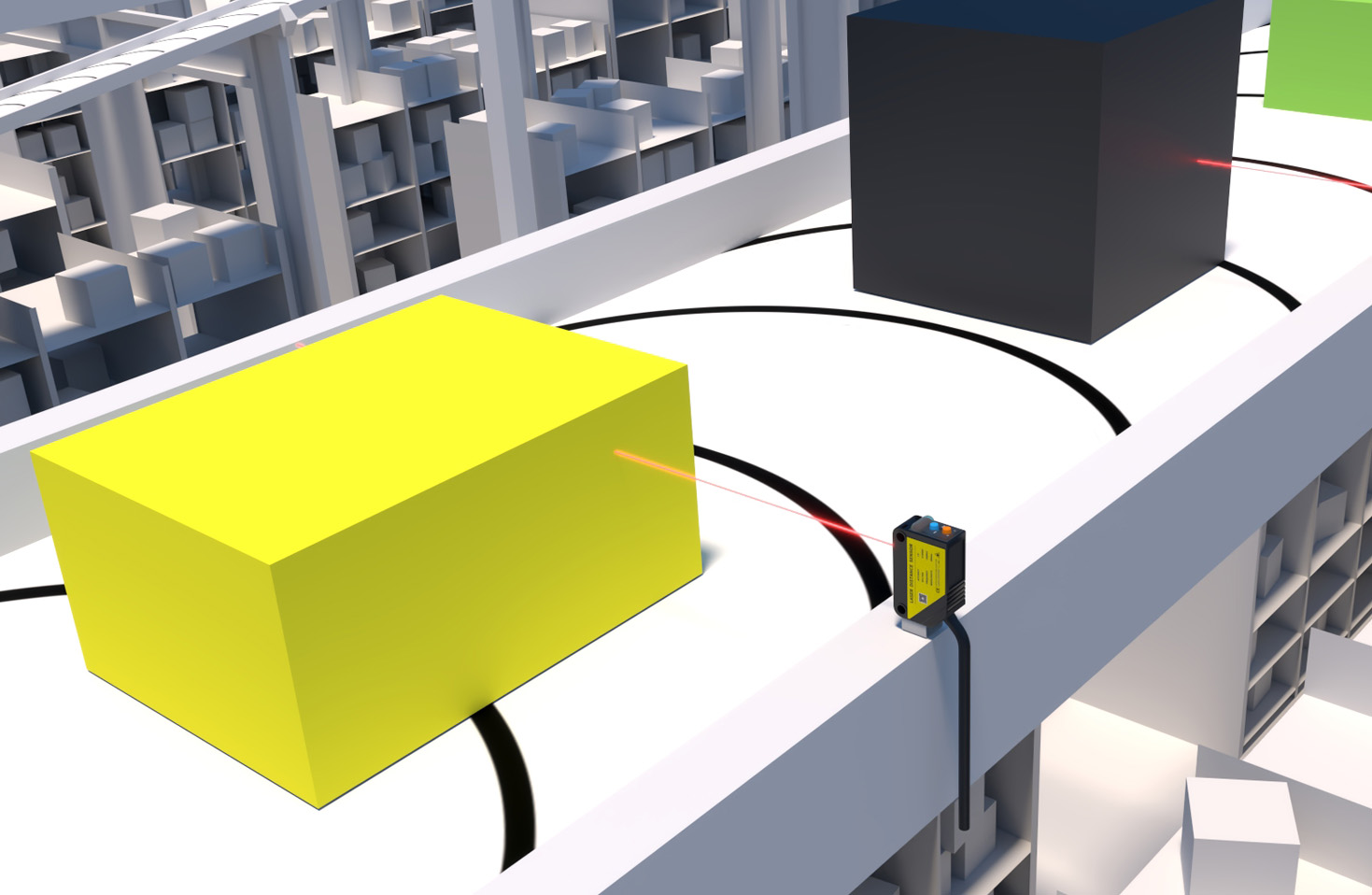
Beyond these, interference can also stem from specular reflections and background radiation. When a laser beam strikes a highly reflective surface (e.g., polished metal, glass), it can create a mirror-like reflection that does not return to the receiver lens, causing a loss of signal. Conversely, it might reflect into the receiver from an unintended path, creating a false measurement point. Background radiation from other optical equipment, such as infrared heaters or other non-coherent light sources operating at similar wavelengths, can also introduce noise into the detection circuit.
The consequences of unmitigated optical interference are substantial. In precision manufacturing, such as in semiconductor fabrication or automotive body-in-white assembly, inaccurate measurements due to interference can lead to defective products, costly rework, and production downtime. In safety-critical applications like light curtains or intrusion detection systems, interference could result in a failure to detect a hazard, posing serious risks to personnel and equipment.
Fortunately, several robust engineering solutions exist to combat these issues. Spectral filtering is a fundamental approach. By incorporating narrow-band optical filters in front of the receiver that match the laser's specific wavelength (e.g., 905 nm for many industrial lidars), a significant portion of broadband ambient light can be rejected. For pulsed time-of-flight sensors, temporal gating is highly effective. The receiver is only activated during the precise time window when the expected return pulse should arrive, ignoring any light signals outside this window, thus eliminating most ambient light and cross-talk from unsynchronized sources.
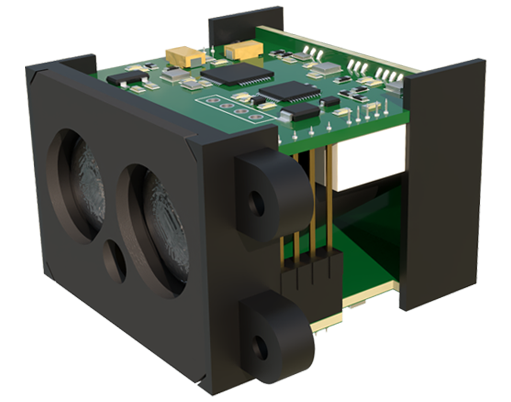
Modulation techniques add another layer of defense. Instead of a simple pulsed or continuous-wave laser, the output can be modulated with a specific high-frequency code. The receiver's electronics are then designed to only recognize and demodulate signals carrying this specific code, making the sensor immune to unmodulated light sources and cross-talk from sensors using different codes. Physical design also plays a crucial role. Proper mechanical shrouding, baffles, and the strategic orientation of sensors can minimize the direct path of ambient light into the receiver and reduce the likelihood of cross-talk. Using lasers with a low degree of coherence and ensuring the sensor is not pointed at highly reflective surfaces are simple yet vital installation considerations.
For systems operating in dynamically lit environments, adaptive thresholding and digital signal processing (DSP) algorithms can provide real-time compensation. These algorithms can distinguish between the characteristic signature of a true return signal and noise, adjusting detection thresholds on the fly to maintain reliability even as background light conditions change.
In conclusion, while optical interference presents a non-trivial obstacle for laser sensor deployment, a systematic understanding of its sources enables the implementation of effective countermeasures. A combination of optical, electronic, mechanical, and algorithmic strategies—selected based on the specific application, environment, and cost constraints—is essential for ensuring the robustness, accuracy, and long-term reliability of laser sensing systems in modern industry. Engineers must consider interference mitigation as an integral part of the sensor selection, system design, and installation process.