In the realm of industrial automation and electronic design, proximity and photoelectric sensors are indispensable for non-contact detection, object positioning, and counting. A critical component defining their performance and application suitability is the operating wavelength, with the infrared (IR) spectrum playing a particularly dominant role. This article delves into the technical specifics of infrared bands utilized in these sensors, explaining their principles, advantages, and typical use cases.
At its core, a standard active photoelectric sensor consists of an emitter (light source) and a receiver. The emitter projects a light beam; the presence or absence of an object is detected based on how this beam is affected—either reflected back to the receiver (reflective mode), interrupted (through-beam mode), or reflected off a background (retro-reflective mode). While some sensors use visible red light for easy alignment, the majority, especially for demanding industrial environments, operate within the infrared spectrum, typically in the near-infrared (NIR) range, from approximately 850 nm to 950 nm.
The choice of infrared, specifically around 880 nm, is not arbitrary. It is driven by several key engineering factors. First, IR light is invisible to the human eye, eliminating potential distraction or annoyance in operational settings. More importantly, IR LEDs (Light Emitting Diodes), which are the most common light sources for these sensors, offer high efficiency and output power at these wavelengths, leading to longer sensing ranges and better signal-to-noise ratios. Furthermore, the ambient light immunity is significantly enhanced. Sunlight and standard artificial lighting contain substantial visible light but have relatively less intense, consistent radiation in the specific NIR band used by sensors. Modern sensors incorporate optical filters tuned to the emitter's wavelength, allowing the receiver to largely ignore fluctuating ambient light, thus ensuring stable operation even in brightly lit conditions.
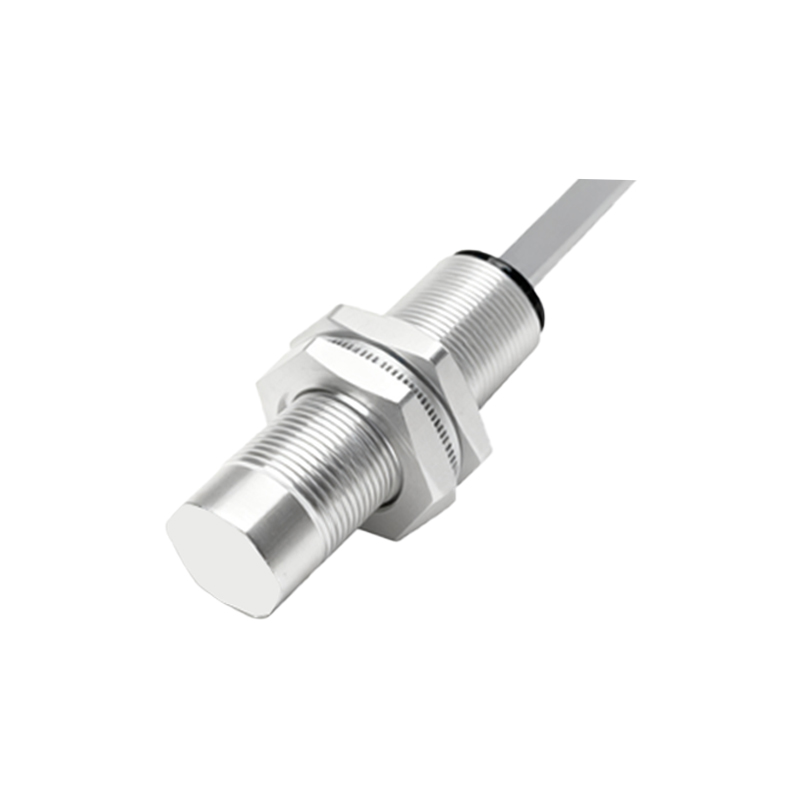
The infrared spectrum itself is broad. Proximity sensors, often used for short-range detection (a few millimeters to tens of millimeters) in consumer electronics (e.g., automatic screen turn-off in smartphones), frequently use even slightly longer wavelengths. They work on the principle of modulated IR reflection. The sensor emits a low-power, modulated IR signal and measures the intensity of the reflected signal from a nearby object. The modulation is crucial to distinguish the sensor's own signal from ambient IR noise. These sensors are finely tuned for specific reflectivity profiles and distances.
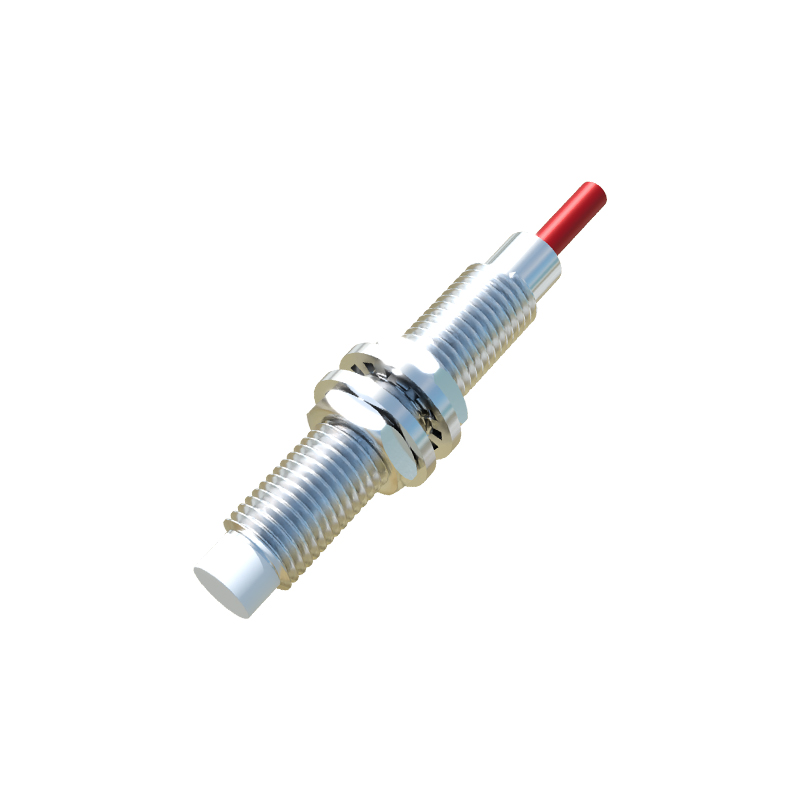
For standard industrial photoelectric sensors, the 850-950 nm NIR band represents a sweet spot. It provides an excellent balance between component availability (high-performance, low-cost IR LEDs and phototransistors or photodiodes), optical power, and interference rejection. Sensors designed for longer ranges or detection through certain materials might use specific wavelengths. For instance, some sensors operate at 1550 nm, a wavelength where water absorption is higher and which is safer for eyes, but these are more specialized and costly.
A critical consideration is the material properties of the target object. Different materials reflect and absorb infrared light differently. A matte black object, which absorbs most visible light, might still reflect a significant portion of infrared radiation, making it detectable. Conversely, transparent materials like clear glass or certain plastics may be transparent to visible light but opaque to specific IR wavelengths, allowing for reliable detection. Understanding the spectral response is therefore vital for selecting the right sensor for a given application, such as in packaging, material handling, or assembly line verification.
In conclusion, the operational wavelength is a fundamental specification for proximity and photoelectric sensors. The strategic use of the near-infrared spectrum, primarily around 880 nm, provides a robust solution offering invisibility, high power efficiency, superior immunity to ambient light interference, and reliable performance across a vast array of industrial and commercial applications. Engineers must match the sensor's infrared characteristics with the target's properties and environmental conditions to ensure optimal and reliable system performance.