In the realm of industrial automation, precision and reliability are paramount. Among the myriad of technologies driving this precision, laser edge detection sensors, often referred to as laser web guiding or laser alignment sensors, have emerged as a cornerstone for ensuring material handling accuracy. These sophisticated devices utilize laser beams to detect the precise position or edge of materials—such as paper, film, metal, textiles, or plastics—as they move rapidly through production lines. Unlike traditional mechanical or ultrasonic sensors, laser sensors offer non-contact measurement with exceptional resolution and speed, making them indispensable in high-speed manufacturing environments.
The core principle involves projecting a focused laser line onto the target material. A high-resolution receiver, typically a CMOS or CCD array, captures the reflected light. By analyzing the displacement or shadow cast by the material's edge, the sensor calculates the exact lateral position in real-time. This data is transmitted to a controller, which adjusts guiding rollers, actuators, or other mechanisms to correct any deviation, ensuring the material remains perfectly aligned. This process, known as closed-loop control, minimizes waste, reduces downtime, and enhances product quality.
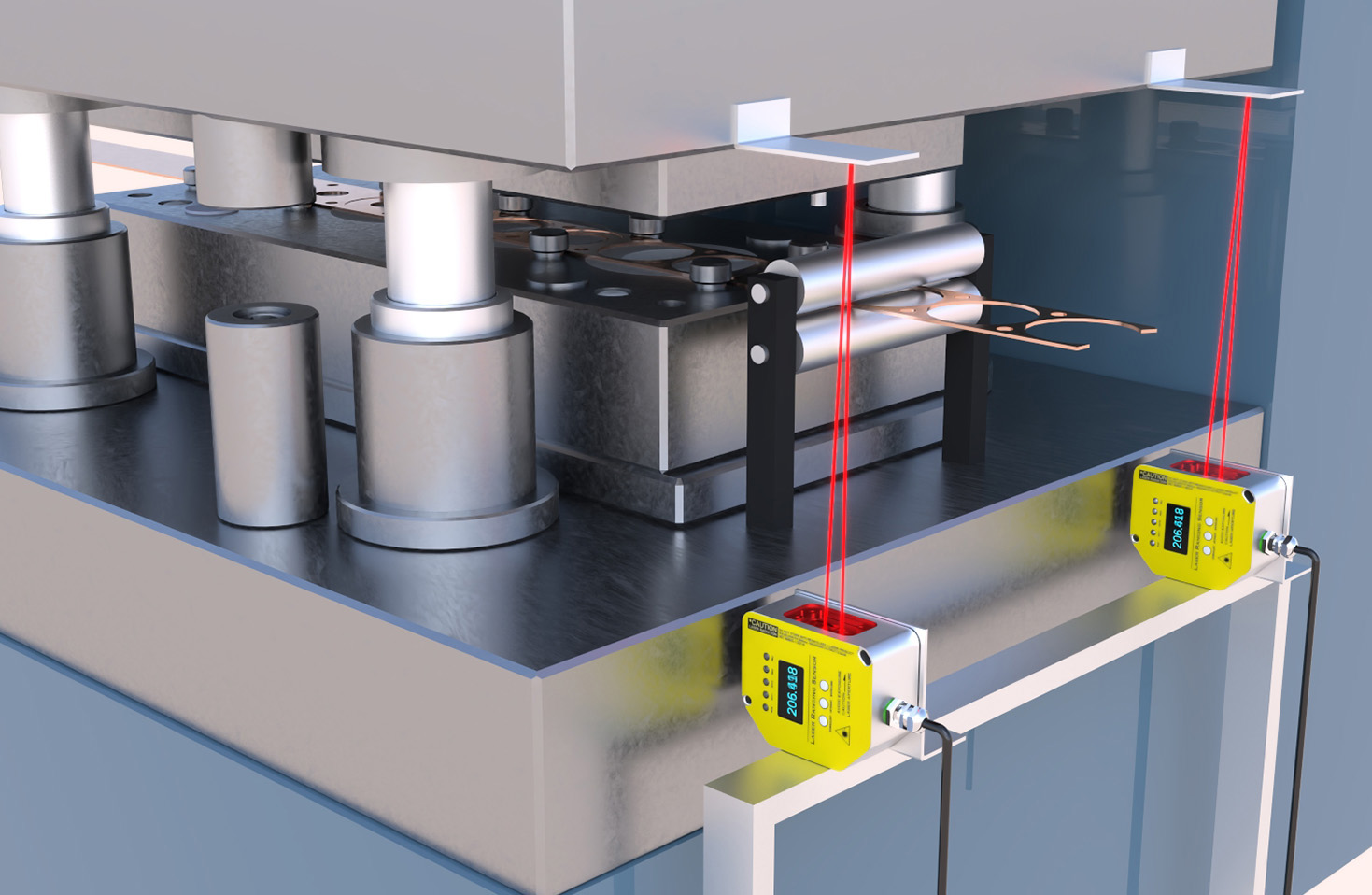
Key applications span numerous industries. In the converting industry—for paper, film, and foil processing—laser edge sensors maintain precise alignment during slitting, coating, and printing operations, preventing costly misalignment that leads to wrinkles, tears, or print registration errors. In the textile sector, they guide fabrics through dyeing and finishing machines, ensuring consistent edge control for uniform quality. Metal processing lines, such as those for steel or aluminum coils, rely on these sensors to track edges during cutting or rolling, safeguarding against material damage and optimizing yield. Additionally, in battery manufacturing for electric vehicles, laser sensors ensure precise electrode alignment, a critical factor for performance and safety.
The advantages of modern laser edge detection sensors are multifaceted. They exhibit high accuracy, often down to micron-level resolution, and fast response times, capable of handling line speeds exceeding 1,000 meters per minute. Their non-contact nature eliminates wear and tear, reducing maintenance needs and avoiding damage to sensitive materials. Advanced models feature robust designs with IP67 ratings, resisting dust, moisture, and vibrations common in industrial settings. Integrated software often provides intuitive interfaces for easy setup, diagnostics, and data logging, facilitating integration with Industrial Internet of Things (IIoT) systems for predictive maintenance and process optimization.

However, successful implementation requires careful consideration. Material properties—like color, transparency, reflectivity, or surface texture—can affect sensor performance. For instance, highly reflective or transparent materials may necessitate sensors with adjustable laser intensity or specialized algorithms. Environmental factors such as ambient light, temperature fluctuations, or airborne contaminants must also be accounted for during installation. Regular calibration and adherence to manufacturer guidelines ensure long-term reliability.
Looking ahead, trends like Industry 4.0 are pushing laser sensor technology toward greater intelligence. Integration with machine learning algorithms enables adaptive control, where sensors can learn and compensate for complex material behaviors autonomously. Enhanced connectivity via Ethernet/IP, PROFINET, or wireless protocols allows seamless data exchange with supervisory systems, enabling real-time analytics and remote monitoring. As industries strive for higher efficiency and sustainability, the role of laser edge detection sensors will only expand, driving innovations in automation that prioritize precision, flexibility, and cost-effectiveness.
In conclusion, laser edge detection sensors represent a critical enabler of modern industrial automation. By providing accurate, real-time positional feedback, they empower manufacturers to achieve unparalleled control over material handling processes. From reducing waste to improving product consistency, their impact is profound, making them a vital investment for any operation seeking to thrive in an increasingly competitive and automated landscape.