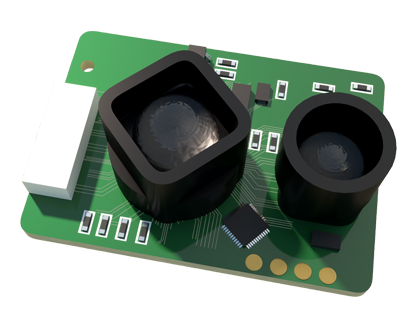
In the realm of precision measurement and automation, the miniature laser displacement sensor has emerged as a pivotal tool. These compact, high-performance devices offer non-contact measurement with exceptional accuracy, making them indispensable across various industries, from semiconductor manufacturing to automotive assembly. This article delves into the operational principles, key advantages, diverse applications, and critical factors for selecting the right sensor for your specific needs.
At its core, a miniature laser displacement sensor operates on the principle of optical triangulation. The sensor projects a focused laser beam onto the target surface. The reflected light from this point is then captured by a receiving lens at a specific angle and focused onto a position-sensitive detector, typically a CMOS or CCD array. Any change in the distance to the target causes the position of the reflected light spot on the detector to shift. The sensor's internal processor calculates this displacement with high precision, converting it into a digital or analog output signal representing the exact distance. This method allows for measurements that are immune to the wear and tear associated with physical contact probes.
The defining characteristic of these sensors is their miniaturized form factor, often with housing dimensions measuring only a few centimeters. This compactness enables installation in space-constrained environments where traditional sensors cannot fit. Despite their small size, they deliver remarkable performance. Key specifications include measuring range, which can vary from a few millimeters to several hundred millimeters; resolution, often in the sub-micron range for high-end models; linearity error, indicating measurement accuracy across the entire range; and sampling speed, which can reach tens of thousands of measurements per second for dynamic applications. The choice of laser, usually a red or blue laser diode, also affects performance, with blue lasers offering better performance on shiny or transparent surfaces due to their shorter wavelength.
The advantages of using miniature laser displacement sensors are manifold. Their non-contact nature eliminates the risk of damaging delicate surfaces and prevents sensor wear, ensuring long-term stability and reliability. They provide high-speed, real-time measurement, which is crucial for inline inspection and process control. Furthermore, they are capable of measuring a wide variety of materials, including metals, plastics, rubber, and even liquids, though surface characteristics like color, reflectivity, and texture must be considered. Their digital interfaces, such as Ethernet/IP, PROFINET, or simple analog outputs, facilitate easy integration into modern industrial control systems and PLCs.
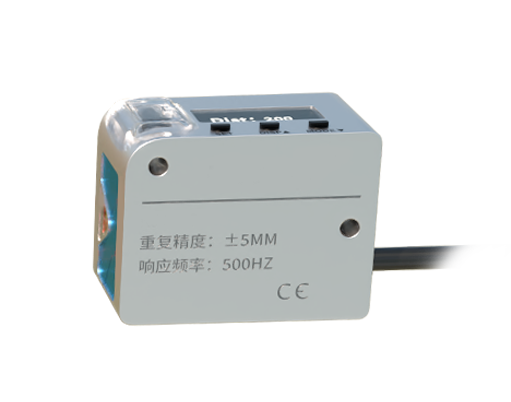
Applications are vast and continually expanding. In electronics manufacturing, they are used to measure component height, coplanarity of BGA balls, and PCB warpage. In the automotive sector, they verify gap and flush dimensions between body panels, measure tire tread depth, and inspect brake disc thickness. Robotics utilize them for precise positioning and guidance. They also play critical roles in 3D profiling, thickness measurement of moving webs or films, and vibration analysis. The ability to perform these tasks at high speeds on production lines directly contributes to improved quality control, reduced waste, and increased throughput.
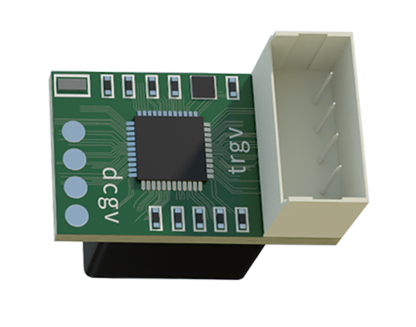
Selecting the appropriate miniature laser displacement sensor requires careful consideration of several parameters. First, clearly define the application: required measuring range, target material, surface finish, and necessary accuracy. For highly reflective or transparent objects, models with specialized algorithms or blue laser technology are preferable. Environmental factors like ambient light, temperature fluctuations, and potential contamination must be accounted for; many sensors feature robust housings (IP67 ratings are common) and built-in filters for such conditions. The required output and interface should match the existing control architecture. Finally, consider support elements like mounting hardware, cabling, and the availability of configuration software for easy setup and calibration.
In conclusion, miniature laser displacement sensors represent a sophisticated convergence of optics, electronics, and precision engineering. Their ability to deliver fast, accurate, and reliable non-contact measurements in a tiny package has revolutionized quality assurance and process automation. By understanding their working principles and carefully matching sensor specifications to application demands, engineers and technicians can unlock significant gains in efficiency, product quality, and operational intelligence across countless industrial scenarios.