While laser air sensors have gained significant attention in recent years for their ability to detect fine particulate matter (PM2.5, PM10) with high precision, they are not without notable limitations. A thorough understanding of these drawbacks is crucial for researchers, engineers, and consumers making informed decisions about air quality monitoring technologies. This analysis delves into the primary disadvantages associated with laser-based particulate sensors.
One of the most prominent disadvantages is their sensitivity to environmental conditions. Laser scattering, the core principle behind these sensors, can be significantly influenced by ambient humidity. High humidity levels cause water vapor to condense on particles, altering their size and optical properties. This leads to inaccurate readings, often overestimating particulate concentrations. Similarly, extreme temperatures can affect the laser diode's performance and the stability of the internal components, potentially causing drift in calibration over time. For reliable data, these sensors often require installation in controlled environments or complex algorithmic compensation, which increases system complexity and cost.
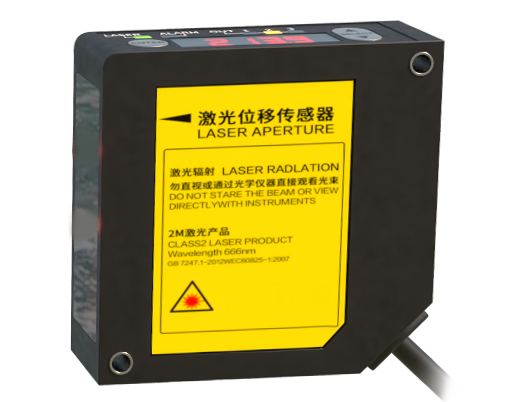
A related and critical issue is the lack of specificity in particle identification. Standard laser scattering sensors provide a mass concentration estimate based on scattered light intensity but cannot distinguish between different particle types. For instance, they cannot differentiate between relatively harmless dust (like pollen or soil) and highly hazardous particles like black carbon from combustion, heavy metals, or airborne viruses. This is a fundamental limitation for applications requiring health risk assessment or source apportionment, where knowing the chemical composition is as important as knowing the particle size and quantity.

Calibration and long-term stability present ongoing challenges. Laser sensors typically require initial calibration against reference-grade instruments, such as beta attenuation monitors or gravimetric methods, to establish a correlation curve. However, this calibration is not permanent. The laser source can degrade in intensity over thousands of hours of operation. Furthermore, contamination of the optical chamber—dust accumulation on the laser window or the photodetector—is inevitable in real-world use. This fouling scatters or blocks light, leading to progressively inaccurate readings unless the sensor is regularly cleaned and recalibrated, a maintenance requirement often overlooked in consumer-grade devices.
Cost remains a significant barrier for widespread, high-quality deployment. While low-cost laser sensor modules (like the PMS5003) have revolutionized the consumer market, they often compromise on components and calibration rigor. High-performance, research-grade laser aerosol spectrometers that offer better size resolution and stability are prohibitively expensive, limiting their use to professional laboratories and regulatory stations. The total cost of ownership must also factor in the maintenance, calibration, and potential replacement costs mentioned earlier.
Finally, there are inherent physical limitations to the measurement principle. Most low-to-mid-range laser sensors struggle with very low and very high concentration ranges. At low concentrations, noise from the photodetector circuit can become significant relative to the weak scattering signal, reducing the signal-to-noise ratio and the lower detection limit. At very high concentrations, the phenomenon of "coincidence error" occurs, where multiple particles are in the laser beam simultaneously, and the sensor counts them as one larger particle, underestimating the true particle count. While advanced models implement coincidence correction algorithms, it adds to the cost and complexity.
In conclusion, laser air sensors are powerful tools for indicative particulate matter monitoring but are best understood as sophisticated estimators rather than definitive analyzers. Their readings must be interpreted with an awareness of their susceptibility to environmental interference, lack of chemical specificity, calibration drift, and cost versus performance trade-offs. For critical health, safety, or regulatory applications, their data should be supplemented with other measurement techniques or validated against higher-class reference instruments. Future advancements may address some issues through multi-wavelength lasers, integrated humidity and temperature sensors with advanced compensation, and self-cleaning mechanisms, but the core physical limitations will likely persist.