In the world of automation, consumer electronics, and industrial safety, proximity sensor models play a crucial, often unseen role. These devices detect the presence or absence of an object within a specific range without any physical contact. Their ability to provide reliable, non-contact sensing makes them indispensable in countless applications, from smartphone screens to complex assembly lines. Understanding the different models, their underlying operating principles, and their ideal use cases is essential for engineers, designers, and procurement specialists.
The fundamental principle behind all proximity sensors is the emission of a field or beam and the analysis of changes in that signal caused by a target object. The method of emission and detection defines the primary categories of sensor models. The most common types include inductive, capacitive, ultrasonic, and photoelectric sensors.
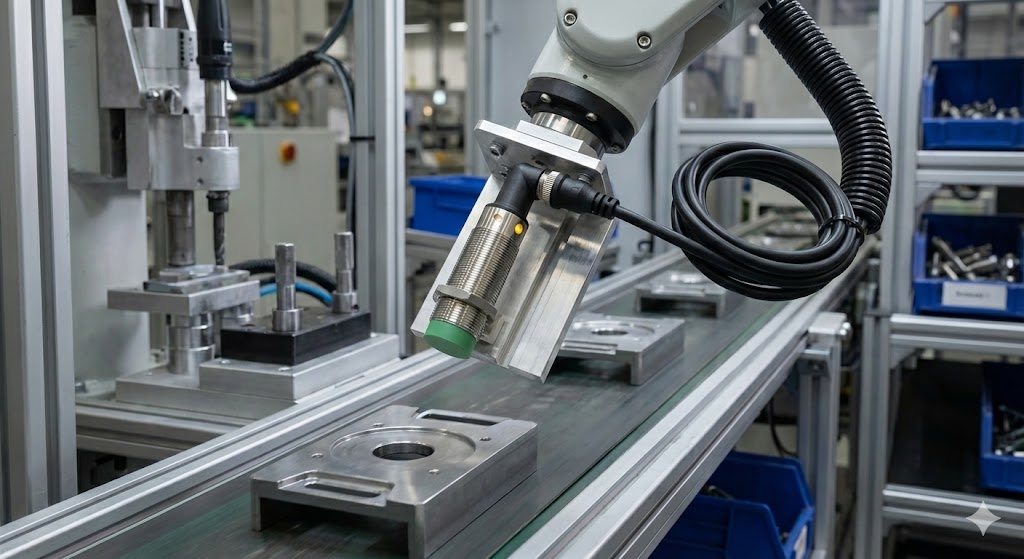
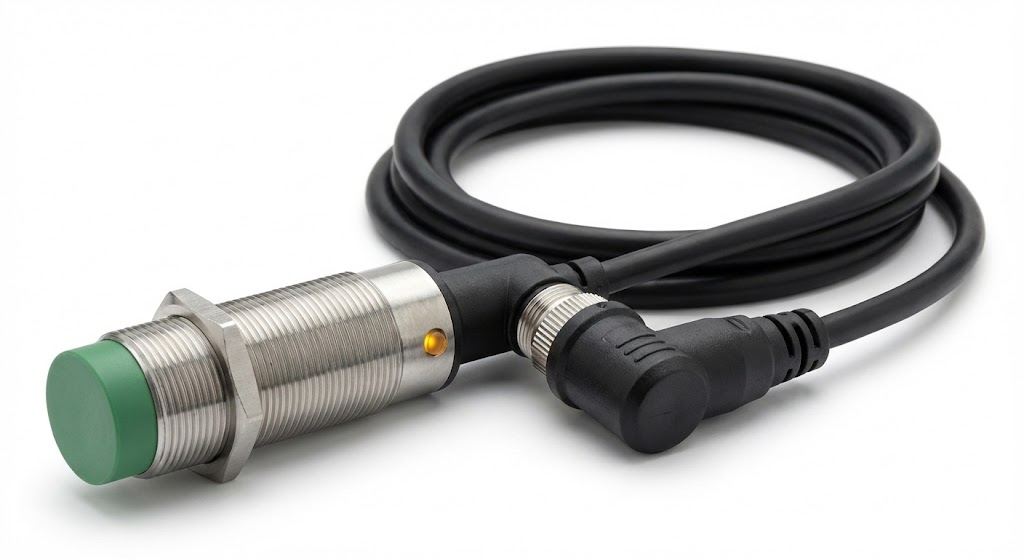
Inductive proximity sensors are the workhorses of metal detection in industrial environments. They generate an electromagnetic oscillating field from a coil located at the sensing face. When a metallic object enters this field, it induces eddy currents within the target, which dampens the oscillation of the sensor's own circuit. This change is detected, triggering an output switch. These models are highly robust, resistant to environmental factors like dust and oil, and are ideal for detecting ferrous and non-ferrous metals. Typical applications include counting metal parts, determining position in machinery, and as safety interlocks.
Capacitive proximity sensors, on the other hand, can detect both metallic and non-metallic materials, including liquids, plastics, wood, and granular substances. They operate by generating an electrostatic field. When any object with a dielectric constant different from air enters this field, it changes the capacitance of the sensor's circuit, leading to a state change. This makes them versatile for tasks like liquid level detection in tanks, monitoring presence of plastic caps on bottles, or sensing powdered materials. Their sensitivity is often adjustable to compensate for different target materials or to ignore unwanted backgrounds.
Ultrasonic proximity sensors utilize sound waves beyond the human hearing range. They emit high-frequency ultrasonic pulses and measure the time it takes for the echo to return from a target object. This time-of-flight measurement allows them to not only detect presence but also precisely measure distance. These models excel in challenging environments with smoke, dust, or varying light conditions where optical sensors might fail. They are commonly used for object detection on conveyor belts, fill level control in bins, and as parking assist systems in vehicles.
Photoelectric sensors represent a broad category that uses light, typically infrared, visible red, or laser. They are subdivided into three main models based on their light path configuration. Through-beam models consist of a separate emitter and receiver; detection occurs when the target object breaks the light beam. They offer the longest sensing ranges and high reliability. Retro-reflective models use a single unit that emits light and receives its reflection from a dedicated reflector; the target breaks this beam. Diffuse or proximity sensors have the emitter and receiver in one housing and detect light reflected directly off the target object. Photoelectric sensors are extremely common for detecting small objects, color differentiation, and in clean environments.
Selecting the right proximity sensor model requires a careful analysis of several key parameters. The nature of the target material is paramount: Is it metal, plastic, liquid, or transparent? The required sensing distance, or range, must be specified, noting that published ranges are typically for standard targets. The operating environment cannot be ignored; factors like temperature extremes, washdown conditions, presence of chemicals, or electromagnetic interference will dictate housing material (often stainless steel or plastic) and protection ratings like IP67 or IP69K. The output type is also critical, whether it's a simple two-wire AC/DC switch, a three-wire NPN/PNN transistor output, or an analog 4-20mA or 0-10V signal for proportional distance measurement.
Furthermore, modern sensor models come with advanced features. Some offer IO-Link digital communication for detailed parameter setting and diagnostic data exchange within Industry 4.0 frameworks. Others have built-in logic functions like timers or counters. The physical form factor—barrel-shaped, rectangular, or ring-shaped—must also fit the mechanical constraints of the application.
In conclusion, the landscape of proximity sensor models is diverse, each engineered to solve specific sensing challenges. From the rugged, metal-only detection of inductive sensors to the versatile material handling of capacitive types, and from the precise distance measurement of ultrasonics to the fast, flexible detection of photoelectrics, the correct choice hinges on a clear understanding of the application's demands. By systematically evaluating the target, range, environment, and required output, one can select the optimal sensor model to ensure reliability, efficiency, and safety in any automated system.