In the world of industrial automation, robotics, and consumer electronics, the ability to detect the presence, absence, or position of an object without physical contact is paramount. Among the various technologies enabling this capability, the Hall effect proximity sensor stands out for its reliability, durability, and versatility. Unlike optical or capacitive sensors, it operates based on a fundamental electromagnetic principle, making it immune to many environmental challenges.
The core principle behind this sensor is the Hall effect, discovered by Edwin Hall in 1879. When a current-carrying conductor is placed in a perpendicular magnetic field, a voltage difference, known as the Hall voltage, is generated across the conductor. A Hall effect proximity sensor leverages this phenomenon. It typically consists of a semiconductor-based Hall element, a permanent magnet, and signal conditioning circuitry. In a common configuration, the sensor itself houses the Hall element and electronics. When a ferromagnetic target (like a steel gear tooth or a machine part) approaches, it distorts the magnetic field from the internal or an external magnet. This distortion changes the magnetic flux density at the Hall element, causing a measurable change in the output Hall voltage. The integrated circuitry processes this change and triggers a clean, digital on/off signal or provides an analog output proportional to the distance.
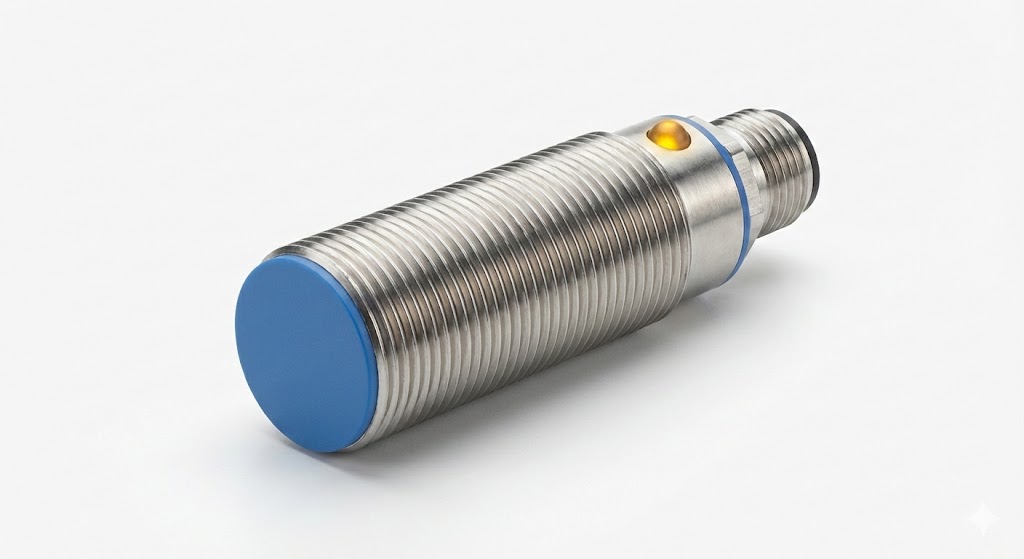
This operating principle grants Hall effect sensors several distinct advantages. They are inherently solid-state with no moving parts, leading to exceptionally long life and high reliability even in millions of cycles. They are unaffected by dust, oil, moisture, or ambient light, making them ideal for harsh industrial environments like machine tools, automotive assemblies, or outdoor equipment. They can operate at high speeds, capable of detecting rapidly passing objects, which is crucial for speed sensing in motors or counting applications. Furthermore, they offer precise and repeatable switching points.
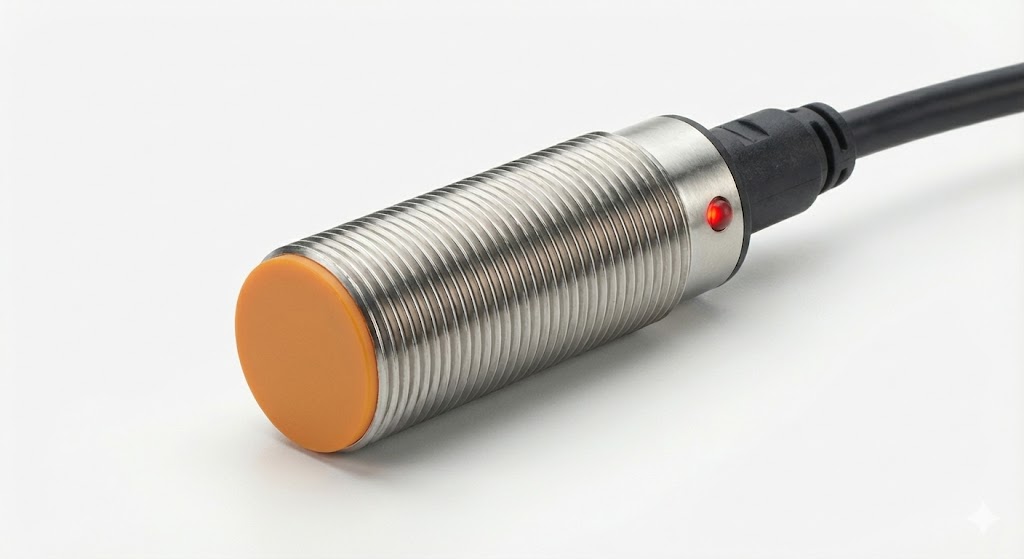
The applications of Hall effect proximity sensors are vast and varied. In the automotive industry, they are ubiquitous: sensing gear position in transmissions, detecting wheel speed for anti-lock braking systems (ABS), monitoring crankshaft and camshaft position, and even in seatbelt buckles and door latches. In industrial automation, they are used for end-of-travel detection on linear actuators, counting products on conveyors, verifying the position of robotic arms, and sensing the rotation of motors and fans. Consumer electronics also rely on them; for instance, in laptops to detect whether the lid is open or closed, or in smartphones for flip cover detection.
When selecting a Hall effect proximity sensor for a specific application, several key parameters must be considered. First is the sensing distance, which is typically shorter than inductive proximity sensors and depends on the magnet strength and target material. The output type is critical: digital (switch) outputs are simple and common, while analog outputs provide continuous distance information. The electrical characteristics, such as supply voltage, output current, and whether it's NPN (sinking) or PNP (sourcing), must match the control system. Environmental ratings, particularly Ingress Protection (IP) codes for dust and water resistance, are vital for harsh conditions. Finally, the physical package—threaded barrel, rectangular block, or surface-mount—must suit the mechanical constraints.
Installation and usage also require attention. The sensor must be positioned correctly relative to the target's path. For consistent operation, the target should be made of a ferromagnetic material like iron or steel; non-ferrous metals like aluminum or copper typically will not trigger a standard sensor. Shielding from strong external magnetic fields is sometimes necessary to prevent false triggering. Understanding the hysteresis—the difference between the switch-on and switch-off points—is important for designing stable systems without chatter.
In comparison to other sensor types, Hall effect sensors fill a unique niche. Inductive proximity sensors also detect metals but usually only work at very short ranges and with all conductive metals. Optical sensors offer longer ranges but can be foiled by dirty environments. Capacitive sensors detect both metals and non-metals but are sensitive to environmental changes. The Hall sensor's combination of contactless operation, environmental robustness, and speed makes it the preferred choice for precise position sensing of ferromagnetic targets.
In conclusion, the Hall effect proximity sensor is a cornerstone of modern sensing technology. Its operation, rooted in a classic physical effect, provides a robust solution for countless position, speed, and proximity detection challenges. From the engine of a car to the assembly line of a factory, these silent, reliable components play a crucial role in enabling automation, enhancing safety, and improving efficiency. As technology advances, newer versions with integrated microcontrollers and digital interfaces (like I2C) are emerging, offering even smarter sensing capabilities while retaining the core benefits that have made Hall effect sensors indispensable for decades.