In the realm of industrial condition monitoring and predictive maintenance, laser vibration sensors have emerged as a critical technology. These non-contact measurement devices offer unparalleled precision in detecting displacement, velocity, and acceleration of surfaces, making them indispensable for applications ranging from turbine monitoring in power plants to quality control in semiconductor manufacturing. The market for these sophisticated sensors is populated by several leading manufacturers, each bringing unique strengths and specialized solutions to the table. This article explores some of the foremost companies driving innovation in this field.
One of the most prominent names is Polytec GmbH, a German company with a long-standing reputation for excellence in optical measurement solutions. Polytec's laser vibrometers are renowned for their high resolution, wide frequency range, and robust design suitable for harsh industrial environments. Their product line includes single-point sensors for precise spot measurements and scanning vibrometers for full-field vibration analysis. Engineers often turn to Polytec for demanding R&D applications and critical machinery health monitoring where data accuracy is non-negotiable.

Another key player is Ometron, now part of Briel & Kjær Vibro, which specializes in laser Doppler vibrometry. Their systems are particularly noted for user-friendly software integration and capabilities in measuring very low amplitude vibrations. This makes them a preferred choice for industries like aerospace, where detecting minute structural resonances in components such as turbine blades or composite materials is essential for safety and performance validation. Their solutions often include advanced signal processing features that simplify data interpretation for maintenance teams.
For applications requiring extreme robustness and ease of integration into existing control systems, the offerings from Optomet are highly regarded. This manufacturer focuses on creating compact, industrially hardened laser sensors that can withstand significant temperature variations, dust, and electromagnetic interference. Their sensors are commonly deployed in continuous production environments, such as paper mills or steel rolling facilities, for real-time monitoring of rollers, bearings, and motors. The emphasis is on reliability and providing a clear, actionable output for plant engineers to prevent unplanned downtime.

In the North American market, companies like MTI Instruments (a division of Mechanical Technology Inc.) have a strong presence. MTI's Proximity Transducers and Fotonic™ Sensors, which utilize laser-based principles, are widely used in the power generation and oil & gas sectors. Their technology excels in measuring vibration on rotating machinery like generators and compressors, often in environments with high temperatures and pressures. The strength of MTI lies in its application engineering support, helping clients tailor systems for specific monitoring challenges on critical assets.
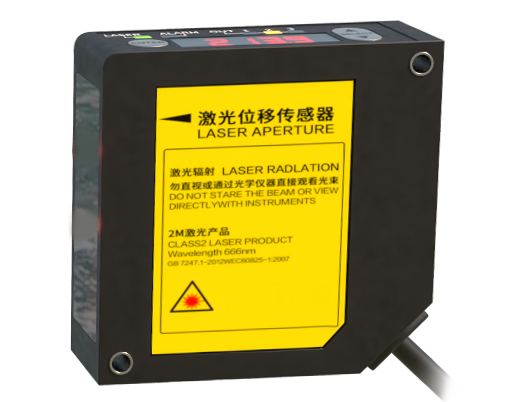
Emerging trends are also being shaped by manufacturers like Sunny Optical, which leverages advancements in cost-effective laser diode and photodetector technology. While historically known for consumer optics, their foray into industrial sensors brings a focus on miniaturization and high-volume production. This is opening new possibilities for embedding laser vibration sensing into a broader array of machines and IoT-enabled monitoring systems, making predictive maintenance more accessible for smaller-scale operations.
Selecting the right manufacturer depends heavily on the specific application parameters: the required measurement range, target surface characteristics, environmental conditions, and the necessary output data format. Leading vendors typically offer comprehensive support, from initial consultation and system design to installation and training. As Industry 4.0 advances, the integration of these sensors with cloud analytics platforms and digital twins is becoming a standard expectation, pushing manufacturers to develop smarter, more connected devices.
Ultimately, the landscape of laser vibration sensor manufacturers is characterized by deep technical expertise and continuous innovation. Whether for safeguarding multi-million dollar capital equipment, ensuring product quality, or advancing fundamental research, these companies provide the technological foundation for understanding and controlling vibration. Their ongoing development efforts promise even greater accuracy, durability, and intelligence in sensing, further solidifying the role of laser vibration measurement as a cornerstone of modern industrial operations.