In the rapidly evolving landscape of industrial automation and precision measurement, miniature laser sensors have emerged as critical components. Their pricing, however, is not a simple figure but a reflection of a complex interplay of technological sophistication, performance specifications, and market dynamics. For engineers, procurement specialists, and system integrators, a deep understanding of these cost factors is essential for making informed investment decisions.
At the core of a miniature laser sensor's cost is its underlying technology. Sensors utilizing time-of-flight (ToF) principles for distance measurement often command a higher price than simpler triangulation-based models due to their more complex internal circuitry and processing algorithms. The type of laser diode itself is a major cost driver. Standard visible red laser diodes are relatively economical, while those operating in specialized wavelengths, such as blue lasers for high-resolution applications or infrared for specific material detection, involve more expensive semiconductor materials and manufacturing processes, significantly increasing unit cost.
Performance specifications directly correlate with price. Key parameters include measuring range, spot size, resolution, repeatability, and response speed. A sensor with a sub-micron resolution and ultra-high repeatability, designed for semiconductor wafer inspection or micro-assembly, will be priced substantially higher than a general-purpose sensor for basic object detection. Similarly, sensors engineered for extreme environments—featuring robust housings with high IP ratings (e.g., IP67, IP69K), extended temperature ranges (-40°C to 85°C), and resistance to vibrations—incorporate additional materials and sealing technologies, adding to the manufacturing cost.
The integration of advanced features and intelligence is another significant cost adder. Sensors with integrated teach-in functions, programmable logic controllers (PLCs), digital interfaces (IO-Link, Ethernet/IP, PROFINET), and sophisticated onboard data processing for edge computing capabilities offer greater flexibility and system integration ease. These features require more powerful microprocessors, additional memory, and complex firmware development, all of which contribute to a higher price point compared to basic analog-output models.
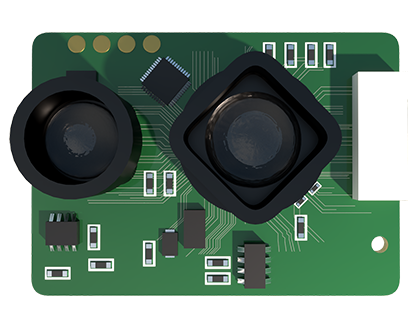
Brand reputation and supply chain stability also influence market pricing. Established manufacturers with a long history of reliability, comprehensive global certification (CE, UL, FDA for specific uses), and extensive technical support networks often price their products at a premium. This premium is not merely for the name but for the assurance of quality, consistency, long-term availability, and access to expert application engineering. In contrast, generic or newer market entrants may offer lower prices, which can sometimes correlate with variations in quality control or limited support infrastructure.
Order volume and packaging form factor play crucial roles in final pricing. Purchasing sensors in bulk for large-scale OEM projects typically unlocks substantial volume discounts from manufacturers. Conversely, buying single units or small batches from distributors incurs higher per-unit costs. The physical packaging—whether a standardized cylindrical housing, a compact rectangular format, or a custom-designed enclosure—also affects cost due to differences in machining, molding, and assembly complexity.
Looking ahead, market trends are applying both upward and downward pressures on prices. The increasing demand for miniaturization, higher speeds, and smarter sensors in sectors like consumer electronics, electric vehicle battery manufacturing, and medical devices pushes R&D costs higher. Conversely, advancements in semiconductor fabrication, economies of scale in laser diode production, and growing competition are gradually reducing costs for standard-performance models. The total cost of ownership (TCO), encompassing not just the purchase price but also installation, calibration, maintenance, and downtime costs, is ultimately the most critical metric for industrial buyers.
In conclusion, the price of a miniature laser sensor is a multifaceted equation. It encapsulates the cost of advanced photonics, precision engineering, environmental robustness, intelligent features, and brand value. A thorough evaluation based on specific application requirements—rather than just the initial purchase price—ensures the selection of a sensor that delivers optimal performance, reliability, and value over its entire operational lifecycle within any automated system.