Proximity sensors are fundamental components in modern industrial automation and control systems, serving as the critical "eyes" of machinery by detecting the presence or absence of objects without physical contact. As an electrical engineer, a deep understanding of their principles, types, and applications is essential for designing robust and efficient systems. This guide delves into the core concepts and practical considerations surrounding these versatile devices.
At its core, a proximity sensor detects a nearby target object and converts information about its presence or absence into an electrical signal. The key advantage is non-contact operation, which eliminates mechanical wear and tear, allows for high-speed detection, and enables use in harsh environments (oily, dusty) or with fragile objects. The sensing distance, or "range," varies significantly by technology and model.
The operational principle defines the primary categories. Inductive proximity sensors are among the most common. They generate an electromagnetic field. When a metallic object (the target) enters this field, it induces eddy currents within the metal, causing a change in the sensor's internal oscillation amplitude. This change is detected and triggers a solid-state output switch. These sensors are ideal for detecting ferrous and non-ferrous metals but are ineffective for non-metallic materials. Typical applications include position sensing of machine parts, limit switching, and metal detection in assembly lines.
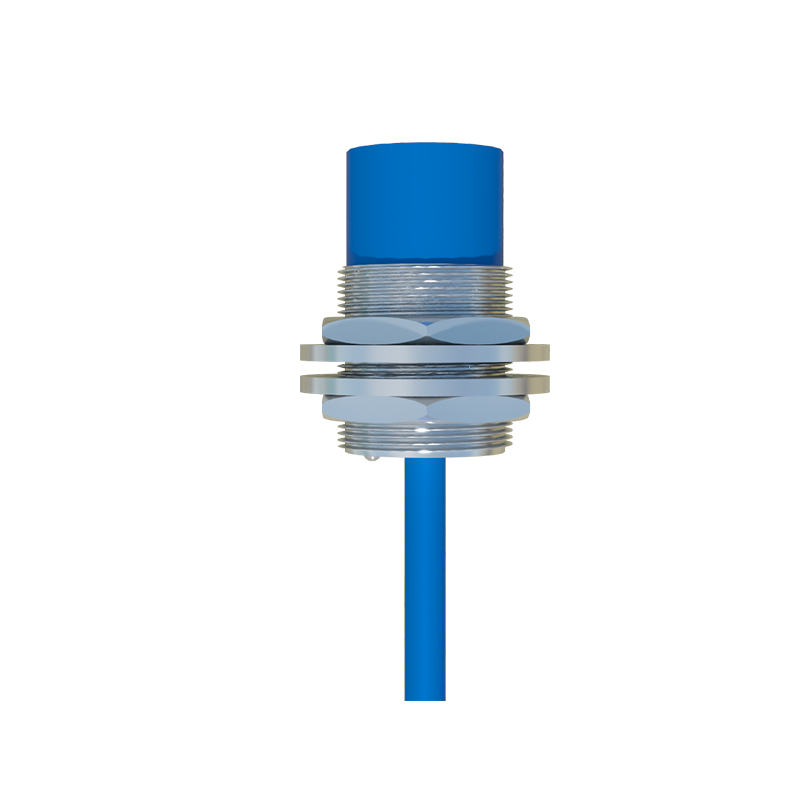
Capacitive proximity sensors, in contrast, can detect both metallic and non-metallic materials (plastics, wood, liquids, granules). They function by generating an electrostatic field. Any object entering this field alters the sensor's capacitance relative to ground. Once this change reaches a predetermined threshold, the sensor activates its output. This makes them perfect for level detection in tanks (liquid or granular), material handling, and detecting non-metallic objects through thin barriers.
Ultrasonic proximity sensors operate on a sonar principle. They emit high-frequency sound waves and evaluate the echo reflected back from a target. The time interval between sending the signal and receiving the echo is used to calculate the distance to the object. They are excellent for precise distance measurement, level sensing of bulk materials, and detecting objects with complex surfaces, regardless of color or material. However, they can be affected by temperature, humidity, and air turbulence.
Photoelectric sensors, while sometimes categorized separately, function as proximity devices. They use a light emitter (usually LED) and a receiver. In the diffuse (proximity) mode, the sensor detects light reflected directly from the target itself. The presence of an object within a specified range causes a sufficient amount of light to be reflected back to the receiver, triggering the output. They are highly effective for detecting small objects, offer long sensing ranges, and can detect virtually any material.
Selecting the right proximity sensor requires careful analysis of several parameters. First, define the target material (metal, plastic, liquid). This immediately narrows the choice to inductive or capacitive technologies. Next, consider the required sensing distance, always consulting the sensor's datasheet for rated operating distance (Sn) and ensuring a safety margin. The mounting environment is critical: factors like temperature extremes, washdown conditions, exposure to chemicals, or strong electromagnetic interference will dictate the required housing material (e.g., stainless steel, PBT plastic) and protection rating (IP67, IP69K).
Electrical characteristics are equally important. Most industrial sensors provide a DC (NPN sinking or PNP sourcing) or AC output. The output configuration must be compatible with the PLC or controller input module. The load current rating must not be exceeded. Additionally, consider features like short-circuit protection, reverse polarity protection, and output status indicators, which greatly aid in installation and troubleshooting.
In application, proper installation is paramount. Ensure the sensor is mounted securely and aligned correctly. For inductive sensors, be mindful of the "flush-mountable" designation; non-flush models require a clear lateral area to function correctly. For all types, avoid mounting multiple sensors too close together to prevent mutual interference (crosstalk). Always follow the manufacturer's guidelines for mounting distances.
Troubleshooting common issues often involves a systematic approach. If a sensor fails to detect, verify power supply connections and voltage levels. Check for the presence of the target within the specified sensing range and ensure it is of the correct material. Look for accumulation of debris on the sensing face. For erratic operation, investigate potential electrical noise sources or physical vibration. Utilizing the sensor's built-in LED indicator is the first step in diagnosing power, output, and stability status.
The evolution of proximity sensors continues with advancements in IO-Link communication, which enables smart sensor capabilities like parameter setting via controller, condition monitoring, and detailed diagnostic data reporting. This integration into Industry 4.0 and IIoT frameworks is enhancing predictive maintenance and overall system intelligence.
In conclusion, proximity sensors are indispensable tools for automation. Mastery of their distinct technologies—inductive, capacitive, ultrasonic,