In the high-precision world of modern manufacturing, laser cutting stands as a cornerstone technology. Its efficiency and accuracy, however, are heavily dependent on robust sensing and control systems. Among these, the laser cutting reflective sensor plays a pivotal, yet often understated, role. This article delves into the operational principles, key applications, and critical selection factors for these essential components, providing a comprehensive guide for engineers and technicians in the field.
At its core, a reflective sensor for laser cutting is a photoelectric device designed to detect the presence, position, or characteristics of a material or surface by emitting a light beam and analyzing the reflected signal. Unlike through-beam sensors which require a separate receiver opposite the emitter, reflective sensors house both the light source and the receiver in a single unit. They typically utilize a focused laser diode as the light source. The sensor emits this laser beam towards the target—often the workpiece or a specific reference point on the cutting bed. The surface then reflects a portion of this light back to the sensor's integrated receiver. The onboard electronics process this returned signal, converting it into a usable digital or analog output.
A critical distinction lies between diffuse and retro-reflective models, though diffuse sensors are most common in laser cutting contexts. Diffuse sensors detect light scattered directly off the target's surface. Their effectiveness is influenced by the target's color, texture, and material. For consistent performance on varied materials, many modern sensors employ background suppression technology or use time-of-flight (ToF) principles. These advanced methods allow the sensor to measure distance or detect an object based on the time it takes for the light to return, making them less susceptible to surface color variations and more reliable for precise positioning tasks.
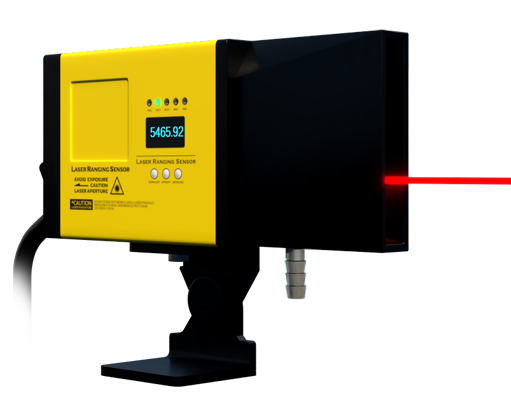
The integration of reflective sensors into laser cutting machinery enables several vital functions that enhance process reliability and product quality. One primary application is material presence and height detection. Before initiating a cut, the sensor can verify that the sheet metal or other workpiece is correctly loaded and positioned on the cutting bed. More importantly, height sensing or capacitive touch-off systems often use a reflective sensor to determine the initial distance between the cutting head nozzle and the material surface. This establishes the correct focal point for the laser, which is paramount for cut quality and process safety.
Another crucial application is edge detection and seam tracking. When processing pre-cut parts or following complex contours, a reflective sensor can scan ahead of the cutting head to locate the material's precise edge. This data is fed back to the CNC controller, allowing for real-time path correction. This capability is invaluable for minimizing waste and ensuring accuracy when cutting irregular shapes or when material positioning isn't perfectly repeatable. Furthermore, these sensors are employed for hole detection, part sorting after cutting, and monitoring for process anomalies like piercing failures or material warping.
Selecting the appropriate reflective sensor for a laser cutting application requires careful consideration of several technical parameters. First, the sensing range must be compatible with the machine's mechanical setup and the required stand-off distance. The resolution and repeatability of the sensor determine its positioning accuracy, directly impacting cut precision. The type of output required—discrete (on/off) for presence detection or analog (e.g., 4-20mA, 0-10V) for continuous distance measurement—must match the input capabilities of the machine's PLC or CNC system.
Environmental robustness is non-negotiable. Laser cutting environments are harsh, characterized by intense ambient light from the cutting process, high temperatures, flying sparks, metal dust, and vapors. Therefore, the sensor housing must have a high IP rating (e.g., IP67) for dust and coolant resistance. The optical components should be protected from contamination, and the sensor should be immune to optical interference from the cutting laser itself, often achieved through specific wavelength selection and optical filtering. Finally, factors like response speed, mounting options, and connectivity (e.g., M8/M12 connectors) play a significant role in seamless integration.
In conclusion, laser cutting reflective sensors are sophisticated enablers of automation, precision, and process control. They move the system beyond simple pre-programmed paths, allowing it to interact intelligently with the physical workpiece. From ensuring the correct focal height to tracking a weld seam on a pipe, their contributions are integral to achieving the high standards of modern fabrication. As laser technology advances towards greater speeds and versatility, the role of advanced, resilient sensing solutions like these will only continue to grow, demanding ongoing attention from design and maintenance engineers alike.