Proximity switches, often referred to as proximity sensors or distance sensors, are fundamental components in modern industrial automation and control systems. Their primary function is to detect the presence or absence of an object within a specified sensing range without any physical contact. This non-contact detection capability makes them exceptionally reliable, durable, and suitable for harsh environments where mechanical wear, contamination, or high-speed operation would compromise other sensing methods. The core principle behind their operation involves generating an electromagnetic field or a beam of radiation and then monitoring changes in that field caused by the intrusion of a target object.
The most prevalent types of proximity switches used for distance sensing are inductive, capacitive, and ultrasonic sensors. Each operates on a distinct physical principle, making them suitable for different target materials and applications.
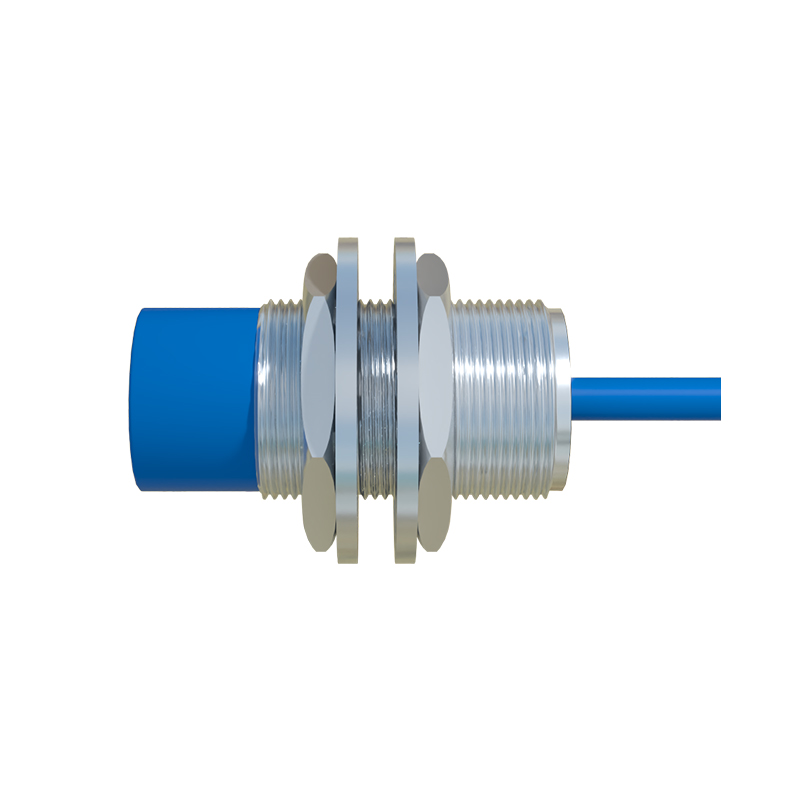
Inductive proximity sensors are the workhorses of metal detection. They consist of four key components: an oscillator coil, a ferrite core, a signal evaluator, and an output switching circuit. The oscillator generates a high-frequency alternating electromagnetic field that radiates from the sensor's active face. When a conductive metal target enters this field, eddy currents are induced on the surface of the target. These eddy currents draw energy from the oscillator, causing a reduction in the amplitude of the oscillations. The sensor's evaluation circuit detects this amplitude drop and triggers a change in the output state (e.g., from OFF to ON). The sensing distance, or "switching distance," is precisely defined and depends on factors like the sensor's design, the target material's conductivity and permeability (ferrous metals like iron and steel are detected at greater distances than non-ferrous metals like aluminum or copper), and the target's size and shape. Inductive sensors are ideal for position sensing of machine parts, limit switching, and counting metallic objects.
Capacitive proximity sensors, in contrast, can detect both metallic and non-metallic materials, including liquids, plastics, glass, wood, and granules. Their operating principle is based on capacitance change. The sensor face acts as one plate of a capacitor, with the target object acting as the other plate, and the intervening space as the dielectric. An internal oscillator circuit is tuned so that it only oscillates when a target is present, changing the capacitance of the circuit. When a target approaches, the capacitance between the sensor and the target increases. Once this capacitance reaches a preset threshold, the oscillation amplitude rises sufficiently to trigger the output circuit. The sensing distance is influenced by the target material's dielectric constant; materials with high dielectric constants (like water) can be detected from farther away. This makes capacitive sensors perfect for level detection in tanks (liquids or powders), presence detection of non-metallic objects, and applications involving thin materials.
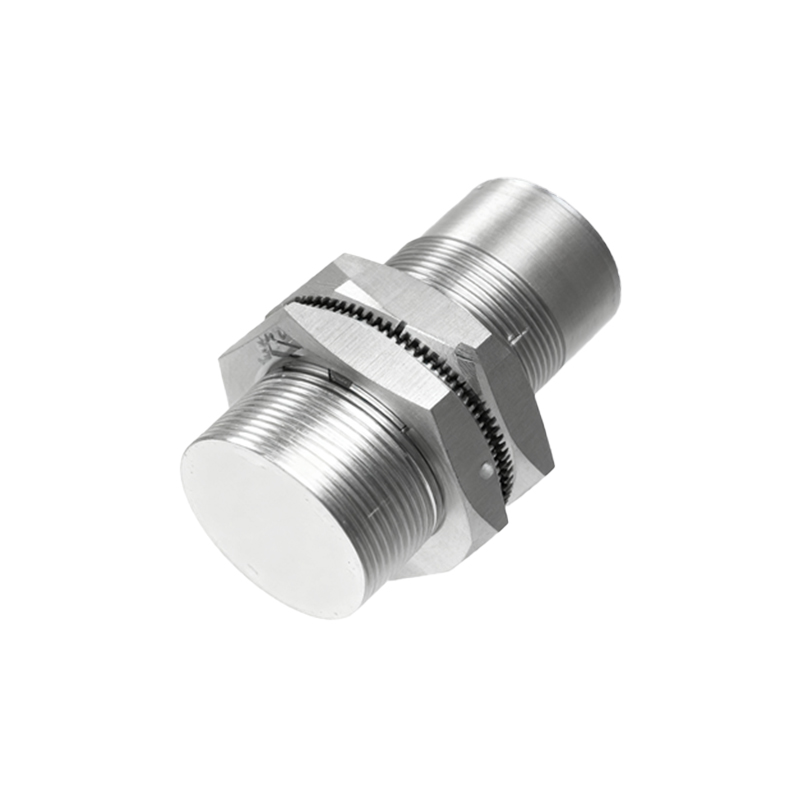
For true distance measurement (analog output) over longer ranges, ultrasonic sensors are frequently employed. These sensors operate on the time-of-flight principle. They emit short, high-frequency ultrasonic sound pulses (typically beyond human hearing, around 40-400 kHz). A transducer acts as both a transmitter and a receiver. The time interval between the emission of the pulse and the reception of its echo from the target object is measured precisely. Since the speed of sound in air is known (approximately 343 m/s at 20°C), the distance to the target can be calculated using the formula: Distance = (Speed of Sound × Time of Flight) / 2. The division by two accounts for the round-trip journey of the sound wave. Ultrasonic sensors are excellent for continuous level monitoring, object profiling, and distance measurement where the target may have varying colors or surface finishes that would confuse optical sensors. They are, however, sensitive to temperature variations, air turbulence, and very soft materials that absorb sound.
Key performance parameters for all proximity sensors include nominal sensing distance (Sn), repeat accuracy, hysteresis, and switching frequency. Hysteresis is a built-in feature that prevents output chatter when a target is at the exact switching point; the release point is slightly farther away than the operating point. Switching frequency defines how many on/off cycles per second the sensor can handle, critical for high-speed counting applications.
In application, the output from these sensors is typically a switched DC signal (PNP or NPN transistor output) or an analog signal (4-20 mA or 0-10 V) proportional to distance. They are integrated into PLC (Programmable Logic Controller) systems, robotics, conveyor systems, packaging machinery, and automotive assembly lines. Proper selection involves considering the target material, required sensing range, environmental conditions (temperature, humidity, presence of chemicals), electrical requirements, and housing style (cylindrical, rectangular, threaded).
In summary, proximity switch distance sensors provide robust, non-contact detection and measurement solutions. Understanding the underlying principles—electromagnetic induction for metals, capacitance change for diverse materials, and ultrasonic time-of-flight for longer-range measurement—is essential for