In the realm of industrial automation and precision control, Hall Effect proximity sensors have emerged as a cornerstone technology for non-contact detection of ferromagnetic materials, including iron wire. These sensors operate on the fundamental principle of the Hall Effect, discovered by Edwin Hall in 1879. When a current-carrying conductor is placed in a magnetic field, a voltage difference—known as the Hall voltage—is generated perpendicular to both the current and the field. Modern Hall Effect sensors leverage this phenomenon by integrating a semiconductor element (often made of gallium arsenide, indium arsenide, or silicon) that produces a measurable voltage when exposed to a magnetic field.
The detection of iron wire specifically relies on the sensor's ability to perceive changes in the surrounding magnetic field. In a typical setup, the Hall Effect sensor itself contains a permanent magnet or is positioned near one. When an iron wire, a ferromagnetic material, enters the sensor's detection zone, it distorts the existing magnetic field lines. This distortion occurs because the iron wire becomes temporarily magnetized, concentrating the magnetic flux. This alteration in the magnetic field density is precisely what the Hall element within the sensor detects. The change in flux density causes a proportional change in the output Hall voltage. This analog signal is then conditioned and processed by integrated electronics (such as operational amplifiers, Schmitt triggers, and output drivers) within the sensor housing to produce a clean, digital switching signal—often an open-collector NPN or PNP transistor output.
The selection and application of a Hall Effect sensor for iron wire detection depend on several critical engineering parameters. First, the sensor's sensing distance, or nominal range, must be appropriate for the wire's diameter and the required installation gap. For thin iron wires, sensors with reduced ranges and higher sensitivity are preferred to avoid false triggers from background noise. Second, the magnetic characteristics of the target are paramount. While iron wire is highly ferromagnetic, its exact composition (e.g., low-carbon steel, galvanized iron) can affect permeability and thus the sensor's effective range. Third, environmental factors cannot be overlooked. Industrial settings may involve temperature extremes, vibration, dust, or the presence of other magnetic fields. Modern Hall sensors are housed in robust, often IP67-rated enclosures made of stainless steel or nickel-plated brass to ensure durability. Their solid-state design, with no moving parts, makes them inherently resistant to mechanical wear.
A significant advantage over other technologies, like inductive proximity sensors, is the Hall Effect sensor's ability to detect static magnetic fields. This allows it to sense iron wire even when the wire is stationary, a common scenario in tension control systems or wire presence verification at the end of a production line. Furthermore, they offer high switching frequencies, often up to several kilohertz, enabling detection of rapidly moving wires in high-speed winding or weaving machinery. The output is consistent and repeatable, with minimal hysteresis, providing reliable feedback for programmable logic controllers (PLCs) that manage automated processes.
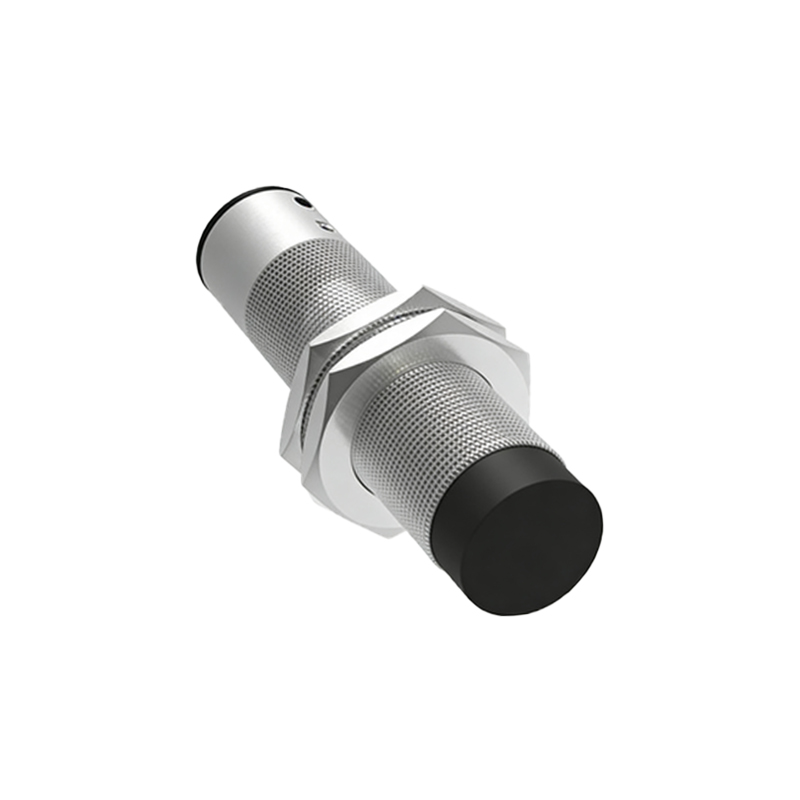
In practical wiring and installation, attention must be paid to electrical specifications. Most industrial Hall proximity sensors operate on DC voltages (commonly 10-30V DC) and require a current-limiting resistor or are connected to a PLC's digital input module. The three-wire configuration (power, ground, and signal output) is standard. Proper shielding of cables is recommended in electrically noisy environments to prevent electromagnetic interference (EMI) from affecting the low-voltage Hall signal. Calibration during installation might involve adjusting the sensor's position to achieve the optimal response for the specific gauge of iron wire being monitored.
Maintenance is typically minimal but should include periodic checks for physical damage, accumulation of ferrous debris on the sensor face (which can shield the magnetic field), and verification of output signals under operational conditions. As Industry 4.0 advances, smart Hall sensors with IO-Link or analog output capabilities are gaining traction, providing not just a switch signal but also diagnostic data and precise distance information for predictive maintenance and tighter process integration.

In conclusion, the Hall Effect proximity sensor provides a robust, accurate, and reliable solution for detecting iron wire across countless industrial applications, from automotive manufacturing and robotics to textile machinery and material handling. Its operation, grounded in a well-understood physical law, translates into predictable performance, making it an indispensable tool for engineers designing systems that require precise, non-contact sensing of ferrous materials.