In the realm of industrial automation and control systems, oscillating proximity sensors stand as a cornerstone technology for non-contact object detection. These sensors operate on a fundamental principle: they generate a high-frequency electromagnetic field from an oscillator circuit. When a metallic or, in some designs, non-metallic target enters this active field, it induces eddy currents within the target. This interaction dampens the oscillation amplitude or alters the oscillation frequency. The sensor's internal circuitry detects this change and triggers a solid-state output signal, switching its state to indicate the presence or absence of the target.
The core advantage of this technology lies in its non-contact nature. Unlike mechanical limit switches, there is no physical wear from repeated actuation, leading to exceptionally long service life and high reliability. This makes them ideal for demanding environments with high cycle rates or where maintenance access is difficult. Furthermore, they are largely immune to environmental contaminants such as dust, oil, and coolants, provided the sensor housing is appropriately rated (e.g., IP67).
Two primary types dominate the market: inductive and capacitive oscillating sensors. Inductive proximity sensors are the most common, designed specifically for detecting metallic objects. Their sensing range is influenced by the target material's properties; ferrous metals like steel are detected at the nominal range, while non-ferrous metals like aluminum or copper typically have a reduced sensing distance. Capacitive proximity sensors, on the other hand, can detect a wider variety of materials, including metals, plastics, liquids, powders, and granular substances. They sense changes in the capacitance of an electrical field, which is affected by the dielectric constant of the target material.
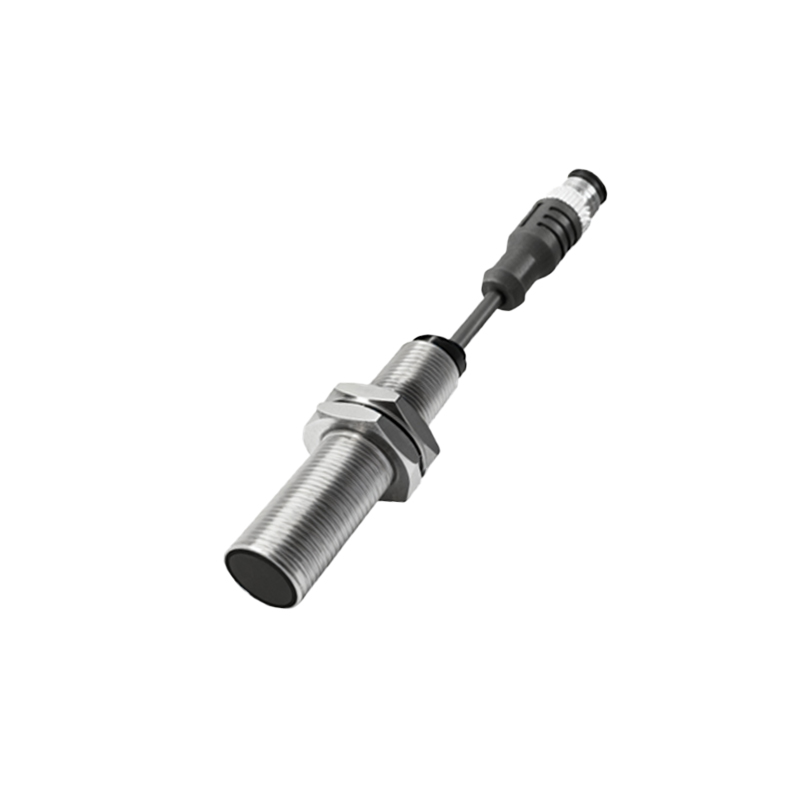
Key performance specifications for engineers to consider include the nominal sensing distance (Sn), which is defined under standardized conditions. The effective operating distance (Sr) is typically 0.8 to 0.9 times Sn, accounting for manufacturing tolerances and environmental factors. Hysteresis is a critical feature that prevents output chattering when a target is at the edge of the sensing range; it ensures a clean, single switch action. Response frequency, measured in Hertz, indicates how quickly the sensor can detect objects passing by, a vital parameter for high-speed counting or sorting applications. Temperature drift and short-circuit protection are also essential for robust operation in industrial settings.
Applications for oscillating proximity sensors are vast and varied. In automotive manufacturing, they are used for robotic end-effector positioning, part presence verification on conveyor lines, and cylinder piston position feedback. In packaging machinery, they detect foil lids, control fill levels of liquids, and count products. Within material handling, they provide position feedback for automated guided vehicles (AGVs) and palletizers. Their sealed designs allow for use in food and beverage processing, often with specialized housings made of stainless steel (e.g., V4A/AISI 316L) for washdown environments.
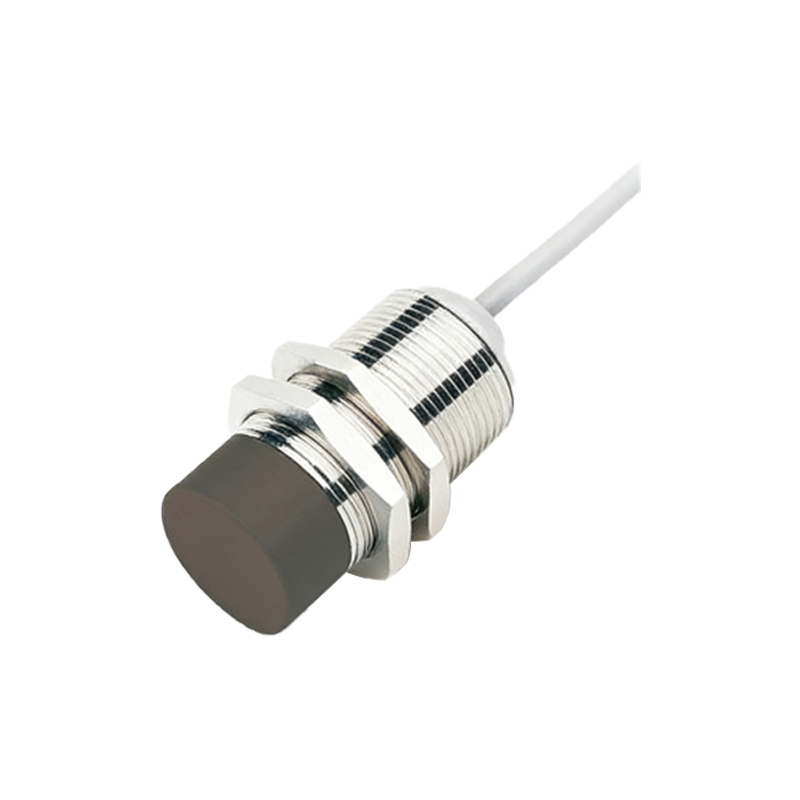
Selecting the right sensor requires a systematic approach. First, identify the target material: metal dictates an inductive sensor, while non-metallics require a capacitive type. Next, determine the required sensing distance, adding a safety factor of 15-20% to the application's physical gap. The sensor's housing shape—barrel (cylindrical), rectangular, or slot-type—must fit the mechanical installation constraints. Electrical characteristics are paramount: choose between DC (2-wire, 3-wire) or AC versions, ensuring compatibility with the control system's voltage (e.g., 10-30V DC, 20-250V AC) and output type (PNP sinking, NPN sourcing, or NO/NC contacts). The housing material should withstand the environmental conditions, including temperature extremes, chemical exposure, and mechanical shock or vibration.
Installation and wiring practices significantly impact performance. Maintain the recommended clearance from surrounding metal (lateral and flush-mounting distances) to avoid false triggering. Use shielded cables in electrically noisy environments and ensure proper grounding. For inductive sensors, remember that the sensing range can vary with different metals; always consult the manufacturer's correction factors. Regular functional checks, while rarely needed due to their durability, are good practice during preventive maintenance cycles.
In conclusion, oscillating proximity sensors are indispensable, robust components in modern industrial systems. Their ability to provide precise, wear-free detection across countless applications drives efficiency and reliability. A thorough understanding of their operating principles, types, and key specifications empowers engineers and technicians to make optimal selection and integration decisions, ensuring seamless operation within complex automated processes.