In the intricate world of industrial automation and control systems, the cylindrical proximity sensor stands as a fundamental and ubiquitous component. Its role is deceptively simple yet critically important: to detect the presence or absence of a target object without any physical contact. The cylindrical form factor, a common and robust housing style, is engineered for reliability and ease of integration in demanding environments. This article delves into the core functions, operational principles, and key applications of these vital devices.
At its heart, the primary function of a cylindrical proximity sensor is non-contact detection. This capability eliminates mechanical wear and tear associated with limit switches, leading to significantly longer service life and reduced maintenance. The cylindrical housing, typically constructed from nickel-plated brass, stainless steel, or ruggedized plastics, provides excellent resistance to vibration, shock, and environmental contaminants like oil, coolant, and dust. This robust design ensures stable operation on factory floors, within machinery, and in assembly lines.
The operation depends on the underlying technology. Inductive cylindrical sensors are the most prevalent. They generate an electromagnetic field from a coil in the sensor's face. When a metallic target (e.g., steel, aluminum, copper) enters this field, it induces eddy currents that dampen the oscillation. The sensor's internal circuitry detects this change and triggers a solid-state output switch. These sensors are ideal for detecting metal objects in applications such as part positioning on conveyors, checking for the presence of a metal cap on a bottle, or counting metallic components.
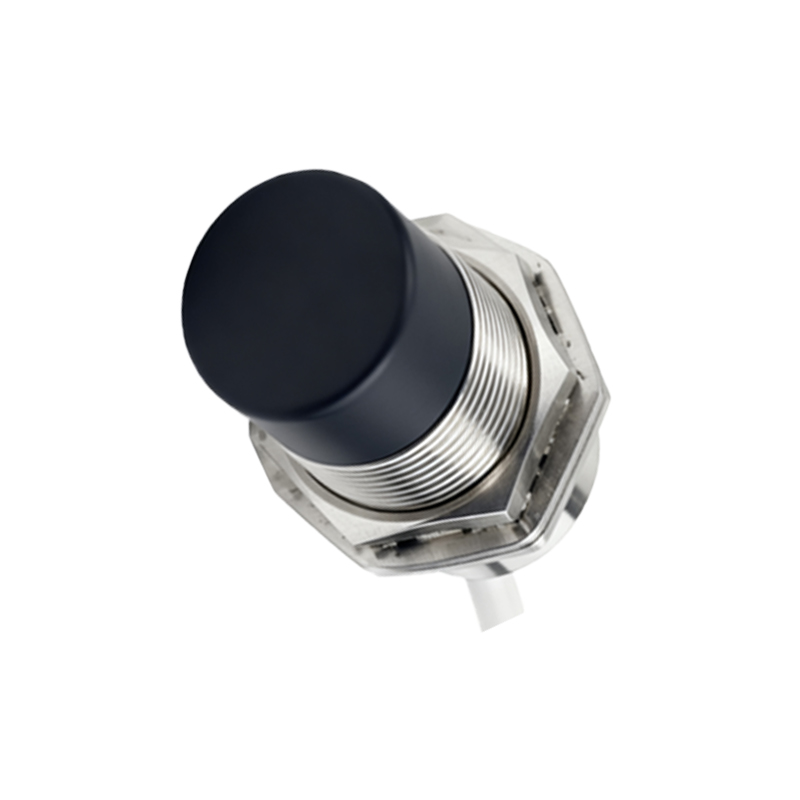
Capacitive cylindrical sensors operate on a different principle, detecting changes in capacitance. They can sense both metallic and non-metallic materials, including liquids, plastics, glass, and wood. This makes them versatile for tasks like monitoring fill levels in tanks, detecting paper or cardboard sheets, or ensuring the presence of a plastic bottle in a packaging line. The cylindrical body often allows for adjustable sensitivity to fine-tune the sensing range for different materials.
The cylindrical shape itself confers several practical advantages. It is perfectly suited for mounting through a drilled hole, secured with standard locknuts. This facilitates easy installation and precise alignment. The form factor also allows for effective sealing (often achieving IP67 or IP69K ratings), making them suitable for washdown areas in food and beverage or pharmaceutical industries. Furthermore, the design efficiently houses the sensing coil or capacitor, oscillator, amplifier, and output circuitry in a compact, space-saving package.
Output configurations are another key aspect. Most cylindrical proximity sensors provide a digital switching output, either as a discrete NPN (sinking) or PNP (sourcing) transistor, or a Normally Open/Normally Closed relay contact. This output seamlessly interfaces with Programmable Logic Controllers (PLCs), motor starters, and other control system components. The cylindrical body often incorporates an LED status indicator, providing immediate visual feedback on the sensor's operational state—power on and target detection.
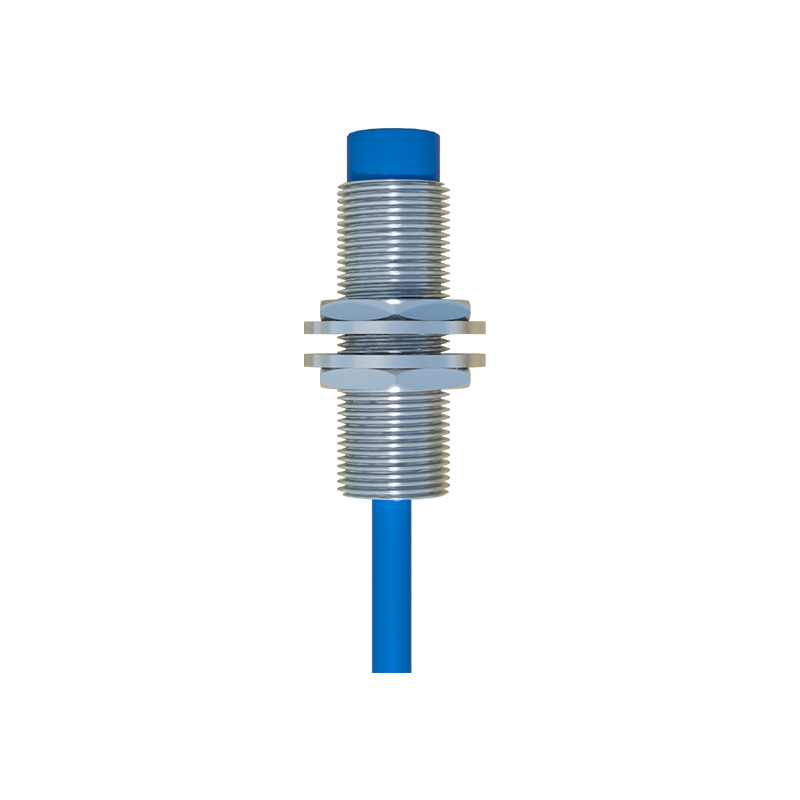
Application examples are vast across manufacturing. In automotive assembly, they verify the correct placement of engine blocks or wheel hubs. In material handling, they detect the position of pallets on a conveyor to control sorting gates. In machine tools, they serve as end-of-travel limit switches for slides and spindles, ensuring precise movement without physical contact and potential damage. Their reliability is crucial for maintaining high-speed production cycles and ensuring overall equipment effectiveness (OEE).
Selecting the right cylindrical proximity sensor requires careful consideration of several parameters: the sensing distance (rated and effective), target material and size, required housing diameter and length, output type, supply voltage, and environmental rating. Understanding the difference between shielded (flush-mountable) and unshielded (non-flush) models is also essential, as it affects the sensing range and mounting proximity to metal surroundings.
In conclusion, the cylindrical proximity sensor is far more than just a simple metal tube. It is a sophisticated, self-contained detection system engineered for durability, precision, and seamless integration. Its role in enabling automated processes, enhancing safety, and improving operational efficiency is indispensable. From monitoring simple part presence to enabling complex sequential logic, these sensors form the essential sensory layer of modern industrial automation, providing the critical data points upon which intelligent control systems act. Their continued evolution, including miniaturization and enhanced communication capabilities like IO-Link, ensures they will remain a cornerstone of smart manufacturing and Industry 4.0 initiatives.