In the realm of industrial automation and machine design, proximity sensors are ubiquitous. A common question that arises in maintenance, retrofitting, or design phases is: "Are proximity sensors interchangeable?" The short, and technically accurate, answer is: It depends. While the fundamental principle of detecting an object without physical contact is universal, declaring them universally interchangeable is a significant oversimplification that can lead to system failures, downtime, and safety hazards. True interchangeability hinges on a meticulous evaluation of multiple technical parameters.
First and foremost, the sensing technology must be considered. The three primary types—inductive, capacitive, and photoelectric—are not directly interchangeable. Inductive sensors detect metallic objects, capacitive sensors detect both metallic and non-metallic materials (like liquids or plastics), and photoelectric sensors use light beams. Substituting an inductive sensor for a capacitive one in a liquid level detection application would result in a complete failure to function.
Assuming the correct technology is selected, the next critical layer is the electrical specification. This is where many interchangeability attempts falter.
Operating Principle: Two-wire AC sensors, two-wire DC sensors, three-wire DC (PNP or NPN sourcing/sinking), and four-wire versions have fundamentally different wiring schematics and load compatibility. Connecting a PNP sensor to a circuit designed for an NPN input will not work and may damage the sensor or controller.
Supply Voltage: A sensor rated for 10-30V DC cannot be directly replaced with one rated for 20-250V AC. Even within DC ranges, ensuring the available supply voltage falls within the sensor's specified range is essential.
Output Type: Solid-state (transistor) outputs are not interchangeable with electromechanical relay outputs. Relay outputs can handle higher currents and AC loads but have slower switching speeds and limited lifespan compared to solid-state outputs.
Current Rating: The sensor's output current (e.g., 200mA) must be sufficient to drive the connected load (e.g., a PLC input, relay coil). An underrated sensor will overheat and fail.
Physical and performance characteristics form the third pillar of assessment.
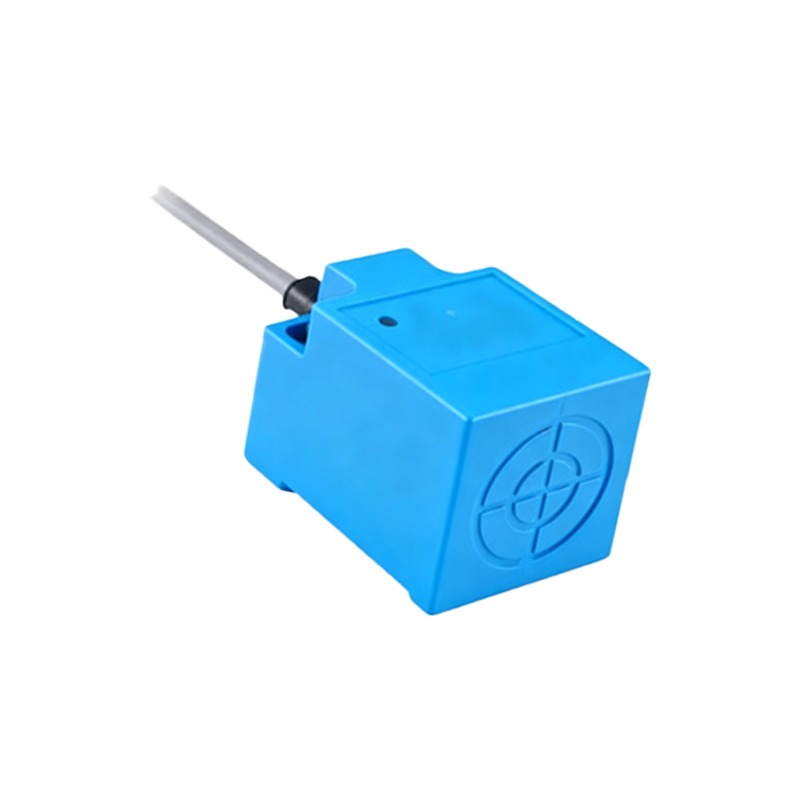
Form Factor and Size: The mechanical housing (cylindrical, rectangular, slot-style) and dimensions (body diameter, length, thread size like M8, M12, M18, M30) must be compatible with the existing mounting location.
Sensing Distance: The rated operating distance (Sn) is crucial. A sensor with a 2mm range cannot replace one with an 8mm range if the target object's travel path is fixed farther from the mounting point.
Switching Frequency: This determines how quickly the sensor can respond to objects passing by. A 100Hz sensor cannot track objects in a high-speed counting application requiring a 1kHz response.
Environmental Ratings: Ingress Protection (IP) ratings (e.g., IP67, IP69K) for dust and water resistance, temperature range tolerance, and resistance to chemicals or welding spatter are often non-negotiable for reliable operation in harsh industrial environments.
Beyond these core specifications, modern sensors include features that further complicate direct swaps. The choice between Normally Open (NO) and Normally Closed (NC) output logic is fundamental to the control circuit's design. Short-circuit protection, reverse polarity protection, and diagnostic LEDs are now standard expectations. Furthermore, analog output sensors (4-20mA, 0-10V) or sensors with IO-Link communication capabilities serve entirely different purposes than simple digital on/off switches and are not interchangeable with them.
So, when is interchangeability possible? It is feasible when a replacement sensor matches all of the following: sensing technology, electrical interface (wiring, voltage, output type/current), physical form factor, key performance specs (sensing range, frequency), and environmental ratings. This often occurs within the same product family from a single manufacturer or when using explicitly designed cross-reference guides from reputable suppliers.
Best Practices for Engineers:
1. Always Consult the Datasheet: The manufacturer's datasheet is the ultimate authority. Never assume compatibility.
2. Document Existing Sensors: Maintain a plant database with part numbers, specifications, and installation locations.
3. Understand the Application: Know what the sensor is detecting, the required speed, and the environmental conditions.
4. Standardize Where Possible: Reduce variability by standardizing on a few sensor types and form factors for new projects.
In conclusion, while many proximity sensors may look similar, they are highly application-specific components. A systematic, parameter-by-parameter comparison is the only reliable method to determine true interchangeability. Treating them as generic, plug-and-play devices is a recipe for operational inefficiency and risk