Proximity sensors are indispensable components in modern industrial automation, providing non-contact detection of objects within a specific range without physical touch. Their ability to function reliably in harsh environments, offer high switching speeds, and ensure long operational life makes them a cornerstone of countless systems, from assembly lines and robotic arms to safety interlocks and material handling equipment. Unlike limit switches that require physical contact, proximity sensors detect the presence or absence of an object through changes in an electromagnetic field or by emitting a beam of electromagnetic radiation. This fundamental principle gives rise to several distinct types, each with unique operating mechanisms, advantages, and ideal use cases. Understanding these differences is critical for engineers and technicians tasked with selecting the right sensor for a specific application to ensure optimal performance, reliability, and cost-effectiveness.
The most prevalent category is the inductive proximity sensor. This type is used exclusively for detecting metallic objects, typically ferrous metals like steel and iron, though specific models can also detect non-ferrous metals like aluminum, copper, or brass with reduced sensing range. An inductive sensor generates an oscillating electromagnetic field from its active face. When a metallic target enters this field, it induces eddy currents within the metal, which in turn dampens the oscillation of the sensor's internal LC circuit. The sensor's electronics detect this amplitude change and trigger a switching output. Inductive sensors are renowned for their robustness, high precision, and immunity to environmental factors like dust, oil, and moisture. They are ideal for counting metal parts, determining the position of machine tools, or as end-position detectors in cylinders. Common housing styles include cylindrical barrels (e.g., M8, M12, M18, M30 threads) and rectangular block types.
For applications requiring detection of non-metallic objects—such as wood, plastic, glass, liquids, and virtually any material—capacitive proximity sensors are the go-to choice. Their operating principle is similar to an open capacitor. The sensor's active surface acts as one plate of a capacitor, and the target object acts as the other, with the air gap as the dielectric. As a target approaches, it alters the dielectric constant of this capacitor, changing its capacitance. The sensor's circuitry monitors this change and switches its output state when a preset threshold is reached. A significant advantage of capacitive sensors is their sensitivity adjustment potentiometer, allowing them to be tuned to ignore certain materials (like a container wall) and sense the material inside (like a liquid level). This makes them perfect for level detection of powders, granules, and liquids, as well as detecting non-metallic objects on conveyor belts.
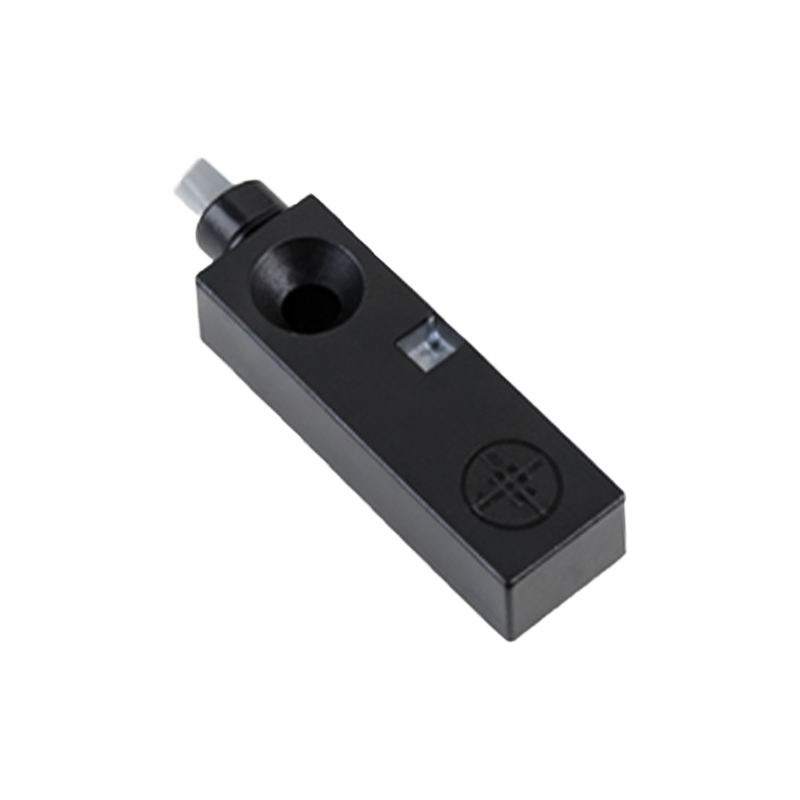
Another major family is the photoelectric sensor, which operates on a completely different principle: light. These sensors use a light emitter (usually an LED producing visible red, infrared, or laser light) and a receiver. They detect objects by interpreting changes in the received light signal. Photoelectric sensors are further subdivided into three primary modes. The through-beam (or opposed) mode consists of separate, aligned emitter and receiver units. An object is detected when it breaks the light beam. This mode offers the longest sensing ranges and highest reliability but requires careful alignment of two separate components. The retro-reflective mode uses a single housing containing both emitter and receiver, and a special reflector bounces the light beam back. Detection occurs when an object interrupts the beam to the reflector. This simplifies installation compared to through-beam. Finally, the diffuse (or proximity) mode also has a single unit, but it relies on light reflecting directly off the target object itself. While easiest to install, its sensing range is shortest and can be affected by the target's color and surface texture. Photoelectric sensors are extremely versatile for detecting objects of any material, provided they are not perfectly transparent to the emitted wavelength.
Magnetic proximity sensors, often called reed switches or solid-state Hall effect sensors, are designed specifically to detect permanent magnets. They are frequently embedded in pneumatic or hydraulic cylinders to provide piston position feedback. When a magnet mounted on the piston moves into the sensor's detection zone, it either closes a reed switch (a hermetically sealed glass tube with ferromagnetic contacts) or triggers a Hall effect IC (which responds to changes in magnetic field density). Magnetic sensors are compact, cost-effective for this specific task, and can operate in very dirty or wet conditions where other sensors might fail. They are a staple in fluid power systems.
Ultrasonic proximity sensors complete the primary lineup. They work by emitting high-frequency sound waves (ultrasound) and measuring the time it takes for the echo to return from a target. This time-of-flight principle allows them to measure distance, not just detect presence. They can detect almost any solid or liquid object, regardless of color, transparency, or material. Their performance can be affected by factors like temperature (which changes the speed of sound), air turbulence, and very soft or angled surfaces that absorb