In the evolving landscape of industrial automation, sensor technology remains a cornerstone for efficiency, safety, and precision. For decades, proximity photoelectric sensors have been the default choice for a vast array of detection and positioning tasks. Their reliance on modulated light beams—typically infrared, visible red, or laser—has provided reliable performance in counting, edge detection, and object presence verification. However, inherent limitations in photoelectric technology, particularly in challenging environmental conditions, have driven engineers to seek robust alternatives. Ultrasonic sensors are emerging as a powerful and often superior substitute, offering unique advantages that address many of the shortcomings of their optical counterparts.
The fundamental weakness of photoelectric sensors lies in their interaction with the environment. They are notoriously susceptible to interference from ambient light, which can cause false triggers or missed detections. Dust, steam, fog, and other airborne particulates can scatter or absorb the light beam, degrading signal integrity and reliability. Furthermore, the optical properties of the target object are critical; transparent, highly reflective, or intensely colored surfaces can lead to inconsistent performance. A clear glass bottle or a glossy metallic surface, for instance, may reflect light away from the receiver, causing a failure to detect. While solutions like polarized filters or background suppression exist, they add complexity and cost.
Ultrasonic sensors operate on a completely different principle: sound. They emit high-frequency sound pulses (typically between 20 kHz and 400 kHz) and measure the time taken for the echo to return from a target. This time-of-flight measurement allows for precise calculation of distance. This sonic methodology renders them largely immune to the environmental factors that plague photoelectric sensors. Dust, smoke, steam, and ambient light have negligible effect on the propagation of ultrasonic waves. The sensor's performance is dependent on the acoustic properties of the target rather than its optical ones. Virtually any material that reflects sound—including glass, liquids, transparent plastics, and textured surfaces—can be reliably detected, regardless of color or transparency.
This makes ultrasonic sensors exceptionally versatile. Common applications where they excel include:
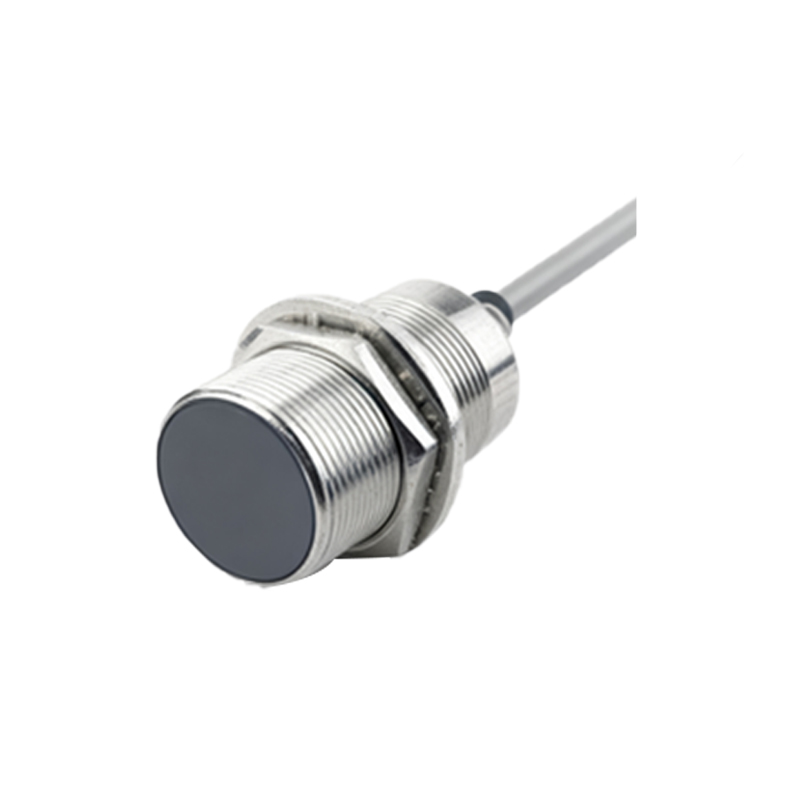
Liquid Level Detection: Reliably sensing the fill level of liquids in opaque or transparent tanks, a task difficult for many photoelectric sensors due to meniscus effects or transparency.
Bulk Material Sensing: Monitoring the level of granular solids, powders, or chips in silos or hoppers, where dust would blind a photoelectric beam.
Presence Detection of Transparent Objects: Consistently detecting clear films, glass containers, or plastic bottles on production lines.
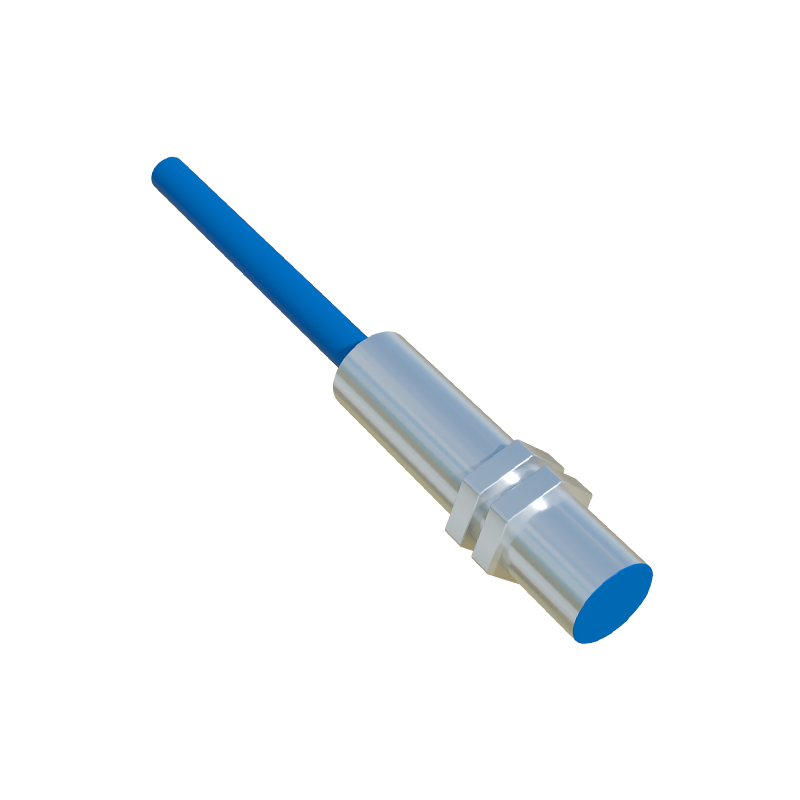
Distance Measurement: Providing analog output for precise positioning or dimensioning tasks, such as loop control in web handling or roll diameter measurement.
Harsh Environments: Operating reliably in washdown areas, outdoor applications, or settings with heavy condensation.
It is crucial, however, to understand the limitations of ultrasonic technology to ensure proper application. The speed of sound is affected by air temperature and, to a lesser degree, humidity and pressure. High-precision applications require temperature compensation circuits. Very soft materials like foam or fabric may absorb sound waves, reducing the echo strength. The sensing range, while sufficient for most industrial proximity tasks (from a few centimeters up to several meters), may not match the extreme long-range capabilities of some laser sensors. Additionally, the detection zone is typically conical, which requires consideration for tight space constraints compared to the precise, small spot of a focused photoelectric beam.
From an integration perspective, modern ultrasonic sensors offer features familiar to automation engineers. They are available in analog (4-20 mA, 0-10 V) and discrete (PNP/NPN) output versions, as well as IO-Link for advanced diagnostics and parameterization. Rugged housings with high IP ratings (e.g., IP67, IP69K) are standard. While the initial unit cost may be higher than a basic photoelectric sensor, the total cost of ownership can be lower when factoring in reduced maintenance, fewer false stops, and greater application flexibility.
In conclusion, while proximity photoelectric sensors will continue to hold their place in clean, controlled environments with well-defined targets, ultrasonic sensors present a compelling alternative for demanding industrial applications. Their environmental robustness, material-independent detection, and versatility in measuring distance and presence solve persistent engineering challenges. For system designers and engineers, the decision is no longer a binary choice but a strategic selection based on the specific physical and operational parameters of the task. By leveraging the strengths of ultrasonic technology, automation systems can achieve higher reliability, reduced downtime, and broader capability, marking a significant step forward in sensor-based control and measurement.