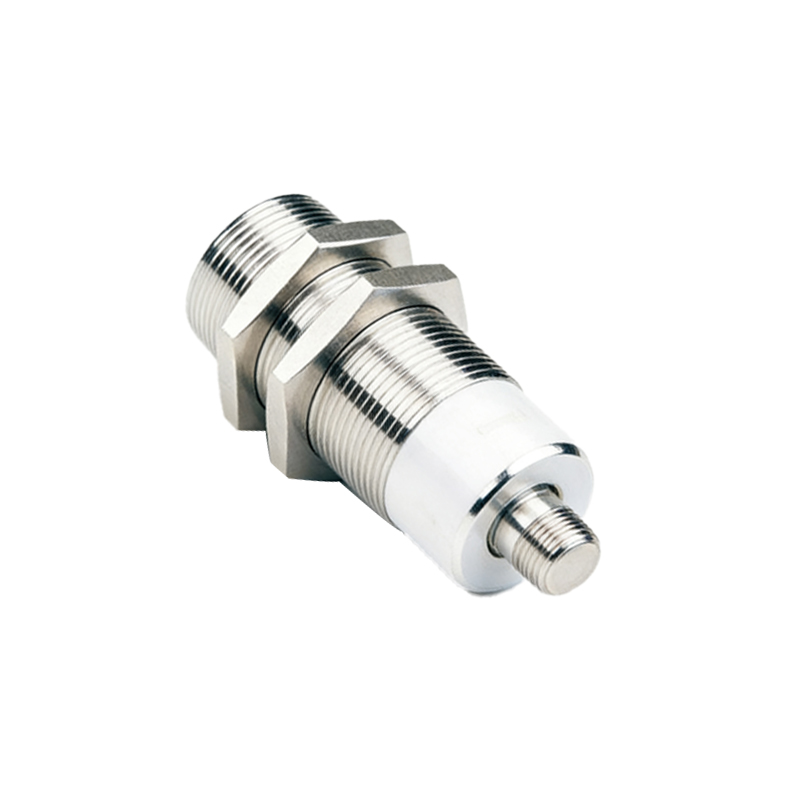
Inductive proximity sensors are fundamental components in modern industrial automation, designed specifically for the non-contact detection of metallic objects. Operating on the principle of electromagnetic induction, these robust devices generate an oscillating electromagnetic field from a coil located at their sensing face. When a metallic target enters this active field, eddy currents are induced on the surface of the metal. This causes a measurable change in the oscillation amplitude within the sensor's internal LC tank circuit. This change is detected by the sensor's evaluation circuitry, which subsequently triggers a solid-state output switch, sending a signal to a programmable logic controller (PLC) or other control system.
The core advantage of inductive sensors lies in their durability and reliability. With no moving parts and a hermetically sealed sensing face, they are exceptionally resistant to dust, dirt, oils, and coolants, making them ideal for harsh manufacturing environments like machining centers, stamping presses, and material handling systems. They are categorized primarily by their housing shape: cylindrical threaded barrels and rectangular block styles. Key performance specifications include sensing distance, which is standardized (e.g., Sn) for different target materials like mild steel, stainless steel, aluminum, and copper. It is critical to note that the effective sensing range reduces for non-ferrous metals due to lower permeability. Other vital parameters are switching frequency (response speed), repeat accuracy, temperature range, and output type (typically NPN or PNP, sinking or sourcing).
When selecting an inductive proximity sensor, engineers must consider several application-specific factors. The target material and size significantly influence performance; a target should be at least the size of the sensor's active face for reliable detection. Mounting considerations, such as flush or non-flush installation in metal, affect the nominal sensing distance due to the influence of surrounding ferrous material. Environmental factors like extreme temperatures, strong electromagnetic interference (EMI), or the presence of welding spatter must also be accounted for, often necessitating sensors with specialized housings or higher protection ratings (e.g., IP67, IP69K).
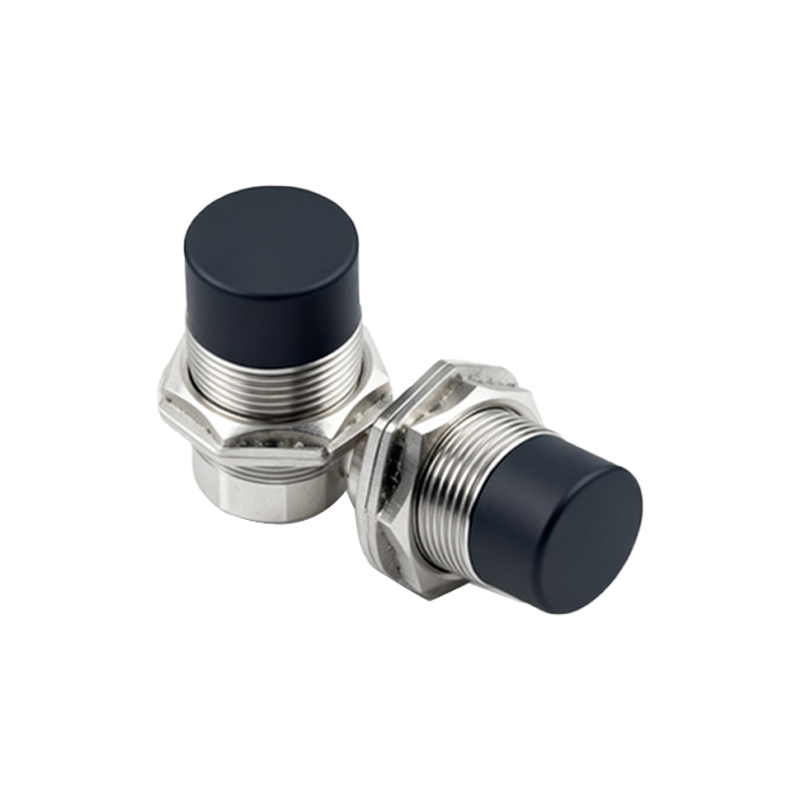
Common applications extend beyond simple presence detection. They are extensively used for precise position verification of machine parts, end-of-travel limit sensing, counting metallic objects on conveyors, and monitoring rotational speed by detecting gear teeth or keyways. Advanced models feature analog outputs (4-20 mA or 0-10V) for distance-proportional signaling or specialized designs for high-temperature applications near furnaces or in die-casting machines.
Maintenance is generally minimal, but ensuring long-term reliability involves periodic checks for physical damage, buildup of metallic debris on the sensing face, and verification of electrical connections. Understanding the interplay between the sensor's specifications and the real-world operating conditions is paramount for designing a robust, fail-safe automation system. As Industry 4.0 evolves, these sensors continue to integrate smarter diagnostics and IO-Link communication, providing detailed status information and parameterization capabilities directly to the control network, further enhancing system intelligence and predictive maintenance strategies.