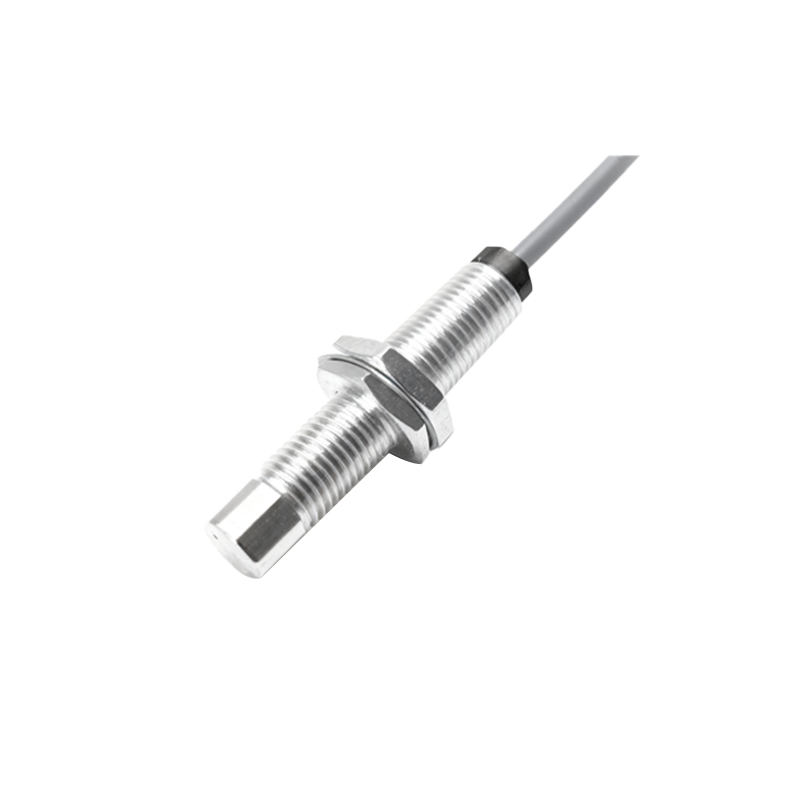
Proximity sensors are pivotal components in modern industrial automation, enabling non-contact detection of objects within a defined sensing range. Their construction varies based on the underlying technology, but common types include inductive, capacitive, ultrasonic, and photoelectric sensors. Each type is engineered with specific materials and components to optimize performance for particular applications, such as metal detection, liquid level sensing, or object positioning on assembly lines.
Inductive proximity sensors, designed primarily for detecting metallic objects, feature a coil wound around a ferrite core, an oscillator circuit, a signal evaluator, and an output switching circuit. Encased in a robust housing typically made of nickel-plated brass or stainless steel, the sensor generates an electromagnetic field via the oscillator. When a metal object enters this field, eddy currents are induced, causing a change in the oscillation amplitude. This change is detected by the evaluation circuit, which triggers the output switch—often a solid-state transistor—to change state, providing a signal to the control system. The sensing face is usually shielded to allow flush mounting in metal, enhancing durability in harsh environments.
Capacitive proximity sensors share a similar housing but incorporate a different sensing element. They utilize a charged plate (electrode) connected to an oscillator circuit. The sensor forms one plate of a capacitor, with the target object acting as the other plate. As an object approaches, the capacitance between the plate and the object increases, altering the oscillator's characteristics. This shift is processed to activate the output. These sensors can detect both metallic and non-metallic materials, including liquids, powders, and plastics, making them versatile for level control or material presence detection. Their construction often includes a sensitivity adjustment potentiometer to fine-tune the response for different dielectric materials.
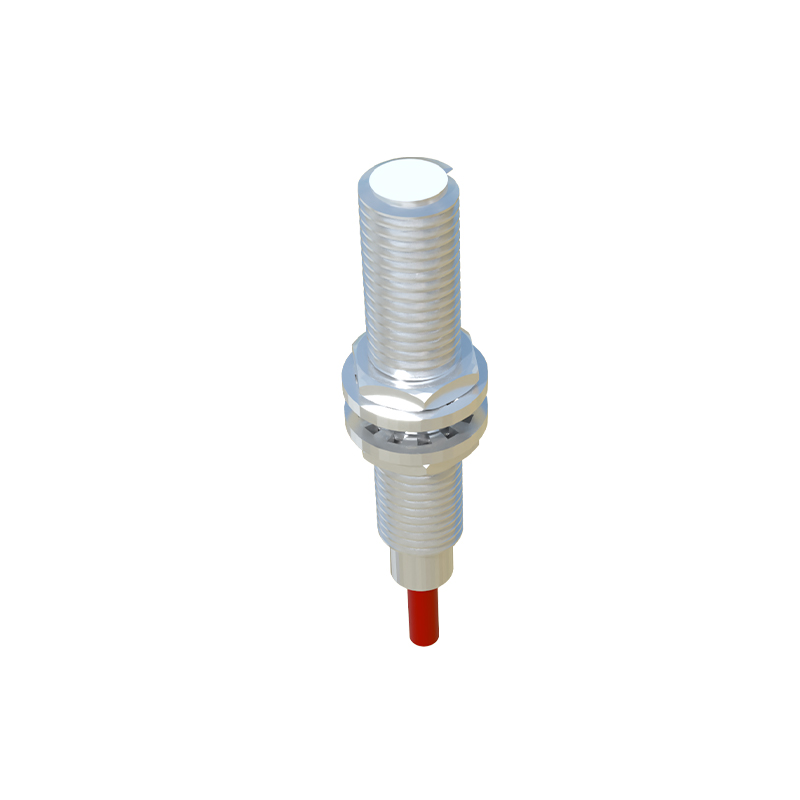
Ultrasonic proximity sensors employ a piezoelectric transducer to emit high-frequency sound waves (typically beyond 20 kHz) and receive their echoes. The construction includes the transducer, a control circuit for signal generation and processing, and a timing circuit to calculate the time-of-flight of the sound waves. The housing is designed to protect the transducer from environmental factors like dust or moisture, which could dampen the acoustic signal. By measuring the time interval between emission and echo reception, the sensor determines the presence and distance of an object. This technology is effective for detecting objects of various materials, including transparent items that may challenge photoelectric sensors.
Photoelectric sensors consist of a light emitter (usually an LED producing visible red, infrared, or laser light) and a receiver (phototransistor or photodiode). They are housed in units that may be separate (through-beam type) or combined (retro-reflective or diffuse reflective types). The housing includes lenses to focus the light beam and may feature alignment indicators. The internal circuitry modulates the emitted light to minimize interference from ambient light. When an object interrupts or reflects the light beam, the receiver detects the change, and the associated amplifier processes the signal to control the output. These sensors offer long sensing ranges and high precision for detecting small or fast-moving objects.
Across all types, modern proximity sensors integrate advanced electronics for functions like short-circuit protection, temperature compensation, and diagnostic LED indicators. The choice of housing material—such as PBT plastic for chemical resistance or stainless steel for high-pressure washdown—is critical for reliability in specific industrial conditions. Understanding the internal construction aids engineers in selecting the appropriate sensor technology, ensuring optimal performance in automation systems where accuracy, speed, and durability are paramount.