In the rapidly evolving landscape of industrial automation, consumer electronics, and robotics, the demand for more compact, efficient, and reliable sensing solutions has never been greater. Among the most transformative innovations meeting this demand is the ultra-thin proximity sensor. These sensors represent a significant leap forward from traditional, bulkier counterparts, offering unparalleled integration capabilities and performance in space-constrained applications. This article delves into the core functions, operational principles, and diverse applications of ultra-thin proximity sensors, highlighting their pivotal role in modern engineering.
At its essence, a proximity sensor is a device that detects the presence or absence of an object within a specified range without physical contact. Ultra-thin variants take this fundamental capability and package it into an exceptionally slim form factor, often just a few millimeters thick. This miniaturization is primarily achieved through advanced manufacturing techniques, innovative material science, and sophisticated circuit design. Common sensing technologies employed include capacitive, inductive, and optical methods, each tailored for specific material detection and environmental conditions.
The primary function of an ultra-thin proximity sensor is non-contact detection. In capacitive sensors, this involves detecting changes in an electrical field caused by a conductive or non-conductive target. Inductive sensors, on the other hand, generate an electromagnetic field to detect metallic objects. The "ultra-thin" design allows these sensors to be embedded directly into surfaces, panels, or moving parts where traditional sensors would be impractical. This enables seamless integration into the final product design, preserving aesthetics and functionality.

The applications of these sensors are vast and cross-disciplinary. In the consumer electronics sector, they are integral to modern smartphones and tablets, where they manage display states during calls (preventing accidental screen touches) and enable features like automatic screen wake-up. Their slim profile is critical for achieving the sleek designs demanded by the market. Within industrial automation, ultra-thin sensors facilitate precise positioning, object counting, and end-of-travel detection in machinery and conveyor systems. Their robustness allows them to operate reliably in harsh environments with dust, moisture, or temperature variations, often where maintenance access is limited.
In the automotive industry, these sensors enhance safety and user experience. They are used in occupant detection systems for airbag deployment optimization, in touch-sensitive control panels, and in automated parking assistance systems. The medical device field also benefits greatly, utilizing ultra-thin sensors in portable diagnostic equipment, surgical robots for tool positioning, and patient monitoring systems where hygiene and space are paramount. Furthermore, in robotics and collaborative robot (cobot) applications, these sensors provide essential input for obstacle avoidance and safe human-robot interaction, enabling closer and safer collaboration.
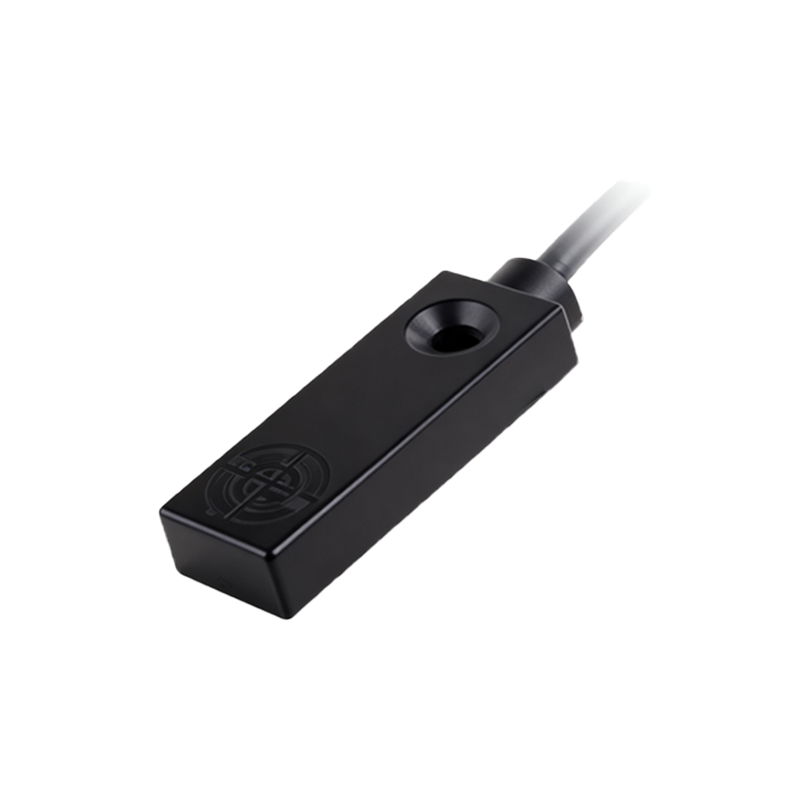
The advantages of ultra-thin proximity sensors extend beyond mere size. They typically offer low power consumption, extending battery life in portable devices. Their high switching frequencies allow for detection of very fast-moving objects on production lines. Additionally, their design often reduces installation complexity and associated costs, as they require less mounting space and hardware. Engineers can now design systems with sensing capabilities directly built into structural components, leading to more innovative and efficient machine designs.
However, selecting the right ultra-thin sensor requires careful consideration of several parameters: the sensing distance (which is typically shorter than larger sensors due to size constraints), the target material, the required response time, environmental factors like temperature and potential contaminants, and the output signal type (e.g., digital NPN/PNP or analog). Proper shielding and installation are also crucial to prevent electromagnetic interference, which can be more challenging in such compact designs.
Looking ahead, the evolution of ultra-thin proximity sensors is closely tied to trends in the Internet of Things (IoT) and Industry 4.0. The next generation will likely feature enhanced intelligence with integrated diagnostics, wireless connectivity, and even thinner, flexible formats enabled by printed electronics. These advancements will further blur the line between sensor and substrate, embedding sensing functionality into virtually any surface.
In conclusion, ultra-thin proximity sensors are not merely smaller versions of existing technology; they are enablers of new design paradigms. By providing reliable, non-contact detection in minimal space, they solve critical engineering challenges across industries. From making consumer devices smarter and safer to driving efficiency and safety in factories, their role is foundational. For engineers and designers, understanding the capabilities and integration strategies of these components is essential for developing the next generation of intelligent, compact, and high-performance systems. Their continued development will undoubtedly remain at the forefront of sensing innovation, pushing the boundaries of what is mechanically and electrically possible.