In the intricate world of industrial automation, where precision, reliability, and durability are non-negotiable, Omron proximity sensors stand as a cornerstone technology. These non-contact detection devices are engineered to sense the presence or absence of metallic or non-metallic objects without physical contact, thereby eliminating mechanical wear and enabling high-speed, maintenance-free operation. This guide delves into the core principles, diverse types, and critical application considerations for Omron's extensive proximity sensor portfolio.
At the heart of Omron's technology lies a commitment to robust performance. Inductive proximity sensors, the most common variant, generate an electromagnetic field. When a metallic object enters this field, it induces eddy currents, causing a change in oscillation amplitude that is detected by the sensor's circuit. Omron's E2E and E2A series are industry benchmarks, renowned for their exceptional sensing distance, temperature stability, and resistance to environmental contaminants like cutting oil or coolant. For non-metallic object detection, such as glass, plastic, or liquid levels, capacitive sensors (like the E2K series) are employed. They detect changes in capacitance caused by the target object, making them versatile for a wide range of materials.
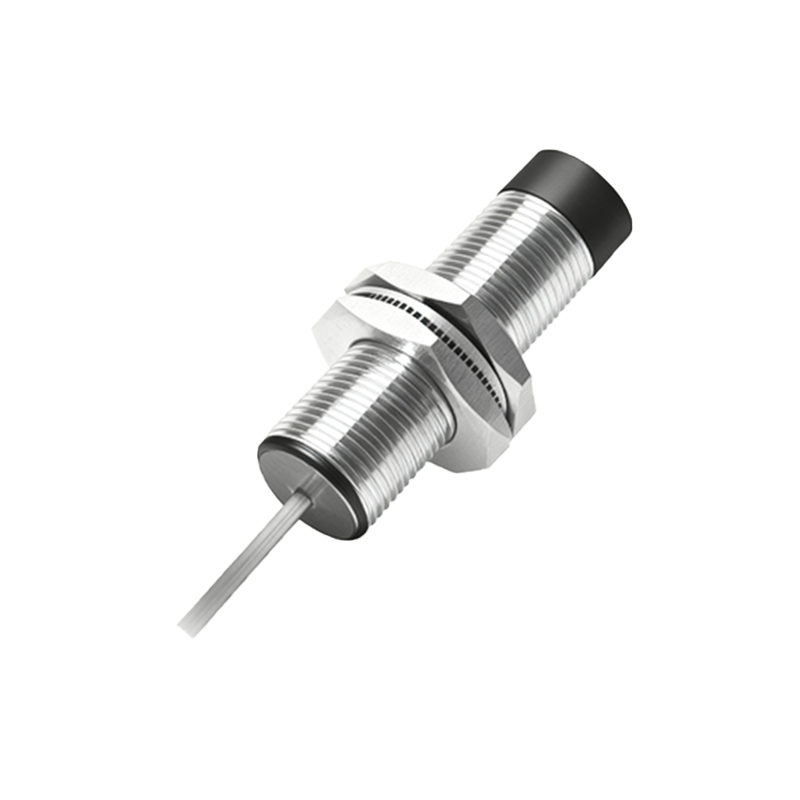
A key differentiator for Omron is its focus on solving specific industrial challenges. The company offers specialized models, including all-metal sensing types that detect both ferrous and non-ferrous metals with consistent sensitivity, and factor-1 cylindrical models that provide the same sensing distance for steel, aluminum, and copper. For harsh environments, Omron produces weld-field immune sensors designed to withstand intense magnetic interference from spot welding equipment, ensuring stable operation on automotive assembly lines. Furthermore, their flush-mountable models allow for side-by-side installation without mutual interference, optimizing space in compact machinery.
Selecting the right Omron proximity sensor requires a meticulous evaluation of several parameters. First, define the target material (steel, aluminum, plastic, etc.) to choose between inductive and capacitive types. Next, the nominal sensing distance, a critical specification, must be considered with a safety margin, typically 70-80% of the catalog value, to account for temperature fluctuations and supply voltage variations. The sensor housing is another vital factor; Omron provides cylindrical (threaded) barrels in various sizes (e.g., M8, M12, M18, M30) and rectangular shapes to suit different mounting configurations. Environmental ratings, encapsulated by the IP (Ingress Protection) code, are paramount. An IP67 rating, common in Omron's industrial sensors, guarantees protection against dust ingress and temporary immersion in water, making them suitable for washdown areas in food and beverage processing.
Electrical characteristics cannot be overlooked. The operating voltage range (commonly 10-30V DC), output configuration (NPN sinking or PNP sourcing), and output state (normally open or normally closed) must align with the control system's PLC or controller interface. Omron also offers advanced features like IO-Link connectivity in its E2E Next-Gen series, enabling digital parameter setting, condition monitoring, and diagnostic data transmission for Industry 4.0 readiness. This facilitates predictive maintenance by alerting operators to issues like sensing distance degradation or contamination buildup before a failure occurs.
Application best practices are essential for maximizing sensor lifespan and performance. Ensure proper mounting, maintaining the recommended clearance from surrounding metal to prevent false triggering. Use shielded cables in electrically noisy environments and secure cable connections tightly to prevent breakage from vibration. Regular functional checks, even with these highly reliable devices, should be part of a preventative maintenance schedule. Common pitfalls to avoid include using a standard inductive sensor to detect aluminum (which requires a reduced sensing distance factor), ignoring the hysteresis specification (which prevents chattering at the detection point), and miswiring the output, which can damage the sensor.
In conclusion, Omron proximity sensors represent a synthesis of precision engineering and practical innovation. From basic presence detection in packaging machinery to critical positioning tasks in robotic cells, their reliability forms the sensory backbone of modern automated systems. By understanding the technology, carefully matching sensor specifications to the application's mechanical, electrical, and environmental demands, and following installation guidelines, engineers and technicians can leverage Omron sensors to build automation solutions that are not only efficient and productive but also resilient and intelligent. The continued evolution of these devices, particularly with smart sensor capabilities, ensures they will remain indispensable in the journey toward fully connected and data-driven smart factories.