Inductive proximity sensors are fundamental components in modern industrial automation, offering non-contact detection of metallic objects. Their operation relies on electromagnetic principles, where an oscillator generates a high-frequency electromagnetic field from a coil in the sensor's face. When a metallic target enters this field, eddy currents are induced, causing a change in the oscillator's amplitude or frequency. The core intelligence of these sensors lies in the embedded algorithms that process this signal change to provide reliable, precise switching outputs.
The primary algorithmic challenge is distinguishing a genuine target detection from environmental noise and interference. Common noise sources include electrical noise from adjacent machinery, temperature variations affecting coil impedance, and the presence of different metal types with varying conductivity and permeability. Advanced sensors employ sophisticated digital signal processing (DSP) algorithms. A baseline algorithm continuously monitors the oscillator's "at-rest" state, establishing a dynamic threshold. This adaptive thresholding is crucial as it compensates for gradual environmental drift, such as temperature changes, preventing false triggers.
For target recognition, algorithms often implement a two-stage process: detection and verification. The detection phase identifies a rapid change in the oscillator's signal characteristic that exceeds the noise floor. The verification phase then analyzes the signal's shape, duration, and stability. A time-domain analysis ensures the signal persists for a minimum debounce time, filtering out transient electrical spikes. More advanced units utilize frequency-shift analysis rather than just amplitude damping. Ferrous metals (like iron) typically cause both amplitude reduction and a significant frequency drop due to their high permeability, while non-ferrous metals (like aluminum) primarily dampen amplitude with a lesser frequency shift. Algorithms can be tuned to be selectively sensitive to this difference, enabling material discrimination—a valuable feature in sorting applications.
Hysteresis is a fundamental algorithmic function implemented to ensure stable switching and prevent output chattering when a target is at the exact sensing point. The algorithm sets a lower threshold for switch-on when the target approaches and a higher threshold for switch-off as it retreats. This creates a dead band, guaranteeing a clean, single output transition. The width of this hysteresis band is often programmable, allowing engineers to tailor it to specific application speeds and mechanical vibration levels.
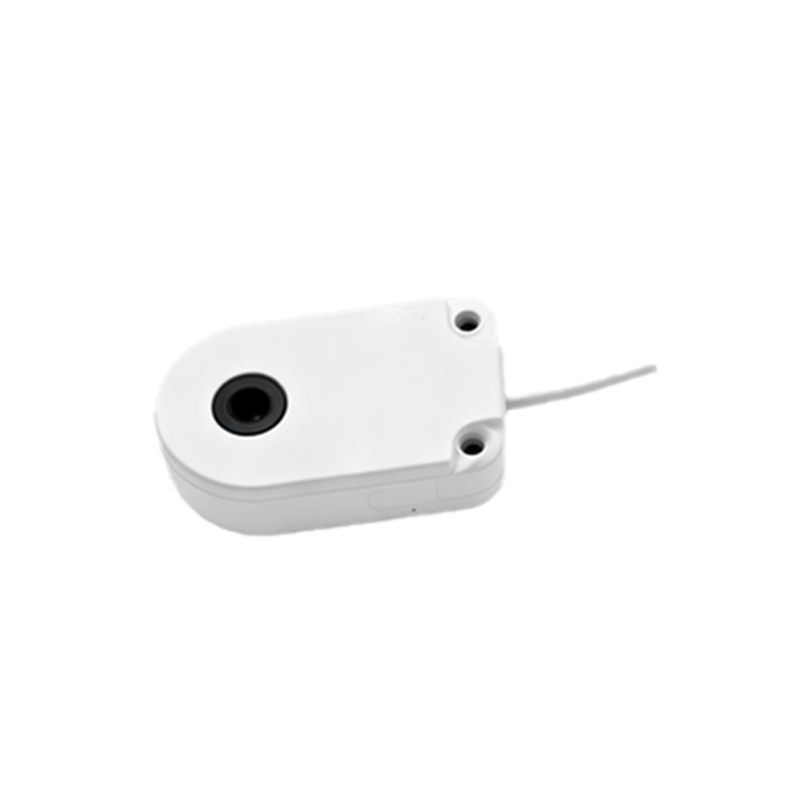
Modern smart sensors integrate microcontroller-based algorithms that enable advanced features. These include:
1. Teach-In Algorithms: This allows automatic calibration. The sensor is presented with a standard target at the desired sensing distance. The algorithm then learns and stores the corresponding signal value as the switching point, simplifying installation and compensating for mechanical tolerances.
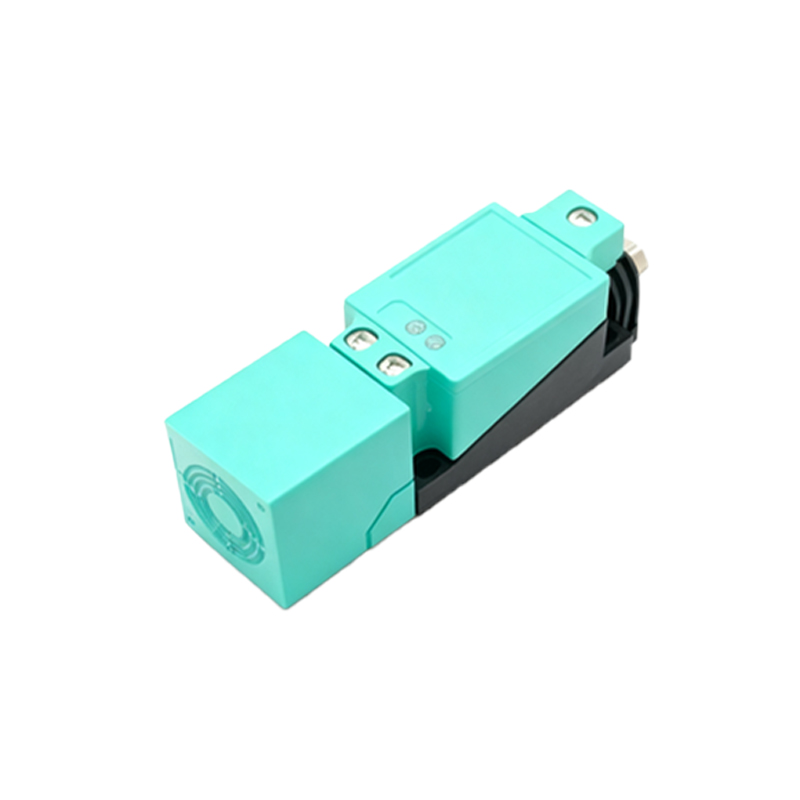
2. Diagnostics and Condition Monitoring: Algorithms continuously perform self-checks on the oscillator circuit, output stage, and supply voltage. They can predict potential failures by trending signal drift over time and communicate this data via IO-Link or analog outputs, facilitating predictive maintenance.
3. Compensation for Mounting Conditions: Sensors mounted flush in metal may have a slightly reduced nominal range. Intelligent algorithms can detect the mounting condition's effect on the electromagnetic field and adjust internal parameters to maintain consistent performance.
The evolution from analog to digital processing has been pivotal. Digital algorithms offer superior noise immunity through techniques like synchronous demodulation and band-pass filtering. They can also implement complex logical functions, such as window comparators (detecting if a signal is within a high and low limit) or time-delayed outputs, directly within the sensor housing. Looking forward, the integration of machine learning elements into sensor algorithms is an emerging frontier. By analyzing long-term signal patterns, sensors could learn to identify specific machine cycle anomalies or wear characteristics of targets, transitioning from simple binary switches to intelligent data sources for Industry 4.0 systems.
In conclusion, the efficacy of an inductive proximity sensor is not solely determined by its physical coil design but increasingly by the sophistication of its embedded algorithms. These algorithms transform a raw electromagnetic phenomenon into a robust, intelligent, and communicative device, forming the reliable sensory foundation for automated systems. Proper selection and configuration of a sensor's algorithmic capabilities are as critical as its mechanical specifications for ensuring optimal system performance and reliability.
SEO Keywords:inductive proximity sensor, detection algorithm, industrial automation, signal processing, smart sensor
SEO Description:Explore the core algorithms behind inductive proximity sensors, covering adaptive thresholding, hysteresis, material discrimination, and smart features like teach-in and diagnostics for reliable metal detection in automation.