In the rapidly evolving landscape of industrial automation, precision measurement is a cornerstone of efficiency, quality control, and safety. Among the myriad of sensing technologies available, the wide-range laser distance sensor stands out as a versatile and powerful tool. This article delves into the operational principles, key applications, and critical selection criteria for these sophisticated devices, providing a comprehensive overview for engineers and system integrators.
At its core, a wide-range laser distance sensor operates on the principle of time-of-flight (ToF) or phase-shift measurement. In the ToF method, the sensor emits a short pulse of laser light towards a target. A high-speed receiver then detects the reflected light. By precisely measuring the time interval between emission and reception, and knowing the constant speed of light, the sensor calculates the distance to the target with remarkable accuracy. Phase-shift sensors, on the other hand, modulate the intensity of the continuous laser beam. The distance is derived from the phase difference between the emitted and reflected modulated signal. Modern wide-range sensors often employ advanced signal processing algorithms to filter out ambient light noise and handle varying surface reflectivities, ensuring reliable performance from a few centimeters up to several hundred meters.
The defining characteristic of these sensors is their extended measurement range, which can span from 0.1 meters to over 300 meters, depending on the model and technology. This "wide-range" capability, combined with high accuracy (often in the sub-millimeter to millimeter range), high measurement speed (kHz frequencies), and non-contact operation, makes them indispensable in numerous industrial scenarios.

Key applications are diverse and impactful. In logistics and warehousing, they are used for pallet dimensioning, volume calculation, and guiding automated guided vehicles (AGVs) through dynamic environments. In the construction sector, they facilitate crane positioning, leveling, and monitoring structural deformations over large distances. Manufacturing lines leverage them for precise positioning of robotic arms, inspection of component profiles, and controlling fill levels in large silos or tanks. Furthermore, in the emerging fields of autonomous mobile robots and drone-based surveying, wide-range laser sensors provide essential environmental perception and mapping data.
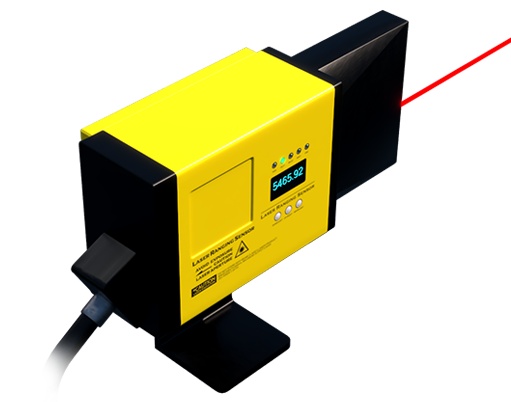
Selecting the appropriate wide-range laser sensor requires careful consideration of several technical parameters beyond just the maximum range. First, the required accuracy and repeatability must align with the application's tolerances. Second, the laser class (typically Class 1 or Class 2) is crucial for ensuring eye safety in the operational environment. The target properties—such as color, material, and surface texture—can significantly affect the signal strength; some sensors offer automatic exposure control or multiple echo processing to handle difficult surfaces like black rubber or granular materials. Environmental factors like dust, fog, rain, or extreme temperatures necessitate sensors with adequate Ingress Protection (IP) ratings and robust housings. Interface options (analog voltage/current, digital RS-422/485, Ethernet, PROFINET, EtherCAT) must be compatible with the existing control system. Finally, form factor and mounting options are practical considerations for integration.
A common challenge is dealing with highly reflective or absorbent surfaces. Engineers should consult datasheets for specific information on target reflectivity and may need to conduct tests with actual samples. Regular maintenance, primarily keeping the lens clean, is simple but vital for sustained optimal performance.

In conclusion, wide-range laser distance sensors are a transformative technology in industrial measurement. Their ability to deliver precise, non-contact distance data over extensive spans unlocks new levels of automation, safety, and data-driven decision-making. By understanding their operating principles and meticulously evaluating application requirements against sensor specifications, engineers can harness their full potential to build smarter, more responsive, and more efficient automated systems. As Industry 4.0 continues to mature, the role of these precise optical measurement tools will only become more central to connected and intelligent manufacturing ecosystems.