Selecting the appropriate laser sensor is a critical decision in industrial automation, measurement, and control systems. These devices offer high precision, non-contact operation, and rapid response times, making them indispensable in modern manufacturing, logistics, and quality assurance. However, the vast array of available models, each with distinct specifications and capabilities, can make the selection process daunting. This guide outlines key factors to consider, ensuring you choose a laser sensor that aligns perfectly with your application requirements.
The first step is to clearly define the application's primary objective. Common uses include distance measurement, precise positioning, object detection, contour profiling, and thickness gauging. For instance, in a packaging line where the presence of a box on a conveyor must be verified, a simple diffuse-reflective laser sensor for object detection suffices. Conversely, measuring the exact diameter of a rotating shaft demands a high-accuracy laser displacement sensor, often of the triangulation type. Misunderstanding the core task can lead to selecting an over-engineered, costly sensor or, worse, an inadequate one that fails under operational stress.

Next, evaluate the essential performance parameters. Range and Standoff Distance are fundamental. The measuring range is the distance over which the sensor can accurately detect or measure. The standoff is the optimal working distance from the sensor head to the target. Ensure your operational distance falls comfortably within these limits. Accuracy and Resolution are often confused. Accuracy refers to how close the measurement is to the true value, while resolution is the smallest change the sensor can detect. A high-resolution sensor with poor accuracy yields precise but incorrect data. For critical measurements, prioritize sensors with high accuracy specifications and good long-term stability.
Spot Size and Response Time are equally crucial. A smaller laser spot allows for measuring finer details or edges but may require more precise alignment. Response time, or switching frequency, determines how quickly the sensor can output a reading. For high-speed production lines or moving targets, a fast response time (in microseconds or milliseconds) is mandatory to avoid missing data points.
The target's characteristics profoundly influence sensor choice. Consider the Material, Color, and Surface Finish. A shiny, specular surface (like polished metal) reflects the laser beam at a predictable angle, often suitable for retro-reflective or thrubeam sensors. A matte, diffuse surface (like white paper) scatters light, typically requiring a diffuse-reflective sensor. Dark, absorbent materials or transparent objects (like glass or clear plastic) pose a significant challenge and may require specialized sensors with background suppression or precise adjustment of sensitivity. The target's size and possible movement (speed, vibration) must also be accounted for in the sensor's specifications.

Environmental conditions are a frequently overlooked yet vital factor. Industrial settings can be harsh. Ambient Light from factory lamps or sunlight can interfere with the sensor's laser, potentially causing false triggers. Look for sensors with robust background suppression or modulated laser light to mitigate this. Temperature, Humidity, and Dust can affect performance and longevity. Ensure the sensor's housing has an appropriate Ingress Protection (IP) rating (e.g., IP67 for dust and temporary immersion) and an operating temperature range suitable for your facility. Exposure to chemicals or mechanical shocks may necessitate a specific housing material like stainless steel.
Finally, consider the Electrical Output and Connectivity. Standard outputs include digital (PNP/NPN), analog (4-20 mA, 0-10 V), and serial interfaces (RS-232, RS-485). The choice depends on your control system (PLC, PC). Ease of Setup and Configuration is practical; some sensors feature teach-in buttons or intuitive software for quick calibration. Don't forget mounting options, cable length, and long-term maintenance and support availability from the supplier.
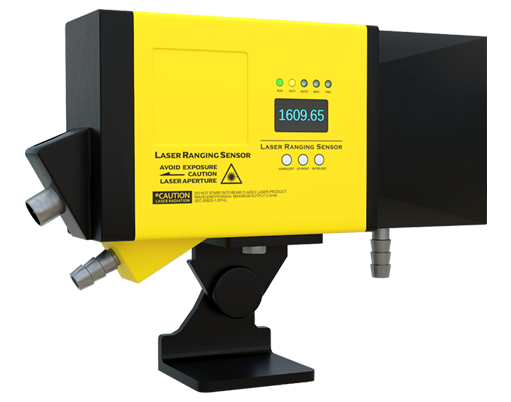
In summary, successful laser sensor selection is a systematic process of matching technical specifications to application demands. Start with a precise definition of the task, rigorously assess parameters like range, accuracy, and response time, account for target properties and environmental rigors, and ensure electrical and mechanical compatibility. Consulting with technical specialists from sensor manufacturers during the planning phase can provide invaluable insights, preventing costly errors and ensuring a reliable, efficient integration into your system. Investing time in this selection process guarantees that the laser sensor becomes a robust and precise tool, enhancing productivity and quality control.