In the world of modern imaging, from smartphones to professional cameras, achieving sharp focus quickly and accurately is paramount. While traditional contrast-detection and phase-detection autofocus systems have served well, a newer technology has emerged as a game-changer for speed and precision, especially in challenging conditions: the laser autofocus sensor. This article delves into the mechanics, advantages, and applications of this fascinating technology.
At its core, a laser autofocus (AF) system is an active distance-measuring device. Unlike passive systems that analyze light coming from the scene, an active laser system projects its own invisible infrared laser beam onto the subject. A dedicated sensor then measures the time it takes for that laser pulse to reflect off the subject and return to the sensor. This method is known as "Time-of-Flight" (ToF) measurement. By knowing the speed of light and precisely timing the round trip of the laser pulse, the camera's processor can calculate the exact distance to the subject with remarkable accuracy, often to within millimeters.
This process happens in a fraction of a second. Once the distance is determined, the camera's firmware instantly commands the lens's focusing motor to move the lens elements to the precise position required for that calculated distance. The result is an almost instantaneous "lock" on focus, without the "hunting" back-and-forth movement common in some passive AF systems, particularly in low-light or low-contrast scenarios.
The benefits of laser autofocus are significant. First and foremost is its speed. Because it relies on its own emitted light rather than ambient scene light or contrast, it can focus exceptionally fast, often in under 0.3 seconds. This makes it ideal for capturing quick, spontaneous moments. Second is its reliability in poor lighting. In near-darkness, where contrast-detection AF fails, the laser system operates unimpeded, as it provides its own light source. Similarly, it excels with subjects that have little texture or contrast, such as a blank wall or a smooth object, where passive systems struggle to find a point of reference.
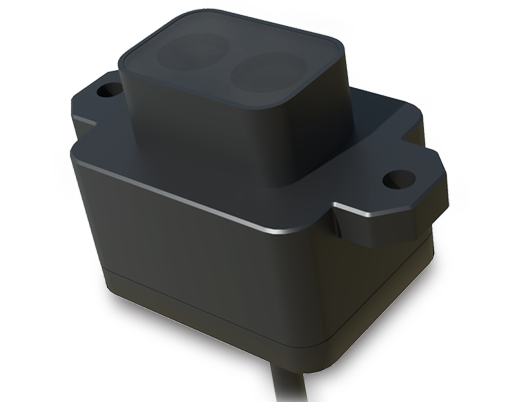
Furthermore, laser AF can be very effective for macro or close-up photography, where depth of field is extremely shallow and precise distance measurement is critical. It also consumes less power during the focusing process compared to systems that require constant sensor analysis and lens motor movement for hunting.
However, the technology is not without limitations. The effective range is typically limited to a few meters (often around 2-5 meters, depending on the implementation), as the laser beam disperses over longer distances. It is primarily designed for short to medium-range focusing. Also, the system can be confused if the laser beam hits a transparent surface, like a window, or reflects off an unintended object. Most implementations therefore use laser AF as a complementary system, initiating a fast focus lock which is then refined or maintained by a traditional phase-detection or contrast-detection AF system for tracking or continuous focus.
The application of laser autofocus sensors has become widespread, most notably in mobile phones. Manufacturers integrated it to solve the common problem of slow, unreliable focusing in smartphone cameras. Its small size and low power consumption make it a perfect fit for compact devices. Beyond consumer electronics, the principles are used in industrial automation for object positioning, in robotics for navigation and obstacle detection, and in various scientific instruments.
Looking forward, the evolution of laser sensing continues. More advanced ToF sensors, which can map entire scenes in 3D, are finding their way into devices for augmented reality and improved portrait mode effects. While these are different from a single-point laser AF sensor, they share the same fundamental principle of using emitted light to measure distance.
In conclusion, the laser autofocus sensor represents a brilliant application of active ranging technology to solve a persistent challenge in photography. By providing a fast, reliable, and low-light-capable method for determining subject distance, it enhances the user experience across countless devices. While often working behind the scenes in tandem with other AF technologies, its role is crucial in delivering the instant, sharp focus that users have come to expect in today's fast-paced, visually-driven world.