Proximity sensors are a cornerstone of modern automation, enabling machines to detect the presence or absence of objects without physical contact. Their ability to operate reliably in harsh environments and provide fast, non-invasive detection makes them indispensable in industries ranging from manufacturing and automotive to consumer electronics and security. Understanding the different proximity sensor models is crucial for selecting the right device for a specific application. This article delves into the primary types, their underlying working principles, and key factors to consider during the selection process.
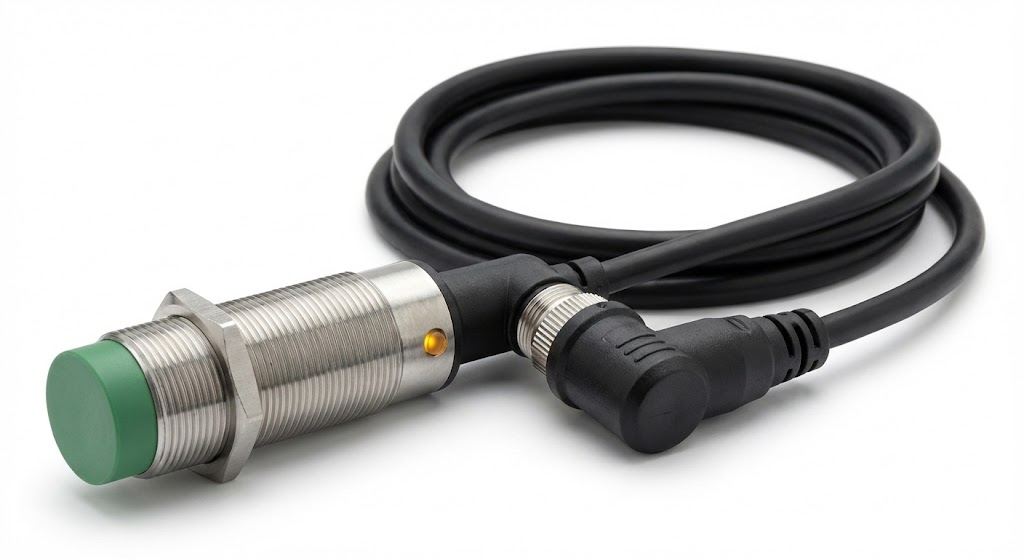
The most common categorization of proximity sensors is based on their sensing technology. Inductive proximity sensors are widely used for detecting metallic objects. They generate an electromagnetic field from a coil in the sensor's face. When a ferrous or non-ferrous metal object enters this field, it induces eddy currents, causing a change in the oscillation amplitude. The sensor's circuit detects this change and triggers a switching signal. These models are highly robust, resistant to dirt and moisture, and excel in industrial settings for tasks like counting metal parts, detecting piston position in cylinders, or ensuring machine tool positioning.
Capacitive proximity sensors, on the other hand, can detect both metallic and non-metallic materials, including liquids, plastics, glass, and wood. They function by generating an electrostatic field. Any object that enters this field alters the capacitance of the sensor's circuit. This change is measured, and when it exceeds a preset threshold, the sensor activates. This makes capacitive models versatile for applications like liquid level detection in tanks, monitoring presence of plastic or glass bottles on a conveyor, or detecting wood chips or grains. They are sensitive to environmental factors like humidity and require careful calibration.
For longer-range detection and sensing of all material types, photoelectric sensors are the preferred choice. These models consist of a light emitter (usually LED) and a receiver. They operate in three main configurations: through-beam, retro-reflective, and diffuse. Through-beam models have separate emitter and receiver units; an object is detected when it interrupts the light beam, offering the longest sensing range and highest reliability. Retro-reflective types use a single unit and a reflector, detecting an object when it blocks the reflected beam. Diffuse (or proximity) sensors have the emitter and receiver in one housing and detect an object by measuring the light reflected directly from the target itself, making them simpler to install but with a shorter range. Photoelectric sensors are ideal for packaging, material handling, and assembly lines.
Ultrasonic proximity sensors use sound waves beyond the human hearing range. They emit ultrasonic pulses and measure the time it takes for the echo to return from a target object. By calculating this time-of-flight, they can determine both presence and distance. These sensors are excellent for detecting objects regardless of color, transparency, or material, and are commonly used for level measurement in silos, distance control, and detecting transparent films or glass bottles where photoelectric sensors might struggle.
Magnetic proximity sensors, often called reed switches or Hall-effect sensors, detect the presence of a permanent magnet. Reed switches use two ferromagnetic reeds sealed in a glass tube; a nearby magnetic field causes the reeds to attract and close the contact. Hall-effect sensors produce a voltage change when exposed to a magnetic field. These models are frequently used for detecting the position of doors and windows, in cylinder position sensing with embedded magnets, and in low-power, high-reliability applications.
Selecting the appropriate proximity sensor model requires a careful analysis of several parameters. First, identify the target material (metal, plastic, liquid) and its characteristics. Next, consider the required sensing distance or range, ensuring to account for the sensor's rated operating distance under real conditions. The operating environment is critical—factors like temperature extremes, presence of dust, oil, or chemicals will dictate the needed ingress protection (IP) rating and housing material (e.g., stainless steel for washdown areas). Electrical requirements, such as the output type (PNP/NPN, analog, IO-Link), supply voltage, and current load, must match the control system. Finally, physical constraints like sensor size, mounting style (flush or non-flush for inductive), and connection type (cable or connector) play a decisive role.
In conclusion, the diverse family of proximity sensor models—inductive, capacitive, photoelectric, ultrasonic, and magnetic—offers a solution for nearly every non-contact detection challenge. By thoroughly understanding the working principle of each type and systematically evaluating the application requirements, engineers and technicians can ensure optimal performance, reliability, and longevity in their automated systems. The correct choice not only improves efficiency but also enhances safety and reduces maintenance costs.