Laser sensors have become integral components across numerous industries due to their exceptional precision and reliability. These devices operate by emitting a focused beam of light, typically in the visible or infrared spectrum, and measuring the reflection to determine distance, displacement, or presence of an object. One of the most prominent characteristics of laser sensors is their high accuracy. Capable of achieving micrometer-level resolution, they provide measurements with minimal error, making them indispensable in quality control and metrology applications where exact tolerances are critical.
Another defining feature is their exceptional speed. Laser sensors can perform thousands of measurements per second, enabling real-time monitoring and control in high-speed production lines, such as those in automotive manufacturing or electronics assembly. This rapid response time ensures processes remain efficient and defects are detected instantaneously. Furthermore, laser sensors offer excellent resolution, allowing them to detect even the slightest changes in position or surface profile. This sensitivity is crucial for applications like wafer inspection in semiconductor fabrication or thickness monitoring in paper and film production.
The non-contact nature of laser sensing is a significant advantage. By not physically touching the target object, these sensors prevent contamination, wear, and potential damage to both the sensor and the measured item. This characteristic is vital in cleanroom environments, food processing, and when dealing with delicate materials. Additionally, laser sensors are known for their long operational range. Depending on the model, they can accurately measure distances from a few millimeters up to several hundred meters, providing versatility for tasks ranging from robotic positioning to large-scale surveying.
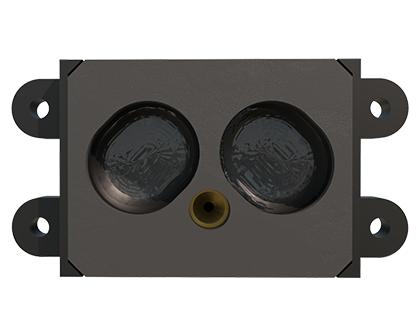
Environmental robustness is another key trait. Many laser sensors are designed with rugged housings that protect against dust, moisture, and vibration, ensuring stable performance in harsh industrial settings like mining, construction, and outdoor logistics. They also maintain functionality across a wide temperature range, unlike some other sensing technologies that may drift or fail under extreme conditions. The ability to integrate with digital networks and industrial communication protocols, such as IO-Link, Ethernet/IP, or PROFINET, enhances their adaptability in Industry 4.0 and smart factory ecosystems, allowing for seamless data collection and system control.
Despite these strengths, certain limitations exist. Laser sensors can be sensitive to ambient light interference, particularly from other strong light sources, which may affect reading stability. The properties of the target surface, such as color, reflectivity, and texture, can also influence measurement accuracy; highly reflective or transparent materials may require special calibration or sensor models. However, advancements like background suppression technology and adaptive algorithms have mitigated many of these challenges.
In practice, laser sensors are deployed in diverse scenarios. In automotive manufacturing, they ensure precise alignment of components and inspect weld seam quality. Within logistics, they facilitate dimensioning packages for shipping and guide autonomous mobile robots. Medical devices utilize them for non-invasive diagnostics and precise surgical tool positioning. Even consumer electronics, like smartphones, incorporate miniature laser sensors for autofocus cameras and facial recognition systems.
The evolution of laser sensing technology continues to drive innovation. Developments in miniaturization, power efficiency, and cost reduction are expanding their applicability. Emerging trends include the integration of artificial intelligence for predictive maintenance and anomaly detection, as well as the use of multi-sensor fusion to create more comprehensive perception systems. As industries increasingly prioritize automation, quality, and efficiency, the role of laser sensors is set to grow, underpinning advancements in robotics, autonomous vehicles, and smart infrastructure. Their unique combination of accuracy, speed, and versatility ensures they remain a cornerstone of modern measurement and detection solutions.