Proximity disc sensors, often referred to as disc-type proximity switches or flat proximity sensors, represent a specialized category within the vast field of industrial automation sensing technology. Characterized by their distinctive flat, disc-like housing, these sensors are engineered for applications where space is at a premium and a low-profile design is critical. Unlike their cylindrical counterparts, the disc sensor's form factor allows for installation in tight spaces, such as within machinery frames, on conveyor system side plates, or behind thin panels, without protruding significantly.
The fundamental operating principle of most industrial proximity disc sensors is based on electromagnetic induction, making them inductive proximity sensors. The sensor generates a high-frequency oscillating electromagnetic field from its flat sensing face. When a metallic target object—typically ferrous metals like steel or iron, though some models can detect non-ferrous metals—enters this field, eddy currents are induced on the target's surface. This causes a change in the oscillation amplitude within the sensor's internal LC circuit. An evaluation circuit detects this change and triggers a solid-state switching output, signaling the presence of the object. This entire process is non-contact, meaning the sensor and the target never physically touch, leading to exceptionally long operational life and high reliability with no mechanical wear.
Key technical features define the performance and selection criteria for these components. One of the most critical specifications is the sensing distance, or nominal range. For disc sensors, this distance is typically very short, often ranging from 1 to 5 millimeters, due to the compact nature of the sensing coil housed within the thin disc. This short range is not a limitation but a design feature for precise detection in confined areas. The sensors are also characterized by their switching frequency, which indicates how many detection cycles they can perform per second. High-speed models are essential for counting fast-moving parts on a production line. Furthermore, they are built to withstand harsh industrial environments, featuring robust housing materials like nickel-plated brass or stainless steel, and offer high degrees of ingress protection (e.g., IP67) against dust and water. Output configurations are another vital consideration, with common types being NPN (sinking) or PNP (sourcing) DC outputs, and sometimes Normally Open (NO) or Normally Closed (NC) logic.
The application spectrum for proximity disc sensors is broad and integral to modern manufacturing and machinery. A primary use case is position verification and end-of-travel detection. For instance, they are mounted on the sides of linear slides or actuators to confirm that a pneumatic or hydraulic cylinder has fully retracted or extended. In automated assembly and packaging machinery, these sensors are indispensable for part presence detection. Their slim profile allows them to be mounted directly next to a fixture or chute to verify that a component is correctly seated before the next process step, such as welding or screwing, commences. They are also widely used in material handling for monitoring the position of elevator platforms, lift gates, or automated guided vehicles (AGVs). Another sophisticated application is in rotary encoding and speed monitoring, where a sensor detects the teeth or holes of a gear or encoder disc rotating in close proximity to its face.
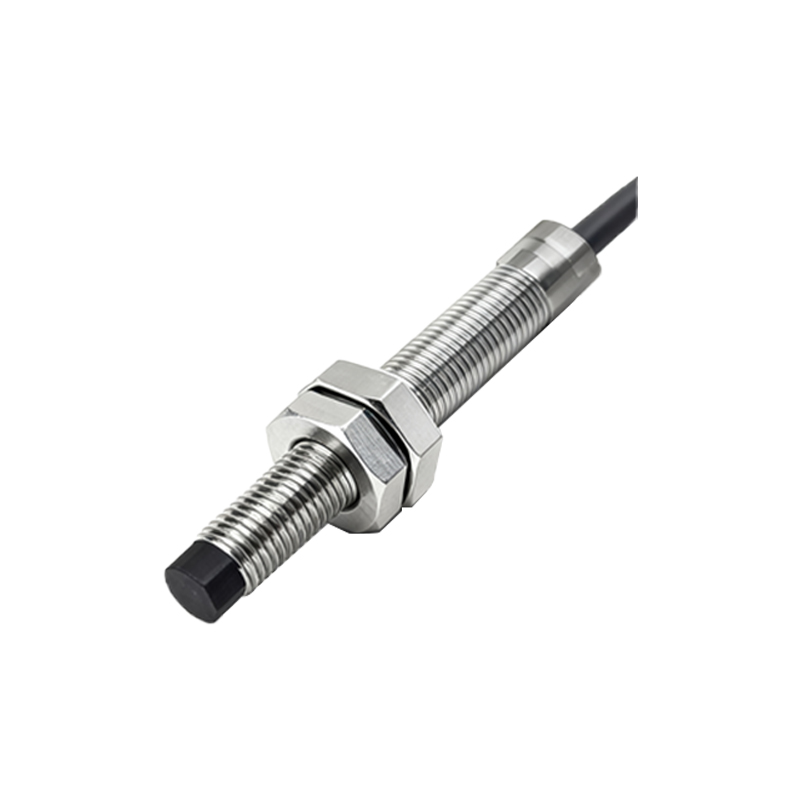
When integrating a disc proximity sensor into a system, several installation and operational factors must be meticulously considered. Correct mounting is paramount; the sensor must be flush with or recessed in a metal bracket to optimize its sensing field and prevent false triggers from surrounding metal. The material, size, and approach direction of the target object directly affect the effective sensing range. Standardized targets are often used for calibration. Engineers must also account for environmental conditions such as temperature extremes, the presence of cutting fluids or oils, and potential electrical interference from nearby motors or frequency drives. Proper shielding and cable management are essential for stable signal integrity.
In summary, the proximity disc sensor is a vital, unsung hero in automation. Its unique flat design solves spatial challenges that cylindrical sensors cannot, providing reliable, wear-free object detection in countless tight spaces. From ensuring robotic arms are in their home position to confirming the presence of a bottle cap on a filling line, these sensors deliver the critical feedback that keeps automated systems running safely, precisely, and efficiently. Their continued evolution, including the development of models with extended ranges or enhanced resistance to specific environmental factors, ensures they will remain a cornerstone of industrial sensing solutions.