In the realm of industrial automation and precision control, proximity sensors stand as indispensable components for non-contact detection. Among the diverse technologies available, high-frequency oscillation proximity sensors have carved out a significant niche, particularly in applications demanding high sensitivity and rapid response to metallic targets. This article delves into the operational principles, key characteristics, application scenarios, and critical selection criteria for these sophisticated devices.
Fundamental Operating Principle
At its core, a high-frequency oscillation proximity sensor operates on the principle of electromagnetic induction. The sensor contains an oscillator circuit that generates a high-frequency electromagnetic field from its sensing face, typically in the range of several hundred kHz to several MHz. When a metallic object enters this oscillating field, eddy currents are induced on the surface of the target. These eddy currents draw energy from the oscillator, resulting in a dampening or attenuation of the oscillation amplitude. An internal detection circuit continuously monitors this amplitude. Once the damping exceeds a predefined threshold—corresponding to the object being within the specified sensing distance—the sensor's output state changes, signaling the presence of the target. This entire process occurs without any physical contact, making it ideal for harsh environments or applications involving fragile materials.
Key Characteristics and Advantages
High-frequency oscillation sensors offer a distinct set of advantages that make them suitable for challenging industrial tasks:
1. High Sensitivity and Precision: They excel at detecting small metallic objects and can achieve very precise sensing distances, often with high repeatability.
2. Fast Response Time: The electronic detection mechanism allows for extremely swift switching speeds, capable of detecting objects moving at high velocities, which is crucial for high-speed counting or sorting applications.
3. Resilience to Surface Conditions: Unlike some optical sensors, their performance is generally unaffected by dust, dirt, oil, or water films on either the sensor face or the target object, provided these contaminants are non-metallic.
4. Target-Specific Detection: Primarily designed for metals, their sensing characteristics can vary based on the target material. Ferrous metals (like iron and steel) typically induce a longer sensing range than non-ferrous metals (like aluminum, copper, or brass). This property can sometimes be leveraged for material discrimination.
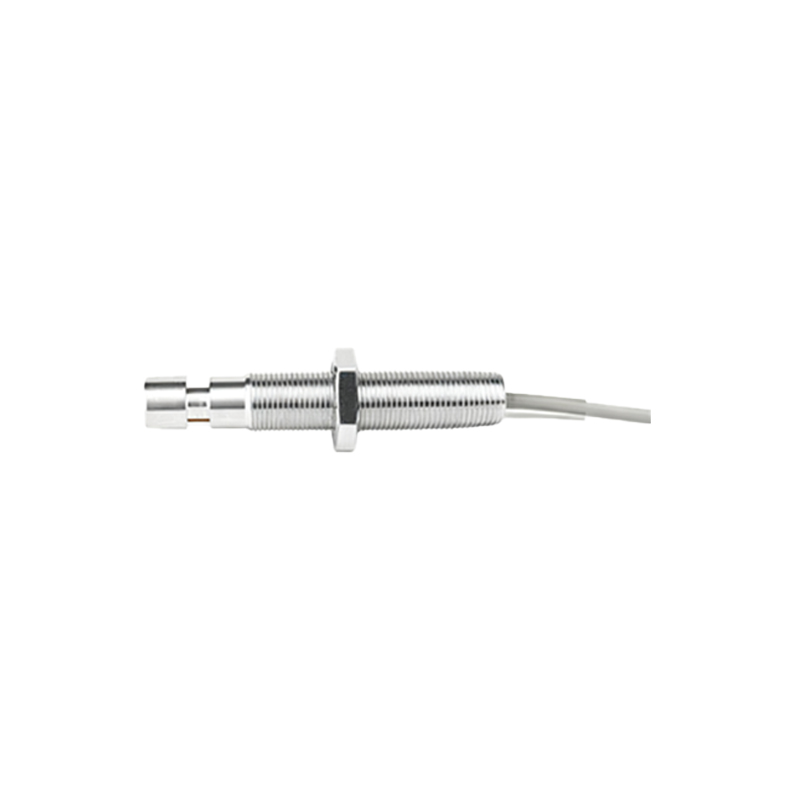
5. Compact and Robust Design: Modern versions are often housed in rugged, sealed metal or polymer casings with ingress protection (IP) ratings suitable for washdown or outdoor use.
Typical Industrial Applications
The unique capabilities of these sensors make them workhorses across various sectors:
Machine Tooling and CNC Machinery: Used for tool wear detection, tool breakage monitoring, and verifying the presence of workpieces or fixtures on pallets.
Material Handling and Packaging: Employed in conveyor systems to detect the presence of cans, metallic lids, or foil packaging for counting, positioning, and process initiation.
Automotive Manufacturing: Critical for robotic weld gun positioning, detecting piston position, verifying part presence in assemblies, and monitoring metal stamping operations.
Metal Fabrication: Used to detect the edge of metal sheets or coils, control loop processes, and monitor the passage of metal parts through processing stages.
Selection and Installation Considerations
Choosing the correct high-frequency oscillation sensor is paramount for reliable operation. Engineers must consider several factors:
Sensing Distance: The nominal sensing distance (Sn) is specified for a standard target (usually mild steel). The effective sensing distance can be reduced for non-ferrous metals. A safety factor (typically 70-80% of Sn) should be applied to account for temperature fluctuations, voltage variations, and manufacturing tolerances.
Target Material and Size: The sensor must be selected based on the specific metal being detected. The target object should also be at least as large as the sensor's sensing face to ensure reliable operation.
Output Type: Common outputs include NPN, PNP (digital switching), and analog (4-20 mA or 0-10 V) versions. The choice depends on the input requirements of the connected controller (PLC, relay, etc.).
Environmental Factors: The required IP rating for dust and water resistance, operating temperature range, and resistance to chemicals or cutting fluids must align with the installation environment.
Mounting and Flushability: Many sensors are "flush-mountable," meaning they can be embedded in metal without affecting their sensing field, preventing false triggers from surrounding metal. Non-flush models offer longer ranges but require a clear non-metallic zone around them.
In conclusion, high-frequency oscillation proximity sensors are a mature yet vital technology for modern industrial automation. Their non-contact nature, robustness, and high-speed performance make them a reliable solution for countless detection tasks involving metallic objects. A thorough understanding of their operating principles and a careful selection process based on the specific