In the rapidly evolving field of electrical engineering, laser amplification sensors have emerged as pivotal components, driving advancements in precision measurement, automation, and industrial control systems. These sensors utilize the principles of laser amplification to enhance signal detection, offering unparalleled accuracy and sensitivity in diverse applications. At their core, laser amplification sensors operate by amplifying weak optical signals through stimulated emission, a process that enables the detection of minute changes in physical parameters such as distance, temperature, pressure, and vibration. This technology is particularly valuable in environments where traditional sensors may falter due to noise interference or limited resolution.
The fundamental mechanism involves a laser medium—often a solid-state, gas, or semiconductor material—that is excited by an external energy source, such as an electrical current or another laser. When photons interact with this excited medium, they trigger the emission of additional photons with identical phase and direction, resulting in coherent light amplification. This amplified light is then directed onto a photodetector, which converts the optical signal into an electrical output for analysis. The key advantage lies in the sensor's ability to maintain signal integrity over long distances and in harsh conditions, making it ideal for use in aerospace, manufacturing, and telecommunications industries.
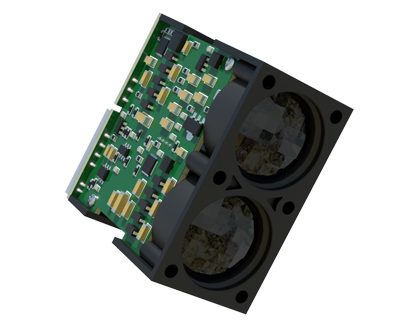
One of the primary applications of laser amplification sensors is in LiDAR (Light Detection and Ranging) systems, where they enhance the detection of objects and terrain mapping with high spatial resolution. In industrial automation, these sensors facilitate non-contact measurement of components on assembly lines, ensuring quality control without physical wear. Additionally, in medical diagnostics, laser amplification sensors contribute to imaging techniques like optical coherence tomography, enabling detailed visualization of biological tissues. The integration of fiber optics has further expanded their utility, allowing for compact designs and remote sensing capabilities in confined or hazardous areas.
Despite their benefits, challenges persist, including high costs, sensitivity to environmental factors like temperature fluctuations, and the need for precise alignment. Ongoing research focuses on developing more robust and cost-effective materials, such as quantum dot lasers and photonic crystal fibers, to overcome these limitations. Moreover, advancements in signal processing algorithms are enhancing the sensors' ability to filter noise and improve data accuracy. As industries increasingly adopt smart technologies and the Internet of Things (IoT), laser amplification sensors are poised to play a critical role in enabling real-time monitoring and adaptive control systems.
In conclusion, laser amplification sensors represent a significant leap forward in sensor technology, offering enhanced performance that meets the demands of modern electrical engineering. By leveraging the principles of laser physics, these devices provide reliable, high-precision measurements that are essential for innovation across various sectors. As technology continues to evolve, their adoption is expected to grow, paving the way for more efficient and intelligent systems in the future.