In the rapidly evolving landscape of industrial automation and smart systems, laser gesture sensors have emerged as a pivotal technology, fundamentally transforming how humans interact with machines. Unlike traditional touch-based interfaces or conventional proximity sensors, these advanced devices utilize laser beams to detect and interpret precise hand movements and gestures without physical contact. This non-contact operation is not merely a convenience; it represents a significant leap in hygiene, safety, and operational efficiency, particularly in environments where sterility is paramount or where machinery poses inherent risks.
The core technology behind laser gesture sensors typically involves the emission of a low-power, focused laser beam. When a hand or finger enters this beam's path, it disrupts the light pattern. Sophisticated photodetectors and embedded algorithms then analyze these disruptions in real-time. By measuring changes in light intensity, reflection angles, or time-of-flight, the sensor can accurately map the gesture in three-dimensional space. This data is processed to recognize specific commands—such as a swipe, pinch, wave, or a custom-defined motion—translating them into actionable digital signals for the connected system. This process occurs within milliseconds, enabling seamless and intuitive control.
The industrial applications for this technology are vast and growing. On manufacturing floors, laser gesture sensors allow operators to control robotic arms, conveyor systems, or complex machinery from a safe distance. This reduces the risk of accidents and minimizes contamination in cleanrooms for semiconductor or pharmaceutical production. In logistics and warehousing, workers can direct automated guided vehicles (AGVs) or sortation systems with simple hand signals, keeping their hands free for other tasks and boosting overall workflow efficiency. Furthermore, in maintenance and training scenarios, technicians can interact with digital manuals or control panels without removing gloves or touching screens, preventing wear and tear on equipment and maintaining a sterile workspace.
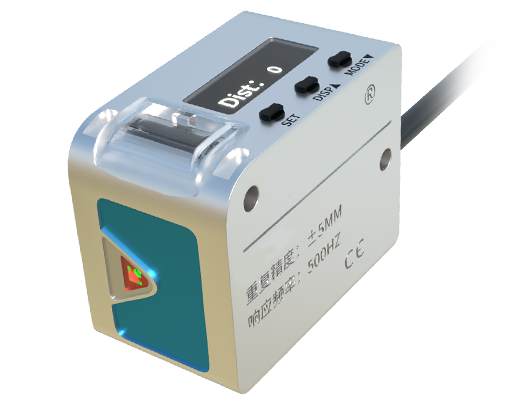
From an engineering perspective, integrating laser gesture sensors presents distinct advantages over alternative solutions like cameras or capacitive sensors. Cameras, while powerful for complex image recognition, often struggle with variable lighting conditions, require significant processing power, and raise privacy concerns. Capacitive sensors necessitate close proximity and can be unreliable with gloved hands. Laser sensors, however, offer high precision, immunity to ambient light interference, and consistent performance regardless of the operator's attire. Their compact form factor and low power consumption make them ideal for embedding into existing industrial hardware without major redesigns.
However, successful deployment requires careful consideration. Engineers must account for the sensor's field of view, detection range, and environmental factors like excessive dust or highly reflective surfaces that could cause false readings. Calibration is crucial to ensure gestures are interpreted correctly across different users. Moreover, designing intuitive gesture libraries that are easy to learn and remember is as important as the hardware itself to ensure user adoption and reduce operational errors.
Looking ahead, the convergence of laser gesture sensing with artificial intelligence and the Industrial Internet of Things (IIoT) promises even greater capabilities. Predictive systems could analyze an operator's gesture patterns to anticipate commands or flag signs of fatigue. Enhanced sensor fusion, combining laser data with other inputs, could create ultra-robust control systems for critical applications. As the technology matures and costs decrease, its adoption is poised to expand beyond high-tech industries into broader manufacturing, automotive assembly, and even public infrastructure, making human-machine interfaces more natural, safe, and efficient than ever before.
In conclusion, laser gesture sensors are far more than a novel input method. They are a cornerstone of the next generation of industrial interfaces, enabling a safer, cleaner, and more intuitive partnership between human operators and automated systems. By eliminating physical contact and enabling precise, gesture-based control, they address core challenges in modern industry, paving the way for smarter and more responsive manufacturing ecosystems.