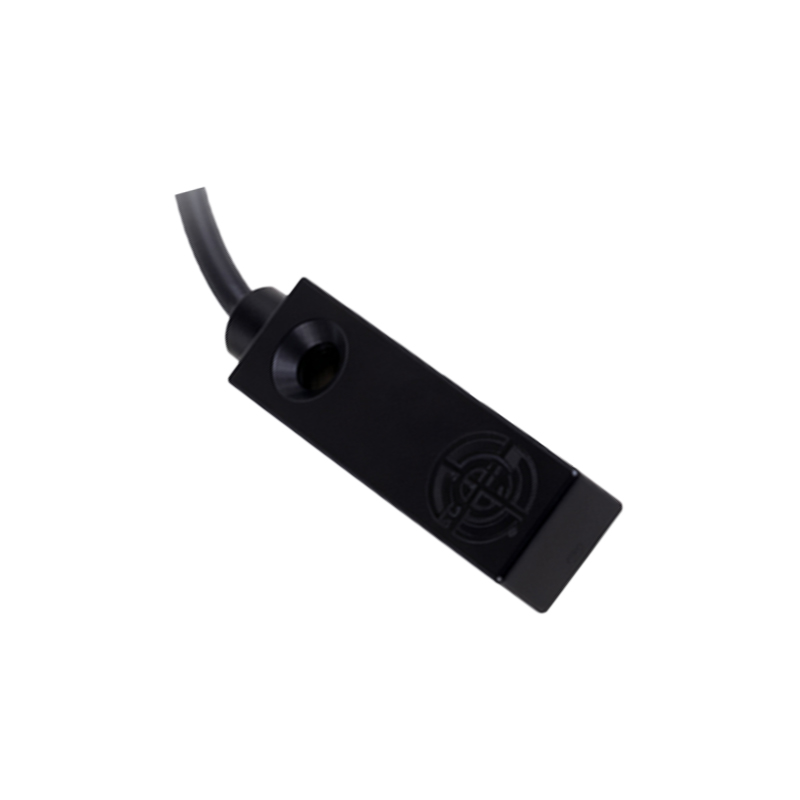
In the realm of industrial automation and machinery, the reliability and precision of sensing technology are paramount. Among the myriad of components that ensure seamless operation, proximity sensors stand as critical elements for non-contact detection. The TK100 proximity sensor, a prevalent model in many industrial settings, exemplifies the engineering excellence required for demanding environments. This article delves into the technical specifications, operational principles, application scenarios, and best practices for integrating the TK100 into various systems.
At its core, the TK100 is an inductive proximity sensor. This type of sensor generates an electromagnetic field from its sensing face. When a metallic object enters this field, eddy currents are induced within the target, causing a change in the oscillation amplitude within the sensor's internal circuit. This change is detected and converted into a solid-state output signal, typically switching a load on or off. The TK100 is designed primarily for the detection of ferrous metals, such as steel and iron, with a defined sensing range, often specified by the manufacturer (e.g., 10mm). Its robust housing, usually constructed from nickel-plated brass or stainless steel, provides excellent resistance to mechanical stress, cutting fluids, and oils commonly found in manufacturing plants.
Key technical features of the TK100 often include a DC three-wire configuration (brown for +V, blue for 0V, and black for the output signal), supporting both NPN (sinking) and PNP (sourcing) output types to interface seamlessly with different PLC (Programmable Logic Controller) systems. It operates on a standard voltage range, commonly 10-30V DC, and offers a short-circuit and reverse polarity protection, enhancing its durability. The response frequency, indicating how quickly it can detect objects passing by, is sufficiently high for high-speed counting or positioning tasks on conveyor lines. Furthermore, many TK100 models feature an LED status indicator, providing immediate visual feedback for diagnostics.
The applications for the TK100 proximity sensor are extensive across the electrical and industrial engineering sectors. A quintessential use case is in automated assembly lines for part presence verification. For instance, ensuring a component is correctly positioned before a robotic arm performs a welding operation. They are also indispensable in material handling for detecting the position of pallets or products on conveyors, triggering subsequent actions like sorting or packaging. In machine tools, TK100 sensors serve as limit switches to prevent over-travel of moving parts, thereby safeguarding equipment. Their inherent ability to function without physical contact eliminates mechanical wear, leading to significantly longer service life compared to mechanical limit switches.
For optimal performance, correct installation and environmental consideration are crucial. The sensor should be mounted securely to avoid vibration-induced false triggers. It is essential to respect the specified sensing distance and note that different metals (e.g., aluminum, brass) may have a reduced effective range due to lower conductivity and permeability. Engineers must also account for mutual interference when mounting multiple sensors in close proximity; maintaining a minimum distance between them, as per the datasheet guidelines, prevents crosstalk. Regular maintenance, though minimal, involves keeping the sensing face clean from debris, metal chips, or buildup of contaminants that could attenuate the electromagnetic field.
In conclusion, the TK100 proximity sensor represents a workhorse component in industrial electrical systems. Its design prioritizes reliability, longevity, and straightforward integration. By understanding its operating principles—relying on electromagnetic induction for metallic object detection—and adhering to proper installation practices, engineers and technicians can leverage the TK100 to enhance automation efficiency, improve safety, and reduce maintenance downtime. As industries continue to advance towards smarter factories, the role of dependable sensors like the TK100 remains fundamentally important, forming the sensory foundation upon which complex automated processes are built.