In the rapidly evolving landscape of industrial automation and smart manufacturing, the demand for precise, reliable, and non-intrusive sensing technology has never been higher. Among the array of advanced solutions, transparent laser sensors have emerged as a pivotal innovation, offering unique capabilities that bridge the gap between high-precision measurement and operational flexibility. This article delves into the core principles, diverse applications, and the promising future of these sophisticated devices.
At its fundamental level, a transparent laser sensor operates on the principle of optical triangulation or time-of-flight measurement, but with a critical distinction: its sensing beam is projected through a transparent or semi-transparent medium to detect objects or measure parameters on the other side. Unlike traditional sensors that require a direct line of sight to an opaque surface, these sensors utilize specific wavelengths of laser light that can penetrate materials like glass, clear plastics, certain polymers, and even thin layers of liquids without significant scattering or absorption. The key lies in the precise selection of the laser wavelength and advanced signal processing algorithms that can distinguish the target signal from background noise caused by the transparent medium itself.
The core components typically include a laser diode emitter, a specialized lens system, a high-sensitivity photodetector (like a CCD or CMOS array), and a powerful microprocessor. The laser beam is focused and directed through the transparent barrier. When it encounters a target object—be it a liquid level inside a sealed vial, a particle contaminant within a fluid stream, or the position of a component behind a protective window—the light is reflected, refracted, or scattered. The photodetector captures this altered light pattern. Sophisticated algorithms then analyze the displacement, intensity change, or phase shift of the returned signal to calculate precise measurements such as distance, presence, thickness, or even the refractive index of the medium.
The applications for transparent laser sensors are vast and transformative across multiple industries. In pharmaceutical manufacturing, they are indispensable for non-contact, sterile level detection in clear syringes, vials, and IV bags, ensuring precise fill volumes without risk of contamination. The food and beverage industry employs them to monitor liquid levels in transparent bottles or cans on high-speed filling lines, guaranteeing consistency and compliance. Within semiconductor fabrication and electronics assembly, these sensors accurately measure wafer thickness or component placement through protective viewing ports in vacuum chambers, maintaining critical cleanroom integrity.
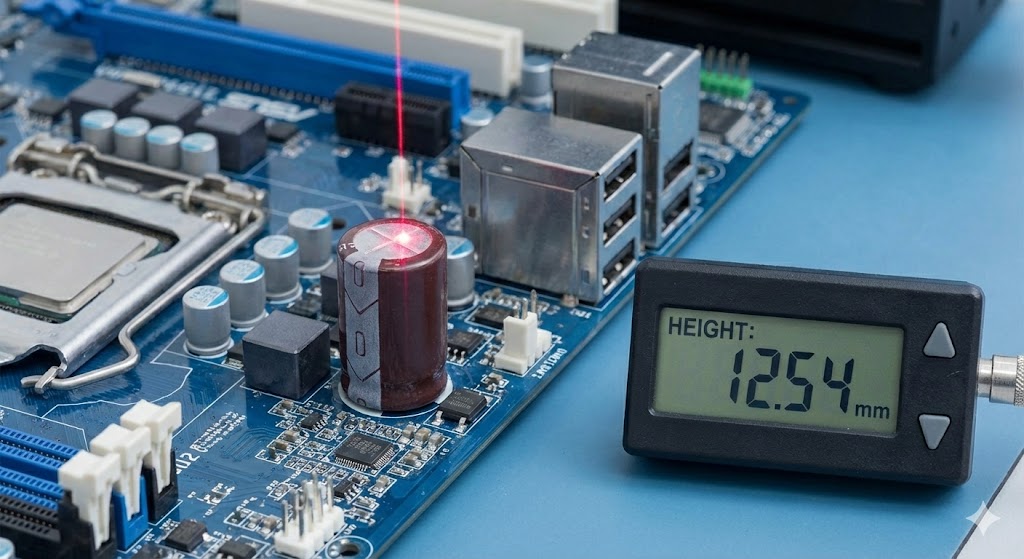
Another significant application is in quality control for transparent packaging. Sensors can detect minute defects, seal integrity issues, or the presence of foreign particles within packaged goods without ever opening the container. In automotive manufacturing, they are used for precise gap and flush measurement between glass windshields/windows and the vehicle body. Furthermore, in chemical processing, they enable safe monitoring of aggressive or hazardous fluids contained within sight glasses or transparent pipelines.
The advantages of implementing transparent laser sensors are compelling. They enable truly non-contact and non-invasive measurement, which is crucial for sterile environments, hazardous materials, or where physical contact could damage delicate products. They offer high accuracy and repeatability, often at the micron level, which is essential for modern precision engineering. Their ability to "see through" barriers reduces the need for complex mechanical access points, simplifying machine design and enhancing operational safety. Moreover, their fast response times make them suitable for high-speed production lines.
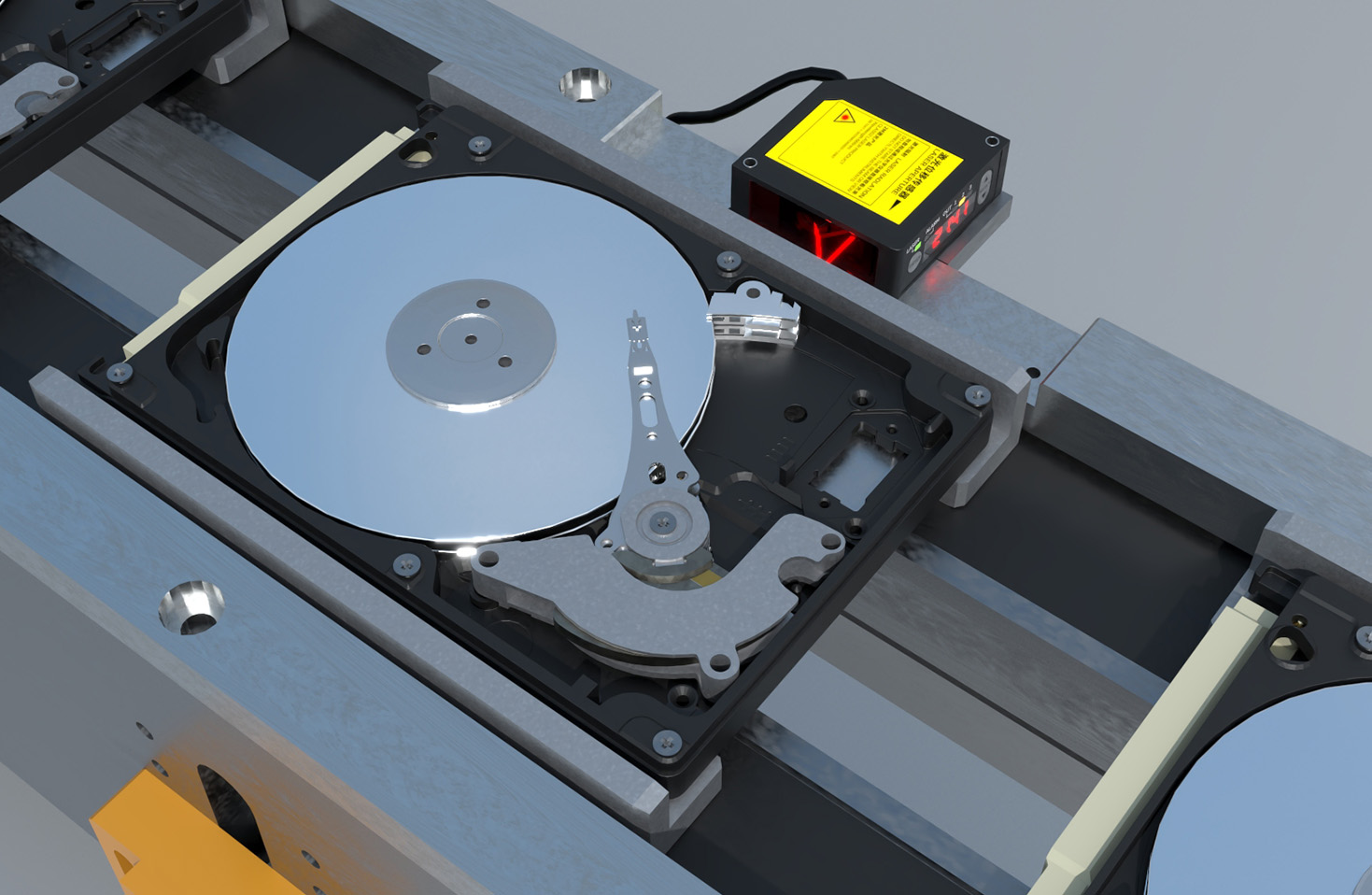
However, challenges remain. The performance can be affected by the optical properties of the intervening transparent medium—variations in its thickness, homogeneity, or surface quality (scratches, coatings) can introduce measurement errors. Environmental factors like ambient light, dust, or condensation on the barrier surface must also be managed through proper housing, filters, and algorithmic compensation. Selecting the optimal sensor for an application requires careful consideration of the medium's material, the target's characteristics, and the required measurement resolution.
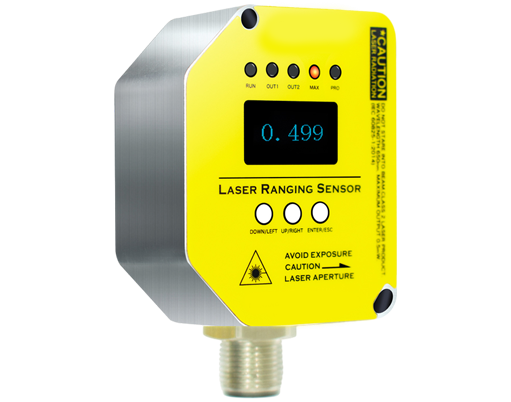
Looking ahead, the future of transparent laser sensor technology is intertwined with broader trends in Industry 4.0 and the Industrial Internet of Things (IIoT). We anticipate the integration of smarter, AI-driven sensors capable of self-calibration and adaptive learning to compensate for changing medium conditions. Miniaturization will open new applications in micro-manufacturing and portable devices. Furthermore, the development of multi-spectral laser sensors that can utilize different wavelengths simultaneously could allow for the analysis of multiple parameters through complex, multi-layered transparent structures.
In conclusion, transparent laser sensors represent a sophisticated fusion of optics, electronics, and software, providing a critical sensing solution where traditional methods fall short. By enabling precise measurement through transparent interfaces, they unlock new levels of automation, quality assurance, and process efficiency. As material science and digital signal processing continue to advance, these sensors will undoubtedly become even more robust, intelligent, and integral to the transparent operations of tomorrow's smart factories.