In the realm of industrial automation and machine control, proximity sensors are indispensable components. They are non-contact electronic devices designed to detect the presence or absence of an object within a specific sensing range without any physical contact. This fundamental capability makes them crucial for tasks like object detection, position verification, counting, and automated process control, offering significant advantages over mechanical limit switches, including higher reliability, longer operational life, and faster response times.
At its core, a proximity sensor operates by emitting an electromagnetic field or a beam of electromagnetic radiation (like infrared light). It then looks for changes in the field or the return signal. The target object, often referred to as the "actuator," causes a detectable change when it enters the sensor's active zone. This change is converted by the sensor's internal circuitry into a clean, binary electrical output signal—typically switching a solid-state output ON or OFF. This signal is then sent to a controller, such as a Programmable Logic Controller (PLC), to trigger a programmed action.
Proximity sensors are broadly categorized based on their underlying detection technology. The most common types include Inductive, Capacitive, Ultrasonic, and Photoelectric sensors, each suited for specific materials and applications.
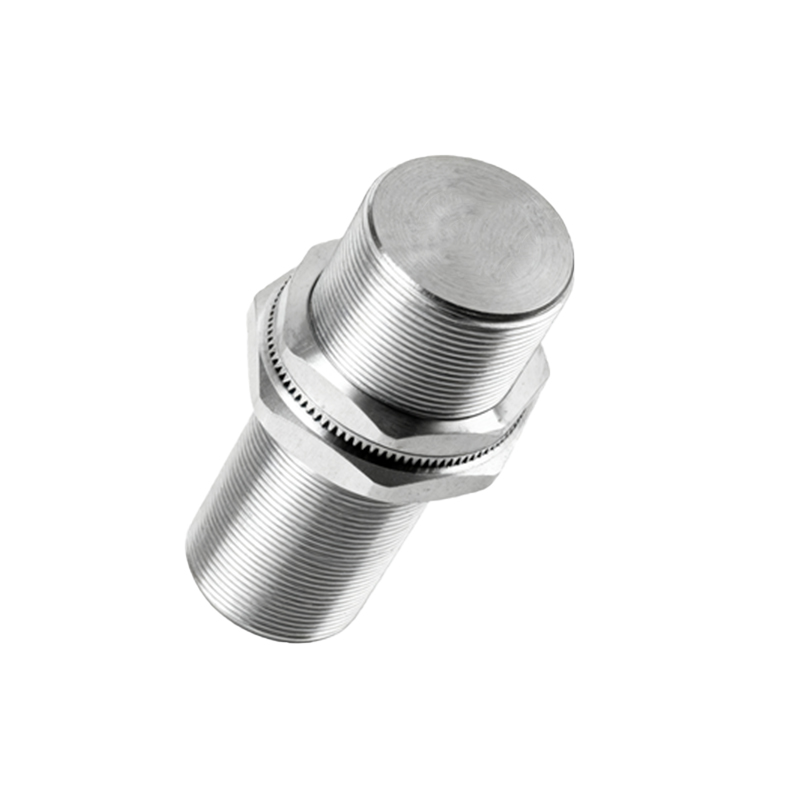
Inductive Proximity Sensors are the workhorses of metal detection. They generate an oscillating electromagnetic field from a coil at the sensing face. When a conductive metal target enters this field, it induces small eddy currents on the metal's surface. This current draw dampens the oscillation, which is detected by the sensor's circuit, triggering the output switch. Inductive sensors are ideal for detecting ferrous and non-ferrous metals but are ineffective for non-metallic materials. They are renowned for their robustness, high switching frequency, and resistance to environmental contaminants like dust, oil, and coolant.
Capacitive Proximity Sensors can detect both metallic and non-metallic materials, including liquids, powders, plastics, and wood. They function by generating an electrostatic field. Any object that enters this field alters the capacitance between the sensor's electrodes. The sensor monitors this capacitance change; when it exceeds a preset threshold, the output state changes. This makes capacitive sensors versatile for applications like liquid level detection, material handling of non-metals, and seeing through certain packaging materials. However, they can be more susceptible to environmental factors like humidity.
Ultrasonic Proximity Sensors measure distance or detect presence using sound waves beyond human hearing. They emit high-frequency ultrasonic pulses and calculate the time taken for the echo to return from a target. This "time-of-flight" principle allows them to detect objects of virtually any material, provided the surface is sufficiently sound-reflective. They are excellent for clear object detection, distance measurement, and applications where the target's color or transparency is variable. Their performance can be affected by temperature, air turbulence, and soft, sound-absorbing materials.
Photoelectric Sensors utilize light, usually infrared or visible LED-based, to detect objects. They come in several main configurations: Through-beam (separate emitter and receiver), Retro-reflective (uses a reflector), and Diffuse (reflective), where the emitter and receiver are in the same housing. An object interrupts or reflects the light beam, causing a state change. Photoelectric sensors offer very long sensing ranges and can detect tiny objects. They are sensitive to color, transparency, and surface finish, and their performance can be compromised by ambient light or dirty lenses.
Key performance parameters for selecting a proximity sensor include Sensing Distance (the nominal range at which a standard target is detected), Repeatability (consistency of the switch point), Response Frequency (how quickly it can detect objects in rapid succession), and Environmental Ratings (such as IP rating for dust/water ingress protection and temperature range). Proper mounting, alignment, and consideration of the target material's size, shape, and composition are critical for reliable operation.
In industrial settings, proximity sensors are ubiquitous. You will find inductive sensors on CNC machines for tool positioning, capacitive sensors on bottling lines for liquid level control, ultrasonic sensors on warehouse Automated Guided Vehicles (AGVs) for obstacle avoidance, and photoelectric sensors on packaging machinery for label detection. Their role in enabling precise, reliable, and maintenance-free automation is foundational to modern manufacturing, robotics, and countless other technological fields. Understanding their principles and characteristics is essential for any engineer or technician involved in system design and maintenance.