In the realm of industrial automation, precision measurement is not merely a convenience but a fundamental requirement for ensuring quality, efficiency, and safety. Among the myriad of sensing technologies available, MTS laser sensors have carved out a significant niche, offering unparalleled accuracy and reliability in demanding environments. This article delves into the operational principles, key features, and diverse applications of these sophisticated devices, providing a comprehensive overview for engineers and system integrators.
At their core, MTS laser sensors operate on the principle of optical triangulation. A laser diode projects a focused beam of light onto the target surface. The reflected light is then captured by a high-resolution CMOS or CCD array at a specific angle. By precisely calculating the position of the light spot on this receiver array, the sensor can determine the exact distance to the target with micron-level resolution. This non-contact measurement method is crucial for applications involving delicate, hot, or fast-moving objects where physical contact is impractical or damaging.
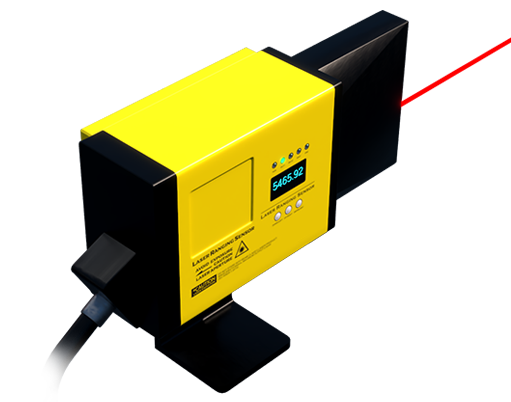
The performance of MTS laser sensors is defined by several critical specifications. Resolution, often in the micrometer range, indicates the smallest detectable change in distance. Repeatability refers to the sensor's ability to consistently return the same measurement for a static target under identical conditions. Linearity error defines the maximum deviation from a perfect straight-line response across the entire measuring range. High-grade MTS sensors excel in all these parameters, often featuring resolutions down to 0.1 µm and repeatability within sub-micron levels. Furthermore, advanced models incorporate integrated microprocessors for real-time data processing, enabling features like programmable switching outputs, analog output scaling (e.g., 4-20 mA, 0-10 V), and digital communication via interfaces like IO-Link, EtherCAT, or PROFINET for seamless integration into Industry 4.0 networks.
Environmental robustness is a hallmark of industrial-grade MTS laser sensors. They are typically housed in rugged, IP67-rated enclosures that protect against dust, water jets, and mechanical shocks. Specialized versions are available with enhanced resistance to extreme temperatures, intense ambient light, or highly reflective or dark, absorbent surfaces—common challenges in factory settings. The laser class (usually Class 2) ensures eye safety during operation.
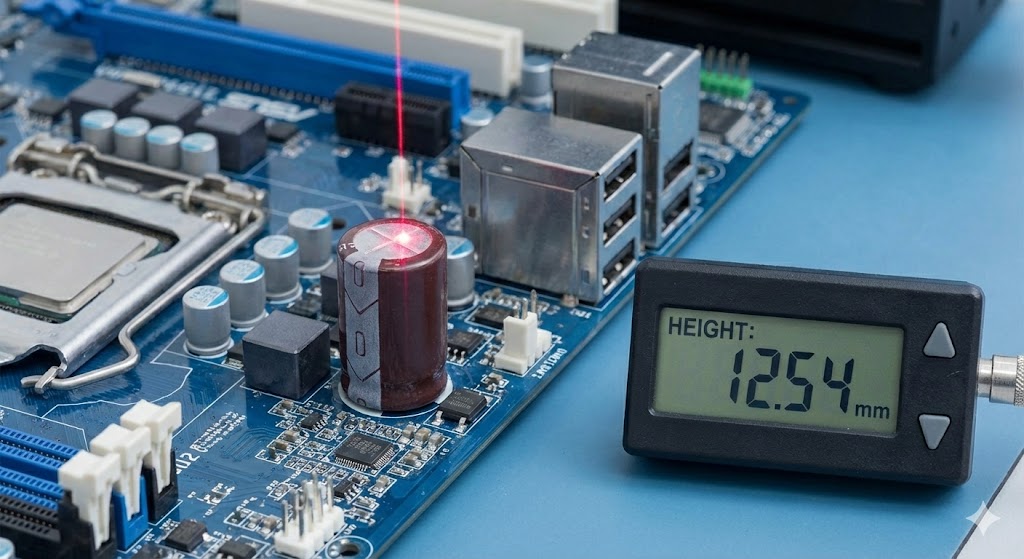
The application spectrum for MTS laser sensors is vast and continually expanding. In automotive manufacturing, they are indispensable for measuring critical gaps and flushness between body panels, inspecting piston ring grooves, and controlling robot welding paths. In the electronics industry, they verify the coplanarity of integrated circuit (IC) leads, measure solder paste thickness on PCBs, and inspect micro-components. Within precision machining, these sensors perform in-process dimensional checks on turned or milled parts, monitor tool wear, and ensure the correct positioning of workpieces. Additional applications include thickness measurement in rolling mills, vibration analysis, and wafer alignment in semiconductor fabrication.
Selecting the appropriate MTS laser sensor requires careful consideration of the specific task. Key factors include the required measuring range, the resolution and speed needed, the properties of the target material (color, texture, reflectivity), and the environmental conditions. For instance, a sensor with a blue laser might be chosen for measuring red-hot metals, as the shorter wavelength offers better performance on hot surfaces. Similarly, a sensor with a diffuse reflection model might be necessary for rough surfaces, whereas a specular reflection model is suited for mirror-like finishes.
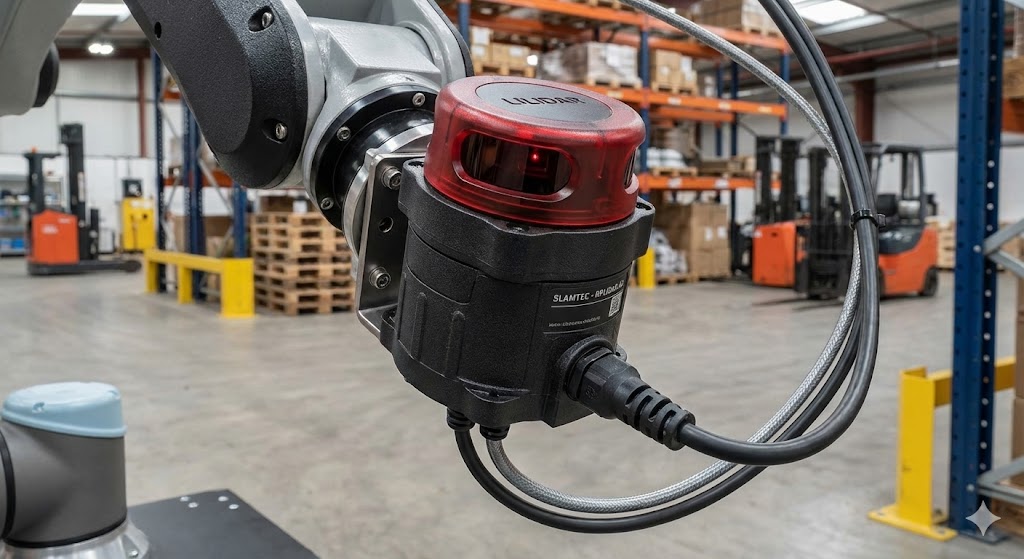
In conclusion, MTS laser sensors represent a pinnacle of non-contact metrology technology. Their exceptional accuracy, robustness, and versatility make them a cornerstone of modern industrial automation systems. By enabling precise, real-time measurement and control, they drive improvements in product quality, manufacturing throughput, and operational cost-efficiency. As industries evolve towards smarter, more connected, and more flexible production, the role of these precise optical sensors will only become more central, continuing to push the boundaries of what is measurable and controllable in the automated world.