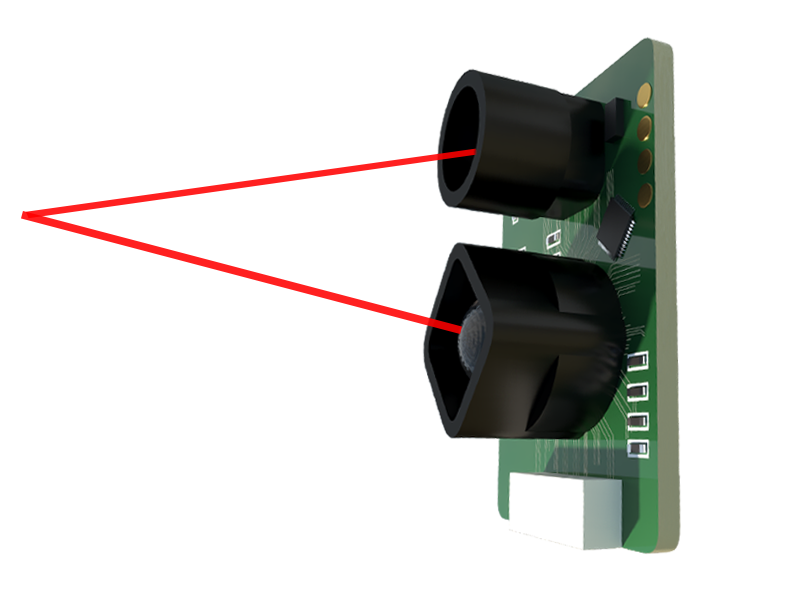
In the rapidly evolving landscape of smartphone technology, laser sensors have emerged as a critical component, driving significant advancements in user interaction, photography, and augmented reality (AR). These sensors, often integrated into the camera module or as standalone units, utilize laser beams to measure distance, detect objects, and map environments with remarkable precision. This article delves into the multifaceted roles of laser sensors in modern smartphones, highlighting their technical principles, applications, and future potential.
At its core, a laser sensor in a smartphone operates on the principle of Time-of-Flight (ToF). It emits a laser pulse toward a target object and measures the time taken for the light to reflect back to the sensor. By calculating this interval, the sensor determines the distance to the object with high accuracy, often within millimeters. This capability is fundamental to several key functionalities. In photography, laser autofocus systems enable faster and more accurate focusing, especially in low-light conditions where traditional contrast-detection methods struggle. By instantly gauging the distance to the subject, the camera can lock focus almost instantaneously, reducing shutter lag and enhancing image clarity. This is particularly beneficial for capturing moving subjects or in dynamic environments, ensuring that users never miss a moment.
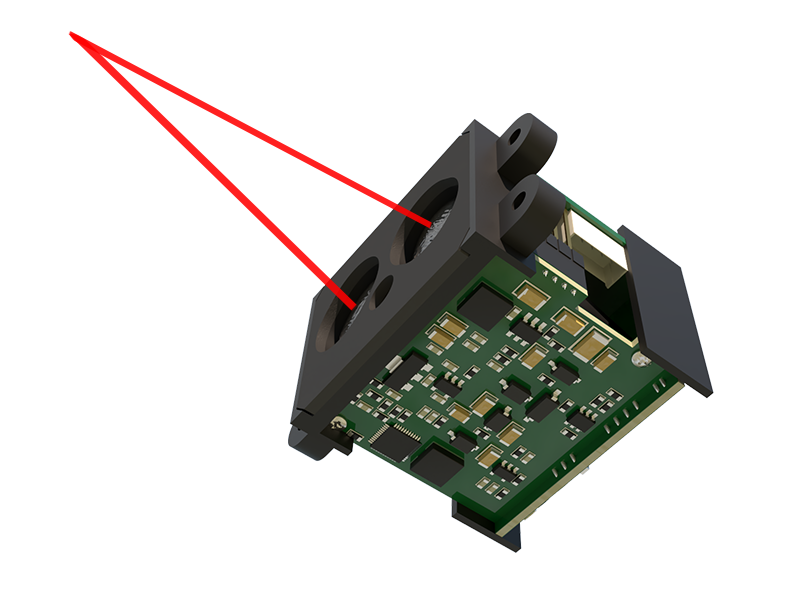
Beyond photography, laser sensors are integral to depth sensing and 3D mapping. When combined with other sensors like infrared projectors and cameras, they create detailed depth maps of scenes. This technology powers portrait mode effects, allowing smartphones to blur backgrounds realistically by distinguishing between foreground and background elements. Moreover, it enhances AR experiences by enabling devices to understand spatial relationships. For instance, in AR applications, laser sensors help place virtual objects accurately in real-world environments, making interactions more immersive for gaming, shopping, or navigation. Companies like Apple and Samsung have leveraged this in features such as Animoji and room scanning, where precise depth data is crucial.
Another critical application lies in security and biometrics. Laser sensors contribute to facial recognition systems, such as Apple's Face ID, by mapping the unique contours of a user's face in three dimensions. This provides a more secure alternative to traditional passwords or fingerprint sensors, as it is harder to spoof with photos or masks. The laser beams project a grid of infrared dots onto the face, and the sensor analyzes the distortion to create a precise 3D model. This not only enhances device security but also streamlines authentication processes, making unlocking phones and authorizing payments seamless.
In terms of hardware, laser sensors are typically compact and energy-efficient, making them ideal for integration into slim smartphone designs. They consist of a laser diode, a detector, and processing circuitry, all miniaturized to fit within the device's constraints. Advances in semiconductor technology have reduced their cost and power consumption, allowing widespread adoption across mid-range and flagship models. As 5G connectivity and edge computing evolve, laser sensors are poised to support more complex applications, such as real-time gesture control and environmental scanning for smart home integration.
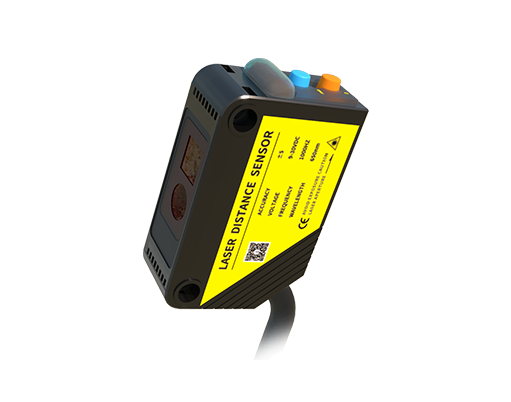
Looking ahead, the role of laser sensors in smartphones is set to expand. With the rise of the Internet of Things (IoT) and autonomous systems, these sensors could enable smartphones to interact more intelligently with their surroundings. For example, they might assist in obstacle detection for visually impaired users or enhance drone navigation when paired with mobile devices. Additionally, ongoing research into LiDAR (Light Detection and Ranging) technology promises even greater accuracy and range, potentially revolutionizing fields like virtual reality and robotics through smartphone platforms.
In conclusion, laser sensors are not merely incremental upgrades but transformative elements in smartphone engineering. By enabling precise distance measurement, depth perception, and secure authentication, they elevate device performance and user experience. As innovation continues, these sensors will likely become more ubiquitous, driving new functionalities that blur the line between digital and physical worlds. For consumers, this means smarter, more responsive devices that adapt to their needs, while for the industry, it represents a frontier of growth in mobile technology.