In the rapidly evolving landscape of industrial automation, the demand for precise, reliable, and application-specific sensing solutions has never been higher. Magnetic proximity sensors, known for their non-contact detection capabilities, durability in harsh environments, and immunity to contaminants like dust and oil, are pivotal components in modern machinery. However, off-the-shelf sensors often fall short when faced with unique operational challenges, such as extreme temperatures, specific mounting constraints, or unusual target materials. This is where bulk customization emerges as a strategic advantage, enabling manufacturers to optimize performance, streamline integration, and reduce total cost of ownership.
Bulk customization of magnetic proximity sensors involves tailoring key parameters to meet exact application requirements. This process typically begins with a thorough analysis of the operational environment. Factors like temperature range, which can extend from cryogenic conditions to over 150°C in foundries or automotive applications, dictate the selection of housing materials and internal components. Similarly, the required sensing distance, or switching distance, must be calibrated precisely. Standard sensors might offer a 10mm range, but a customized batch can be engineered for 15mm or 20mm to detect larger actuator flags or through thicker non-ferrous barriers, enhancing system design flexibility.
Electrical characteristics form another critical customization domain. Voltage ratings (e.g., 10-30V DC, 90-250V AC), output types (PNP, NPN, analog, or IO-Link digital), and connection methods (pre-wired cables, quick-disconnect plugs, or terminal housings) are adapted to match existing control systems. For instance, a food processing plant requiring frequent washdowns might opt for sensors with IP69K-rated stainless steel housings, high-grade sealing, and FDA-compliant materials, all configured in a bulk order to ensure consistency across production lines.
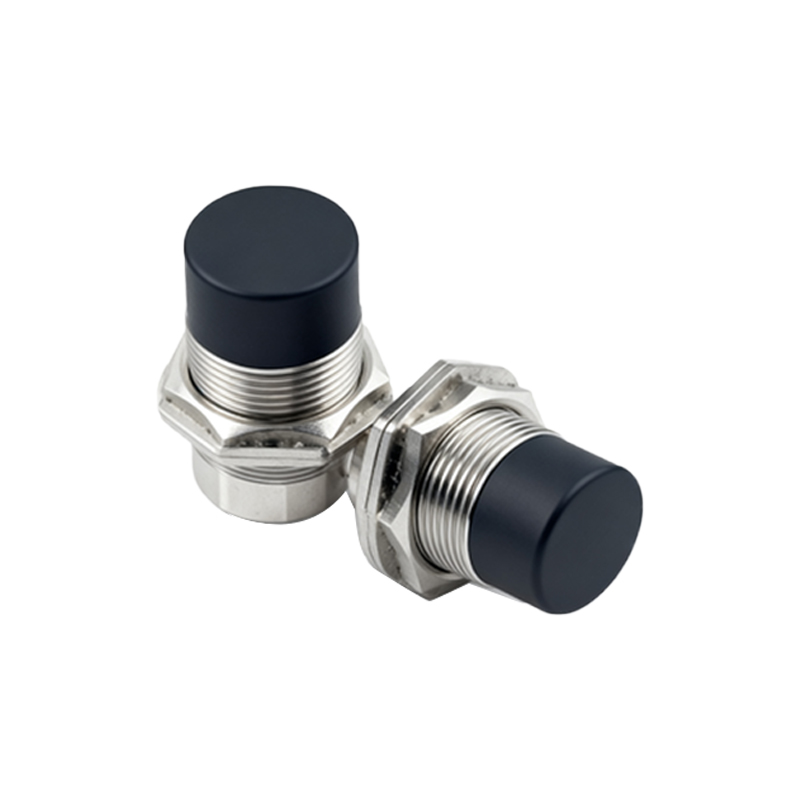
The mechanical design is equally customizable. Housing shapes can be modified from standard cylindrical (M8, M12, M18, M30) to rectangular or slot-style formats to fit limited spaces. Mounting brackets, thread types, and orientation of sensing faces are adjusted for direct replacement or novel installations. In automotive assembly, sensors might be customized with a 90-degree angled head to avoid interference with moving parts, while in material handling, extended sensing ranges and reinforced housings protect against physical impacts.
The economic and logistical benefits of bulk customization are substantial. Ordering large quantities of tailored sensors reduces per-unit costs through economies of scale, minimizes inventory of multiple stock-keeping units (SKUs), and eliminates the need for post-purchase modifications. It ensures that every sensor in the batch is application-ready, reducing installation time and potential errors. Furthermore, collaboration with sensor manufacturers during the customization phase often leads to value engineering—identifying opportunities to simplify design or use alternative materials without compromising performance, yielding additional savings.
Quality assurance and testing are integral to the customization workflow. Reputable manufacturers conduct rigorous sample validation, including life-cycle testing (millions of operations), temperature cycling, vibration resistance checks, and EMC compliance verification. For a batch destined for offshore oil rigs, sensors would undergo salt spray corrosion testing and validation for operation under high pressure. These steps guarantee that the customized sensors perform reliably over their intended lifespan, reducing downtime and maintenance costs.
Emerging trends are further shaping customization possibilities. The integration of smart features like IO-Link communication allows for parameter setting, condition monitoring, and diagnostic data reporting, enabling predictive maintenance. Customizing sensors with these digital interfaces in bulk future-proofs automation systems. Additionally, advancements in magneto-resistive or Hall-effect sensing elements allow for detection of specific magnetic field strengths or polarities, enabling customization for complex multi-position sensing or speed monitoring tasks.
In conclusion, bulk customization of magnetic proximity sensors is not merely a procurement option but a strategic engineering partnership. It transforms a standard component into a optimized solution that enhances machine efficiency, reliability, and safety. By specifying exact requirements for environmental resilience, electrical interface, mechanical form, and smart functionality, industrial enterprises can achieve seamless integration and sustained operational excellence. Engaging early with technical experts to define these parameters ensures the final product delivers unparalleled value in the demanding world of industrial automation.