Laser gyroscope sensors, often referred to as ring laser gyroscopes (RLGs), represent a pivotal advancement in inertial navigation and motion sensing technology. Unlike traditional mechanical gyroscopes that rely on spinning rotors, RLGs utilize the principles of laser interferometry to detect rotational movement with exceptional precision. At the core of an RLG is a closed-loop optical path, typically in the shape of a triangle or square, through which two laser beams travel in opposite directions. When the sensor rotates, the path length for each beam changes slightly due to the Sagnac effect, leading to a measurable phase difference between the beams. This interference pattern is directly proportional to the rate of rotation, allowing for highly accurate angular velocity measurements without any moving mechanical parts.
The development of laser gyroscope sensors has been driven by the demand for reliable, maintenance-free navigation systems in aerospace, defense, and automotive industries. In aviation, RLGs are integral to inertial navigation systems (INS), providing stable orientation data even in GPS-denied environments. Their robustness against vibration and shock makes them ideal for military aircraft and missile guidance systems. Similarly, in the automotive sector, emerging autonomous vehicle technologies leverage RLGs for precise positioning and dead reckoning, enhancing safety and navigation accuracy. The absence of friction-prone components in RLGs translates to longer operational lifespans and reduced calibration needs compared to mechanical alternatives.
From an electrical engineering perspective, the design and implementation of laser gyroscope sensors involve sophisticated optoelectronic integration. Key components include high-quality laser sources, mirrors or optical fibers to form the resonant cavity, and photodetectors to capture interference signals. Engineers must address challenges such as lock-in at low rotation rates, where the beams can synchronize and reduce sensitivity. Solutions often involve mechanical dithering or optical biasing techniques to maintain performance across all operational ranges. Additionally, signal processing electronics play a crucial role in converting raw optical data into usable digital outputs, requiring advanced analog-to-digital converters and filtering algorithms to minimize noise.

Recent innovations in laser gyroscope technology focus on miniaturization and cost reduction. Fiber optic gyroscopes (FOGs), a variant of RLGs, use coiled optical fibers to achieve similar functionality in smaller packages, expanding applications to consumer electronics and robotics. Research into integrated photonic circuits promises further size reductions, potentially enabling chip-scale laser gyroscopes for portable devices. Environmental factors, such as temperature fluctuations and electromagnetic interference, remain critical considerations in sensor design, prompting the use of temperature compensation circuits and shielding materials to ensure reliability.
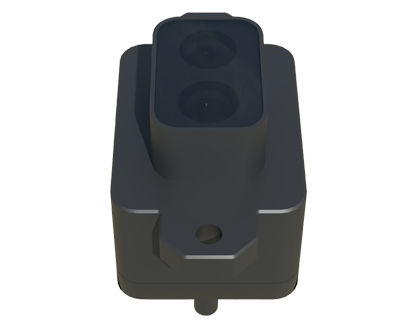
In practice, deploying laser gyroscope sensors requires careful alignment and calibration to meet specific accuracy standards, often defined by parameters like bias stability and angle random walk. Industry standards, such as those from IEEE and ISO, guide testing protocols to validate performance under varied conditions. As the Internet of Things (IoT) and smart infrastructure evolve, laser gyroscopes are finding new roles in structural health monitoring and precision agriculture, where subtle motion detection is essential. Their ability to provide continuous, drift-free data makes them a cornerstone of modern inertial measurement units (IMUs), often combined with accelerometers and magnetometers for comprehensive motion tracking.
Looking ahead, the future of laser gyroscope sensors is intertwined with advancements in quantum sensing and artificial intelligence. Quantum-enhanced gyroscopes, leveraging entangled photons, aim to surpass current sensitivity limits, opening doors to fundamental physics research and next-generation navigation. Meanwhile, AI-driven calibration methods could automate optimization processes, reducing production costs and expanding accessibility. For electrical engineers, mastering the interdisciplinary knowledge of optics, electronics, and materials science is key to innovating in this field. As global demand for precise motion sensing grows, laser gyroscope sensors will continue to shape technologies from autonomous drones to seismic monitoring systems, underscoring their vital role in the electrical engineering landscape.