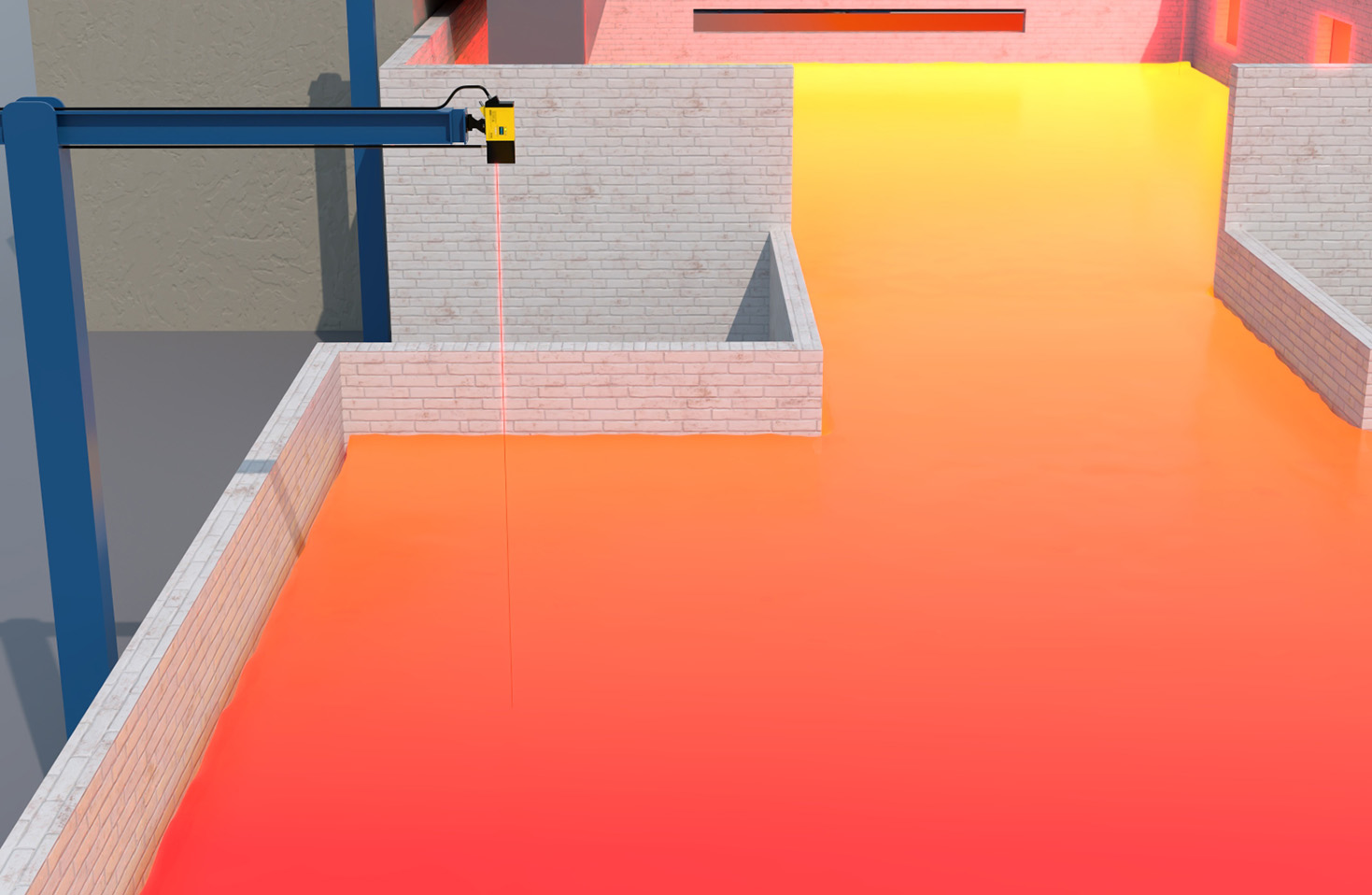
In the realm of industrial automation and precision engineering, the demand for reliable, accurate, and robust distance measurement solutions is paramount. Among the various technologies available, sunlight laser distance sensors have emerged as a critical tool, particularly for applications exposed to challenging ambient light conditions. Unlike standard laser sensors that can be easily saturated or blinded by intense external light sources such as direct sunlight or high-intensity factory lighting, sunlight laser sensors are specifically engineered to maintain high performance and accuracy.
The core innovation lies in advanced optical filtering and signal processing algorithms. These sensors typically employ a narrow-band laser source, often in the visible red or infrared spectrum, combined with highly selective optical filters. These filters are designed to allow only the specific wavelength of the emitted laser light to pass through to the receiver, effectively blocking out a broad spectrum of ambient light. This is complemented by sophisticated digital signal processing (DSP) that can distinguish the modulated laser pulse from any remaining background noise. The result is a sensor with an exceptionally high signal-to-noise ratio (SNR), ensuring stable readings even when the sensor is operating outdoors under full sun or in environments with strong, fluctuating artificial light.
The applications for these robust sensors are vast and varied. In logistics and warehousing, they are indispensable for automated guided vehicles (AGVs) and robotic forklifts that must navigate both indoor warehouses and outdoor loading yards. The sensor provides continuous, precise distance data for obstacle detection and navigation, regardless of weather conditions. In the construction and agricultural sectors, sunlight laser sensors are integrated into machinery for grade control, leveling, and terrain mapping. Excavators and harvesters equipped with these sensors can operate with enhanced precision, improving efficiency and reducing material waste. Furthermore, in the renewable energy sector, they are used for the alignment and tracking of solar panels, ensuring optimal angle to the sun throughout the day.
When selecting a sunlight laser distance sensor, several key technical specifications must be considered. The measuring range is fundamental, with models available from a few centimeters up to several hundred meters. Accuracy and resolution are equally critical; high-end models can achieve sub-millimeter accuracy. The response time, or how quickly the sensor can take and output a measurement, is vital for dynamic applications like robotics. Environmental ratings, such as IP67 or IP69K for dust and water ingress protection, and a wide operating temperature range (e.g., -20°C to 60°C) are non-negotiable for harsh outdoor or industrial settings. Finally, the output interface—whether analog (4-20mA, 0-10V), digital (RS-232, RS-485), or industrial Ethernet (EtherCAT, PROFINET)—must be compatible with the existing control system.

Installation and maintenance, while straightforward, require attention to detail. The sensor should be mounted securely to minimize vibration, which can affect accuracy. The lens must be kept clean from dust, dirt, and moisture, though many models feature a protective window or air purge option. Regular calibration checks against a known reference are recommended to ensure long-term precision. It is also crucial to verify that the sensor's laser class (typically Class 2 or Class 2M) is safe for the intended environment and that all necessary safety protocols for laser devices are followed.
The future of sunlight laser distance sensing is closely tied to the evolution of Industry 4.0 and the Internet of Things (IoT). We are seeing a trend towards sensors with integrated intelligence, capable of performing edge computing for basic data analysis and diagnostics. Wireless connectivity options are becoming more prevalent, simplifying installation in large or complex sites. Furthermore, the integration of multiple sensing modalities—such as combining laser distance measurement with inertial measurement units (IMUs) or vision cameras—is creating more comprehensive and context-aware perception systems for autonomous machines.
In conclusion, sunlight laser distance sensors represent a significant technological advancement for precise measurement where light interference is a major concern. Their ability to deliver dependable data in the most demanding conditions makes them an invaluable component in modern automation, construction, agriculture, and beyond. By understanding their operating principles, key specifications, and application requirements, engineers and system integrators can leverage this technology to build more resilient, efficient, and intelligent systems. As environmental challenges and automation needs grow, the role of these robust sensors will only become more central to industrial and technological progress.