In the realm of industrial automation and control systems, the integration of photoelectric proximity sensors with rotary knobs represents a sophisticated approach to enhancing operational precision and user interface flexibility. This article delves into the technical intricacies, operational principles, and practical applications of photoelectric proximity sensor rotary knobs, tailored for engineers and professionals in the electrical and automation sectors.
Photoelectric proximity sensors operate on the fundamental principle of detecting the presence, absence, or distance of an object using a light emitter and receiver. Typically, these sensors employ infrared, visible, or laser light sources. When combined with a rotary knob—a manual input device that allows users to adjust parameters by rotation—the system enables precise control over machinery settings, such as speed, position, or threshold levels. The rotary knob's mechanical movement modulates the sensor's light path, triggering electrical signals that are processed by connected controllers like PLCs (Programmable Logic Controllers) or microprocessors. This synergy offers a tactile, intuitive interface for operators while maintaining high accuracy in feedback loops.
Key components of a photoelectric proximity sensor rotary knob include the housing, which is often constructed from durable materials like ABS plastic or metal to withstand harsh industrial environments. The internal mechanism features an optical encoder disk attached to the knob shaft, with patterned slots or reflective surfaces that interrupt or reflect the light beam as rotation occurs. Advanced models incorporate incremental or absolute encoding techniques, providing either relative or exact position data. For instance, incremental encoders generate pulse trains corresponding to rotational increments, while absolute encoders output unique binary codes for each angular position, ensuring reliable data even after power loss.
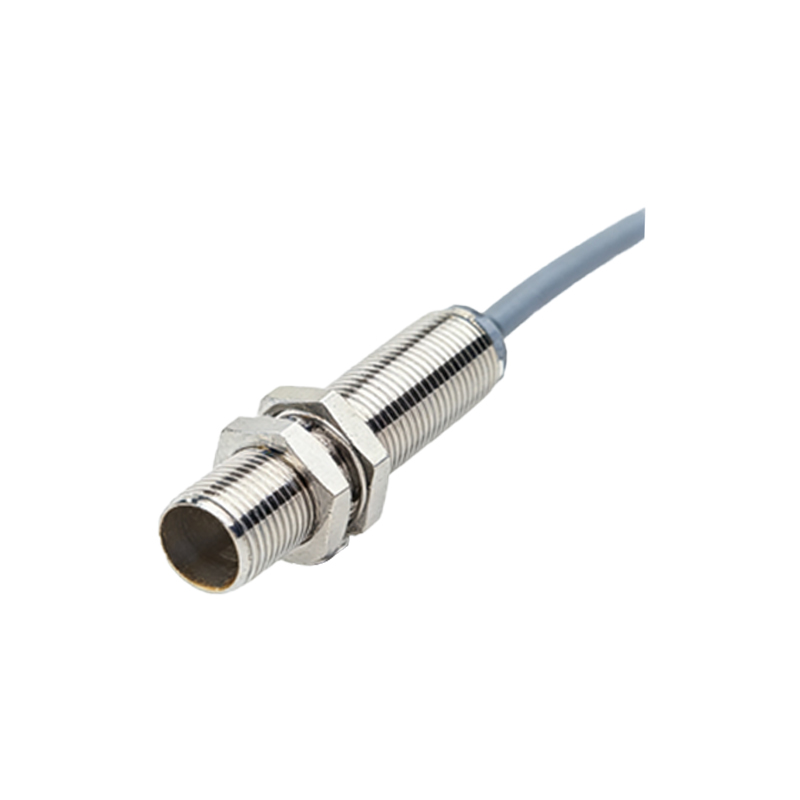
The advantages of using photoelectric proximity sensor rotary knobs are manifold. Firstly, they offer non-contact sensing, which eliminates mechanical wear and tear, leading to longer service life and reduced maintenance costs. Secondly, their high resolution and repeatability make them ideal for applications requiring fine adjustments, such as in CNC machines, robotic arms, or conveyor systems. Additionally, these devices are resistant to environmental factors like dust, moisture, and electromagnetic interference, thanks to sealed designs and robust construction. In terms of safety, photoelectric sensors provide an added layer of protection by enabling fail-safe operations; for example, if an object obstructs the sensor path, the system can automatically halt machinery to prevent accidents.
From an application perspective, photoelectric proximity sensor rotary knobs are widely utilized across various industries. In manufacturing, they facilitate precise calibration of assembly line equipment, ensuring consistent product quality. In the automotive sector, they are integrated into dashboard controls for adjusting settings like lighting or climate control. Renewable energy systems, such as wind turbines, employ these knobs for monitoring blade pitch angles. Moreover, in laboratory instrumentation, they allow scientists to fine-tune experimental parameters with high accuracy. When selecting a sensor knob, engineers must consider factors like operating voltage (commonly 12-24V DC), output type (e.g., NPN/PNP for digital signals or analog voltage/current), response time (often in milliseconds), and IP (Ingress Protection) ratings for environmental resilience.
Installation and maintenance best practices involve aligning the sensor and knob assembly properly to avoid misalignment errors, which can cause signal drift or false triggers. Regular cleaning of optical surfaces is recommended to prevent contamination from oil or debris. For troubleshooting, common issues include signal dropout due to dirty lenses or electrical noise; using shielded cables and proper grounding can mitigate such problems. As technology evolves, trends like IoT (Internet of Things) integration are emerging, where sensor knobs transmit data wirelessly to cloud platforms for real-time monitoring and predictive maintenance.
In conclusion, photoelectric proximity sensor rotary knobs are pivotal components in modern industrial setups, blending user-friendly manual control with automated sensing capabilities. Their reliability, precision, and adaptability make them indispensable for optimizing processes and enhancing safety. For engineers seeking to implement these devices, understanding their technical specifications and application contexts is crucial for achieving optimal performance. As industries advance toward smarter automation, the role of such integrated solutions will only grow, driving efficiency and innovation in electrical engineering projects.