In the realm of precision measurement and automation, laser head sensors stand as a cornerstone technology. These devices, often compact and highly reliable, project a focused beam of light to detect, measure, or inspect objects with exceptional accuracy. Unlike conventional contact sensors, they perform their tasks without physical touch, making them ideal for delicate materials, high-speed processes, and harsh environments. The core principle revolves around the emission of laser light and the analysis of its interaction with a target.
The fundamental operation can be categorized into several primary types. Through-beam sensors consist of separate transmitter and receiver units. The transmitter emits a continuous laser beam to the receiver. An object is detected when it interrupts this beam. This method offers the longest sensing distances and highest reliability for detection tasks. Retro-reflective sensors house both emitter and receiver in a single unit, using a reflector to bounce the beam back. Detection occurs when the object blocks the reflected beam. Finally, diffuse-reflective sensors, the most common self-contained type, emit light and detect the portion that diffuses back from the target itself. The sensing distance depends on the target's color, material, and surface texture.

For precise distance measurement and profiling, triangulation sensors are paramount. Here, the laser emitter, the point of reflection on the target, and the receiving element (like a CCD or PSD array) form a triangle. By calculating the angle of the reflected beam hitting the receiver, the sensor determines the exact distance to the target. This allows for micrometer-level resolution in measuring height, thickness, or contour. Another advanced variant is the confocal chromatic sensor, which uses white light split into a spectrum. Different wavelengths focus at different distances, and the analysis of the reflected spectrum's color provides extremely precise displacement measurements, even on transparent or glossy surfaces.
The applications of laser head sensors are vast and transformative across industries. In manufacturing, they are indispensable for presence detection on assembly lines, precise positioning of robotic arms, and fill-level control in bottling plants. The electronics industry relies on them for wafer inspection, component placement verification, and measuring minute solder paste deposits. In automotive production, they ensure panel gap consistency, weld seam tracking, and part dimension verification. Beyond factory floors, they enable barcode and QR code scanning at retail checkouts, facilitate vehicle classification in toll systems through profile scanning, and are integral to modern surveying equipment and 3D scanning systems for reverse engineering and quality control.

Selecting the appropriate laser head sensor requires careful consideration of several parameters. The required sensing distance and the size of the target are primary factors. A through-beam sensor is superior for long ranges, while a diffuse type suffices for shorter distances. The required resolution, or smallest detectable change, dictates whether a standard on/off sensor or a high-precision analog measuring sensor is needed. Environmental conditions are critical; factors like ambient light, dust, fog, or vibration can affect performance, necessitating sensors with robust housings, specific spectral ranges (e.g., red vs. blue laser for different materials), or polarized filters. Output type is another key decision; digital outputs (PNP/NPN) are for simple detection, while analog outputs (0-10V, 4-20mA) or serial interfaces (RS-232, Ethernet) are for measurement data. Finally, the target's properties—its color, material, surface finish (matte, shiny, transparent)—must be evaluated against the sensor's specifications to ensure reliable operation.
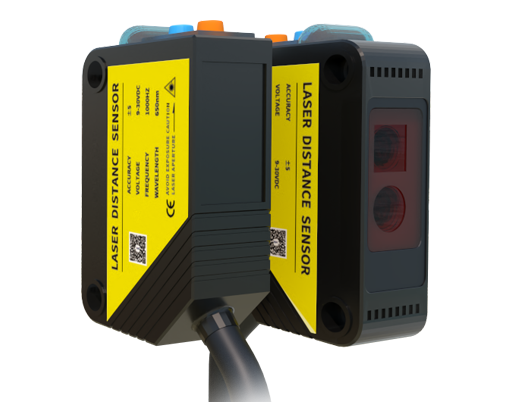
Installation and maintenance are straightforward but vital for optimal performance. Ensuring a stable mount free from vibration is essential. The sensor must be aligned correctly, especially for through-beam and retro-reflective types. Keeping the lens clean from dust and oil buildup prevents signal attenuation. Most modern sensors feature built-in indicators for alignment aid and output status, simplifying setup. Regular verification against a known reference ensures the sensor maintains its specified accuracy over time.
In conclusion, laser head sensors provide a non-contact, high-precision solution for a myriad of detection and measurement challenges. From simple object counting to complex 3D profiling, their versatility and accuracy drive efficiency and quality in automated systems. Understanding the basic principles, key types, and selection criteria empowers engineers and technicians to effectively integrate this powerful technology, enhancing capabilities in automation, quality assurance, and beyond. As technology advances, these sensors continue to evolve, offering even greater precision, smaller form factors, and smarter integrated diagnostics for the factories and systems of the future.